While Gran Canaria's volcanic departure is visually striking, it represents only 15-20 minutes of the 5+ hour flight. The right side captures the entire approach phase over the Oslo Fjord and Scandinavian interior—a landscape of genuine scenic complexity with fjords, forests, and lakes. The left side is dominated by 5+ hours of featureless Atlantic Ocean, which cannot score above 2.0 per constraints. Right side scores 4.0 for the landing sequence alone, while left side averages 2.5 across the full flight.
Flight Path
The flight path crosses the Bay of Biscay (open ocean, minimal features), then transitions over the Iberian Peninsula's northern coast near Galicia or Asturias (occasional glimpses of coastal terrain and Cantabrian Mountains if visible through cloud), continues over the Atlantic approaches to the British Isles, then crosses the North Sea toward Scandinavia. The most notable midpoint feature is the transition from open ocean to the Norwegian coast near Stavanger or the Skagerrak strait, where the Scandinavian landscape becomes visible with its characteristic fjord-carved coastline and forested interior.
Great circle distance and headings ›

.jpeg?width=600)

Phase by phase
Takeoff from LPA
LEFTGran Canaria's volcanic terrain and coastal harbor provide immediate visual interest during climb-out. The island's central ridge and surrounding Atlantic coastline create dramatic relief compared to the flat approach over open ocean on the right side.
Landing at OSL
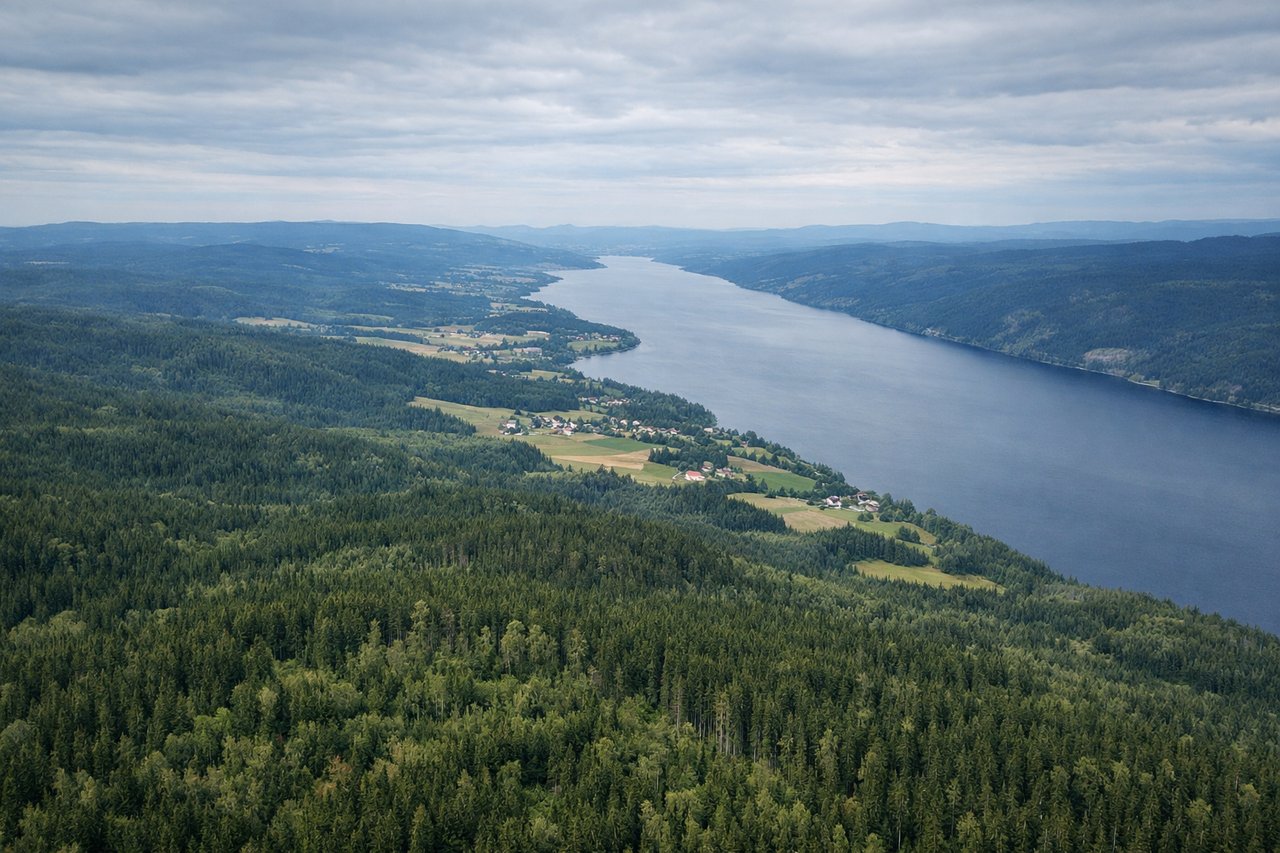
RIGHTThe approach to Oslo Gardermoen crosses the Scandinavian interior with extensive forests, lakes, and the Oslo Fjord system. The fjord's complex branching waterways, surrounding forested terrain, and the city's urban sprawl create far more visual variety and landmark density than the monotonous Atlantic crossing that dominates the left side.
Landmarks on this routeAll landmarks →
Will your flight be in sunlight?
See exactly which side of the plane gets sun and shade at your departure time.
About This Route
Which side of the plane should I sit on flying from Gran Canaria (LPA) to Oslo Gardermoen (OSL)?
Sit on the Right side of the plane for the best views on flights from Gran Canaria to Oslo. While Gran Canaria's volcanic departure is visually striking, it represents only 15-20 minutes of the 5+ hour flight. The right side captures the entire approach phase over the Oslo Fjord and Scandinavian interior—a landscape of genuine scenic complexity with fjords, forests, and lakes. The left side is dominated by 5+ hours of featureless Atlantic Ocean, which cannot score above 2.0 per constraints. Right side scores 4.0 for the landing sequence alone, while left side averages 2.5 across the full flight.
What can I see during takeoff from Gran Canaria in Gran Canaria?
During takeoff from Gran Canaria (LPA), sit on the Left side for the best views. Gran Canaria's volcanic terrain and coastal harbor provide immediate visual interest during climb-out. The island's central ridge and surrounding Atlantic coastline create dramatic relief compared to the flat approach over open ocean on the right side. Notable sights include: Gran Canaria's central volcanic peaks (Pico de las Nieves visible at ~6,400 ft), Las Palmas harbor and city sprawl on the northeast coast, Atlantic coastline with dark volcanic rock formations.
What can I see when landing at Oslo Gardermoen in Oslo?
When landing at Oslo Gardermoen (OSL), sit on the Right side for the best views. The approach to Oslo Gardermoen crosses the Scandinavian interior with extensive forests, lakes, and the Oslo Fjord system. The fjord's complex branching waterways, surrounding forested terrain, and the city's urban sprawl create far more visual variety and landmark density than the monotonous Atlantic crossing that dominates the left side. Notable sights include: Oslo Fjord's branching arms and islands (Hovedøya, Lindøya visible in the fjord system), extensive boreal forest and lake network of southeastern Norway, Oslo city center and harbor district during final approach.
How long is the flight from Gran Canaria to Oslo?
The flight from Gran Canaria (LPA) to Oslo Gardermoen (OSL) takes 5h 35m.
What does the Gran Canaria to Oslo flight path pass over?
The flight path crosses the Bay of Biscay (open ocean, minimal features), then transitions over the Iberian Peninsula's northern coast near Galicia or Asturias (occasional glimpses of coastal terrain and Cantabrian Mountains if visible through cloud), continues over the Atlantic approaches to the British Isles, then crosses the North Sea toward Scandinavia. The most notable midpoint feature is the transition from open ocean to the Norwegian coast near Stavanger or the Skagerrak strait, where the Scandinavian landscape becomes visible with its characteristic fjord-carved coastline and forested interior.