While takeoff on the right offers estuary views, the landing approach on the left provides more dramatic and visually distinctive scenery—the Pennine transition and Manchester's urban-industrial landscape are more striking than the relatively flat Mersey approach.
Flight Path
The flight path crosses the Cheshire Plain between the two airports. Notable features include the Chat Moss area (flat, formerly boggy terrain), scattered towns like Stockport visible to the southeast, and the gradual rise of the Pennine foothills to the east. The landscape transitions from coastal/estuarine (Liverpool) through agricultural lowland to moorland edges (Manchester approach).
Great circle distance and headings ›Phase by phase
Takeoff from LPL
RIGHTRight-side seats offer views of the Mersey Estuary and the Wirral Peninsula as you climb out westward before turning southeast toward Manchester. The contrast between water, urban sprawl, and green belt is striking during initial climb.
Landing at MAN
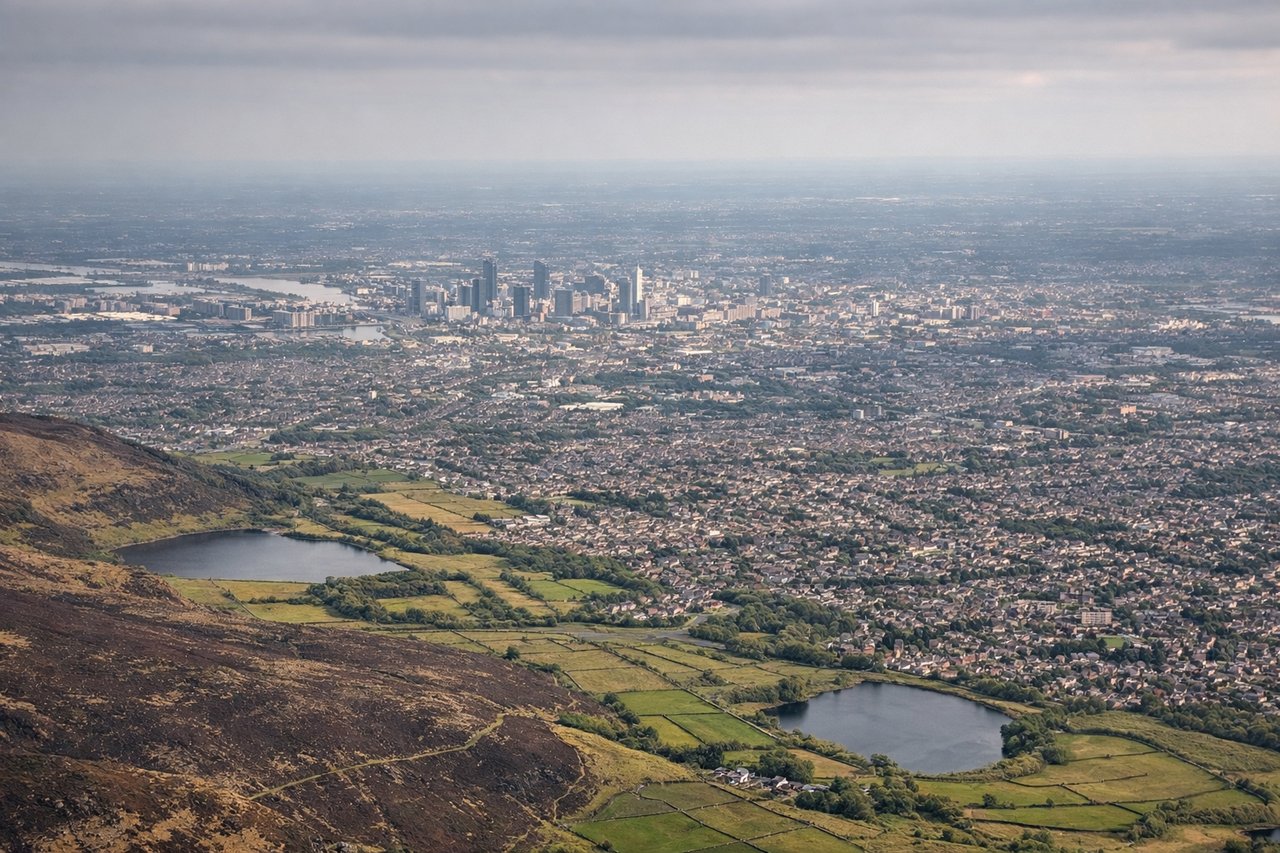
LEFTLeft-side seats provide excellent views during descent into Manchester from the southeast. You'll see the Pennine foothills rising to the east, the Irwell Valley, and Manchester's urban sprawl spreading across the Cheshire Plain—a dramatic transition from moorland to city.
Will your flight be in sunlight?
See exactly which side of the plane gets sun and shade at your departure time.
About This Route
Which side of the plane should I sit on flying from Liverpool (LPL) to Manchester (MAN)?
Sit on the Left side of the plane for the best views on flights from Liverpool to Manchester. While takeoff on the right offers estuary views, the landing approach on the left provides more dramatic and visually distinctive scenery—the Pennine transition and Manchester's urban-industrial landscape are more striking than the relatively flat Mersey approach.
What can I see during takeoff from Liverpool in Liverpool?
During takeoff from Liverpool (LPL), sit on the Right side for the best views. Right-side seats offer views of the Mersey Estuary and the Wirral Peninsula as you climb out westward before turning southeast toward Manchester. The contrast between water, urban sprawl, and green belt is striking during initial climb. Notable sights include: Mersey Estuary, Wirral Peninsula, Liverpool city center and docks, Irish Sea coastline.
What can I see when landing at Manchester in Manchester?
When landing at Manchester (MAN), sit on the Left side for the best views. Left-side seats provide excellent views during descent into Manchester from the southeast. You'll see the Pennine foothills rising to the east, the Irwell Valley, and Manchester's urban sprawl spreading across the Cheshire Plain—a dramatic transition from moorland to city. Notable sights include: Pennine foothills, Irwell Valley, Manchester city center and Trafford Park industrial area, Cheshire Plain.
How long is the flight from Liverpool to Manchester?
The flight from Liverpool (LPL) to Manchester (MAN) takes Approximately 18-22 minutes.
What does the Liverpool to Manchester flight path pass over?
The flight path crosses the Cheshire Plain between the two airports. Notable features include the Chat Moss area (flat, formerly boggy terrain), scattered towns like Stockport visible to the southeast, and the gradual rise of the Pennine foothills to the east. The landscape transitions from coastal/estuarine (Liverpool) through agricultural lowland to moorland edges (Manchester approach).