Las Vegas to New Orleans is 1,492 miles (2,401 km), a flight of about 4 hours 15 minutes.
Right-side seats win overall because the takeoff scenery from Las Vegas is more visually dramatic and sustained (Spring Mountains and Red Rock Canyon are striking during climb), while the landing approach into New Orleans offers comparable but less distinctive views. The outbound experience is the stronger scenic advantage.
Flight Path
The flight path crosses the Mojave Desert, then transitions over Arizona and into the Texas Panhandle. Notable features include the Colorado River (visible on approach to Arizona), the Painted Desert region, and the transition from high desert to the flat plains of Texas and Oklahoma. The Mississippi River becomes visible approximately 45 minutes before landing, with the river's characteristic meanders and oxbow lakes appearing as the aircraft descends into Louisiana airspace.
Great circle distance and headings ›


.jpeg?width=600)

.jpg?width=600)

Phase by phase
Takeoff from LSV
RIGHTRight-side seats capture the Spring Mountains and Red Rock Canyon immediately after departure. The aircraft climbs southeast from Nellis, and right-side windows frame these dramatic desert ranges perfectly during the initial climb-out phase.
Landing at MSY
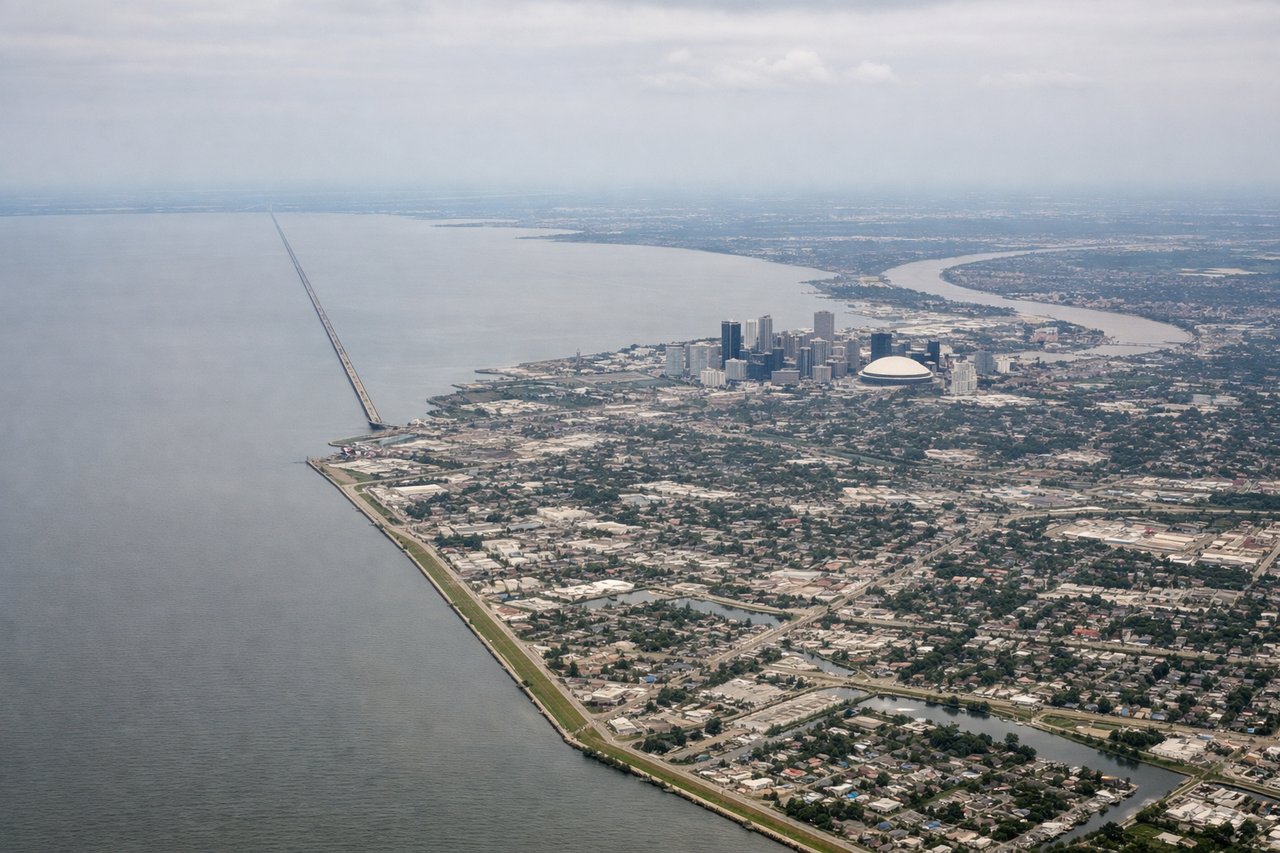
LEFTLeft-side seats offer views of the Mississippi River delta and Lake Pontchartrain during approach. The aircraft descends from the northwest into Louis Armstrong, and left windows capture the distinctive water features and New Orleans' position on the river bend.
Landmarks on this routeAll landmarks →
Will your flight be in sunlight?
Pick a date and time in the Sun Map to watch the sun move across your whole flight.
About This Route
Which side of the plane should I sit on flying from Nellis Afb (LSV) to Louis Armstrong New Orleans International (MSY)?
Sit on the Right side of the plane for the best views on flights from Las Vegas to New Orleans. Right-side seats win overall because the takeoff scenery from Las Vegas is more visually dramatic and sustained (Spring Mountains and Red Rock Canyon are striking during climb), while the landing approach into New Orleans offers comparable but less distinctive views. The outbound experience is the stronger scenic advantage.
What can I see during takeoff from Nellis Afb in Las Vegas?
During takeoff from Nellis Afb (LSV), sit on the Right side for the best views. Right-side seats capture the Spring Mountains and Red Rock Canyon immediately after departure. The aircraft climbs southeast from Nellis, and right-side windows frame these dramatic desert ranges perfectly during the initial climb-out phase. Notable sights include: Spring Mountains, Red Rock Canyon, Las Vegas Valley floor, Mojave Desert expanse.
What can I see when landing at Louis Armstrong New Orleans International in New Orleans?
When landing at Louis Armstrong New Orleans International (MSY), sit on the Left side for the best views. Left-side seats offer views of the Mississippi River delta and Lake Pontchartrain during approach. The aircraft descends from the northwest into Louis Armstrong, and left windows capture the distinctive water features and New Orleans' position on the river bend. Notable sights include: Mississippi River delta and meanders, Lake Pontchartrain, New Orleans city grid, Gulf of Mexico coastline.
How long is the flight from Las Vegas to New Orleans?
The flight from Nellis Afb (LSV) to Louis Armstrong New Orleans International (MSY) takes about 4 hours 15 minutes. The shortest flight path between them is 1,492 miles (2,401 km); winds and air traffic control usually add a few percent.
What does the Las Vegas to New Orleans flight path pass over?
The flight path crosses the Mojave Desert, then transitions over Arizona and into the Texas Panhandle. Notable features include the Colorado River (visible on approach to Arizona), the Painted Desert region, and the transition from high desert to the flat plains of Texas and Oklahoma. The Mississippi River becomes visible approximately 45 minutes before landing, with the river's characteristic meanders and oxbow lakes appearing as the aircraft descends into Louisiana airspace.