The right (south) side gets the better departure over the Las Vegas Valley and Lake Mead, plus the Grand Canyon country and Lake Powell early in cruise. It also gets the Queens and Manhattan view on arrival. The left side's northern view of the Colorado Rockies is good but less varied.
Flown LSV to JFK? Did we get it right?
Flight Path
Las Vegas to New York is 2,233 miles (3,593 km), a flight of about 4 hours 30 minutes.
Lake Mead, the Colorado Plateau and Grand Canyon country of northern Arizona and southern Utah (including Lake Powell), the Colorado Rockies, the Great Plains of Kansas, the Mississippi River, the Ohio Valley, the Appalachians in Pennsylvania, and the New Jersey approach to New York
Great circle distance and headings ›


Phase by phase
Takeoff from LSV
RIGHTDeparting the Nellis runways to the northeast and turning east on course, the right side looks south over the Las Vegas Valley, Frenchman Mountain and the Lake Mead basin. The left side mostly sees the empty desert ranges north of the city.
Landing at JFK
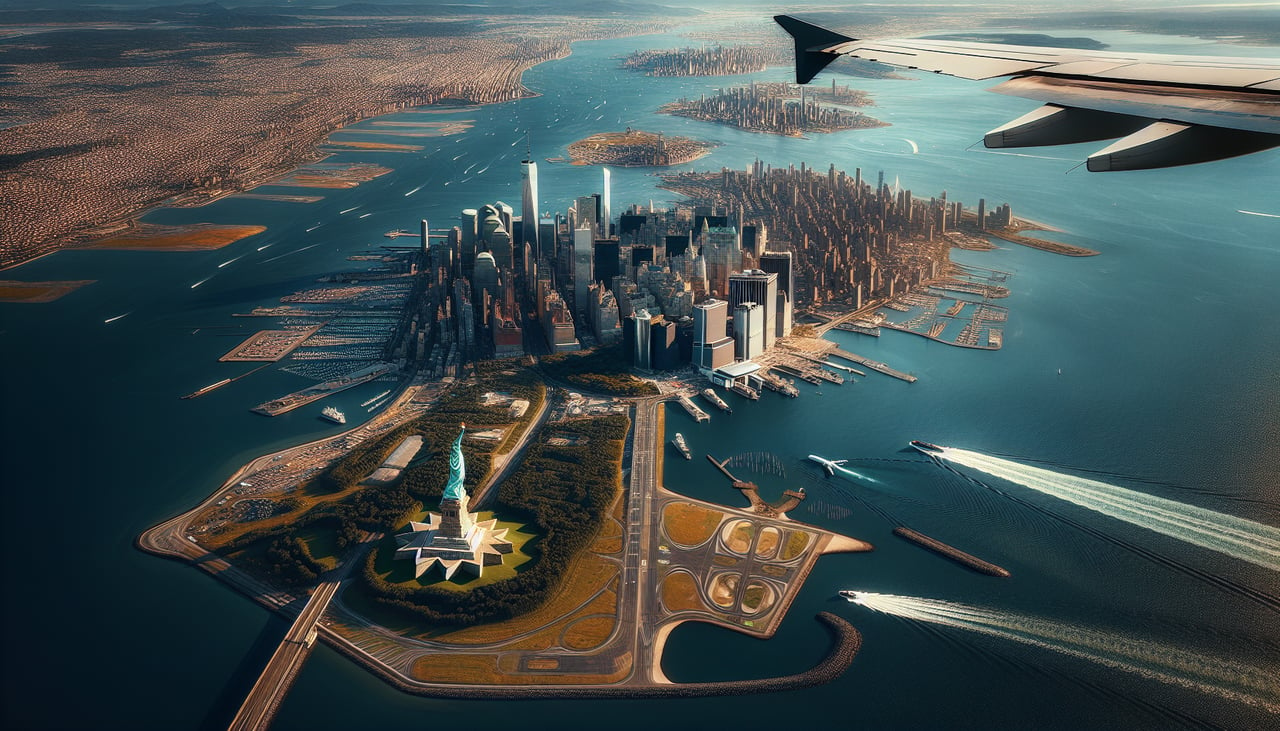
RIGHTArrivals to JFK on the 22 runways usually line up over Queens and Nassau County, so the right side looks toward Manhattan and the western Queens neighborhoods. Jamaica Bay sits on the right as you reach the runway. The left side sees mostly suburban Long Island.
Will your flight be in sunlight?
Pick a date and time in the Sun Map to watch the sun move across your whole flight.
About This Route
Which side of the plane should I sit on flying from Nellis Afb (LSV) to John F Kennedy International (JFK)?
Sit on the Right side of the plane for the best views on flights from Las Vegas to New York. The right (south) side gets the better departure over the Las Vegas Valley and Lake Mead, plus the Grand Canyon country and Lake Powell early in cruise. It also gets the Queens and Manhattan view on arrival. The left side's northern view of the Colorado Rockies is good but less varied.
What can I see during takeoff from Nellis Afb in Las Vegas?
During takeoff from Nellis Afb (LSV), sit on the Right side for the best views. Departing the Nellis runways to the northeast and turning east on course, the right side looks south over the Las Vegas Valley, Frenchman Mountain and the Lake Mead basin. The left side mostly sees the empty desert ranges north of the city. Notable sights include: Las Vegas Valley and the Strip, Frenchman Mountain, Lake Mead, Sunrise Mountain.
What can I see when landing at John F Kennedy International in New York?
When landing at John F Kennedy International (JFK), sit on the Right side for the best views. Arrivals to JFK on the 22 runways usually line up over Queens and Nassau County, so the right side looks toward Manhattan and the western Queens neighborhoods. Jamaica Bay sits on the right as you reach the runway. The left side sees mostly suburban Long Island. Notable sights include: Manhattan skyline, Jamaica Bay, Flushing Meadows and Citi Field, Rockaway Peninsula.
How long is the flight from Las Vegas to New York?
The flight from Nellis Afb (LSV) to John F Kennedy International (JFK) takes about 4 hours 30 minutes. The shortest flight path between them is 2,233 miles (3,593 km); winds and air traffic control usually add a few percent.
What does the Las Vegas to New York flight path pass over?
Lake Mead, the Colorado Plateau and Grand Canyon country of northern Arizona and southern Utah (including Lake Powell), the Colorado Rockies, the Great Plains of Kansas, the Mississippi River, the Ohio Valley, the Appalachians in Pennsylvania, and the New Jersey approach to New York