New York to Las Vegas is 2,233 miles (3,593 km), a flight of about 5 hours 10 minutes.
The right side delivers the flight's best moments: the Manhattan skyline at takeoff, glimpses of the Rocky Mountain front range and Colorado Plateau during cruise, and the Las Vegas Strip with the Spring Mountains on final approach. The left side offers mostly flat Midwestern farmland and a less distinctive desert horizon.
Flight Path
Appalachian ridges over Pennsylvania, the Ohio Valley and Great Plains of Kansas, the Rocky Mountain front range near Colorado, and the high desert plateau of eastern Utah before descending toward the Nevada desert.
Great circle distance and headings ›.jpg?width=600)
.jpeg?width=600)

.jpg?width=600)
.jpg?width=600)

.jpeg?width=600)


Phase by phase
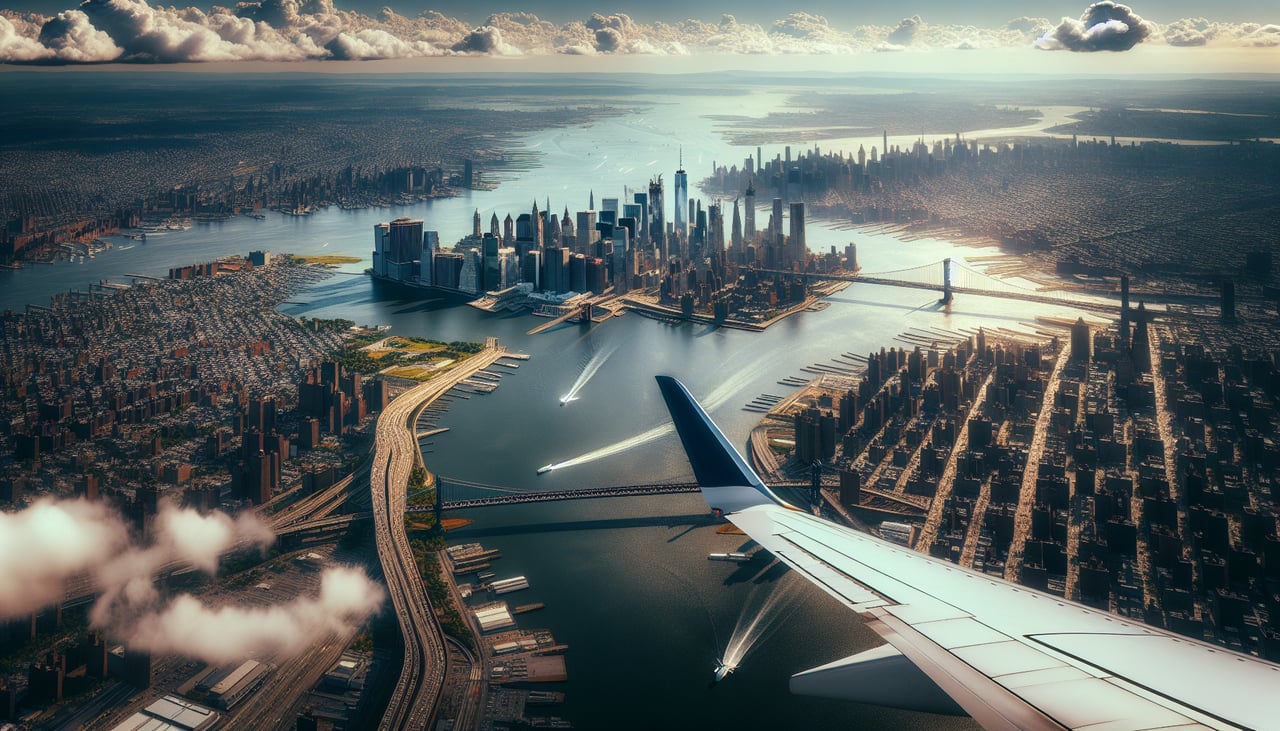
Takeoff from JFK
RIGHTDeparting JFK to the west/southwest, the initial turn puts Manhattan's skyline, the East River, and Long Island Sound on the north-facing side of the aircraft. The left side only shows Jamaica Bay and the flat Rockaway shoreline before the plane turns inland.
Landing at LSV
RIGHTOn approach into the Las Vegas valley, the descent path passes north of the Spring Mountains and gives a clear view of the Las Vegas Strip skyline and Red Rock Canyon escarpment on the north/west-facing side. The left side mainly shows the darker, less distinctive McCullough Range and Lake Mead in the far distance.
Landmarks on this routeAll landmarks →
Will your flight be in sunlight?
Pick a date and time in the Sun Map to watch the sun move across your whole flight.
About This Route
Which side of the plane should I sit on flying from John F Kennedy International (JFK) to Nellis Afb (LSV)?
Sit on the Right side of the plane for the best views on flights from New York to Las Vegas. The right side delivers the flight's best moments: the Manhattan skyline at takeoff, glimpses of the Rocky Mountain front range and Colorado Plateau during cruise, and the Las Vegas Strip with the Spring Mountains on final approach. The left side offers mostly flat Midwestern farmland and a less distinctive desert horizon.
What can I see during takeoff from John F Kennedy International in New York?
During takeoff from John F Kennedy International (JFK), sit on the Right side for the best views. Departing JFK to the west/southwest, the initial turn puts Manhattan's skyline, the East River, and Long Island Sound on the north-facing side of the aircraft. The left side only shows Jamaica Bay and the flat Rockaway shoreline before the plane turns inland. Notable sights include: Manhattan skyline, East River, Long Island Sound, Throggs Neck Bridge area.
What can I see when landing at Nellis Afb in Las Vegas?
When landing at Nellis Afb (LSV), sit on the Right side for the best views. On approach into the Las Vegas valley, the descent path passes north of the Spring Mountains and gives a clear view of the Las Vegas Strip skyline and Red Rock Canyon escarpment on the north/west-facing side. The left side mainly shows the darker, less distinctive McCullough Range and Lake Mead in the far distance. Notable sights include: Las Vegas Strip skyline, Spring Mountains, Red Rock Canyon escarpment, Las Vegas Valley desert floor.
How long is the flight from New York to Las Vegas?
The flight from John F Kennedy International (JFK) to Nellis Afb (LSV) takes about 5 hours 10 minutes. The shortest flight path between them is 2,233 miles (3,593 km); winds and air traffic control usually add a few percent.
What does the New York to Las Vegas flight path pass over?
Appalachian ridges over Pennsylvania, the Ohio Valley and Great Plains of Kansas, the Rocky Mountain front range near Colorado, and the high desert plateau of eastern Utah before descending toward the Nevada desert.