The left side wins overall because the cruise phase offers a genuine crossing of the Western Alps, with snow-capped peaks near Mont Blanc and the Matterhorn visible in the distance — a dramatic contrast to the flatter scenery on the right during that same stretch. The right side's advantage is limited to the final coastal approach, which isn't enough to outweigh a full Alps traverse.
Flight Path
Western Alps near Mont Blanc and the Matterhorn massif, the Po Valley in northern Italy, and the Apennine ridgeline running down through Tuscany and Umbria before the descent toward Rome
Great circle distance and headings ›.jpeg?width=600)

_Panoramica_del_centro_della_citt%C3%A0_dal_lago.jpg?width=600)


.jpg?width=600)

_-_24_(50543603956).jpg?width=600)

Phase by phase
Takeoff from LTN
LEFTLTN's runway 25 departure heads west before turning south toward Rome, and during that left-hand turn passengers on the left side get a brief but genuine view back toward London's skyline in the distance, plus the patchwork Hertfordshire farmland below. The right side mostly just sees the turn's outward horizon with little of interest.
Landing at FCO
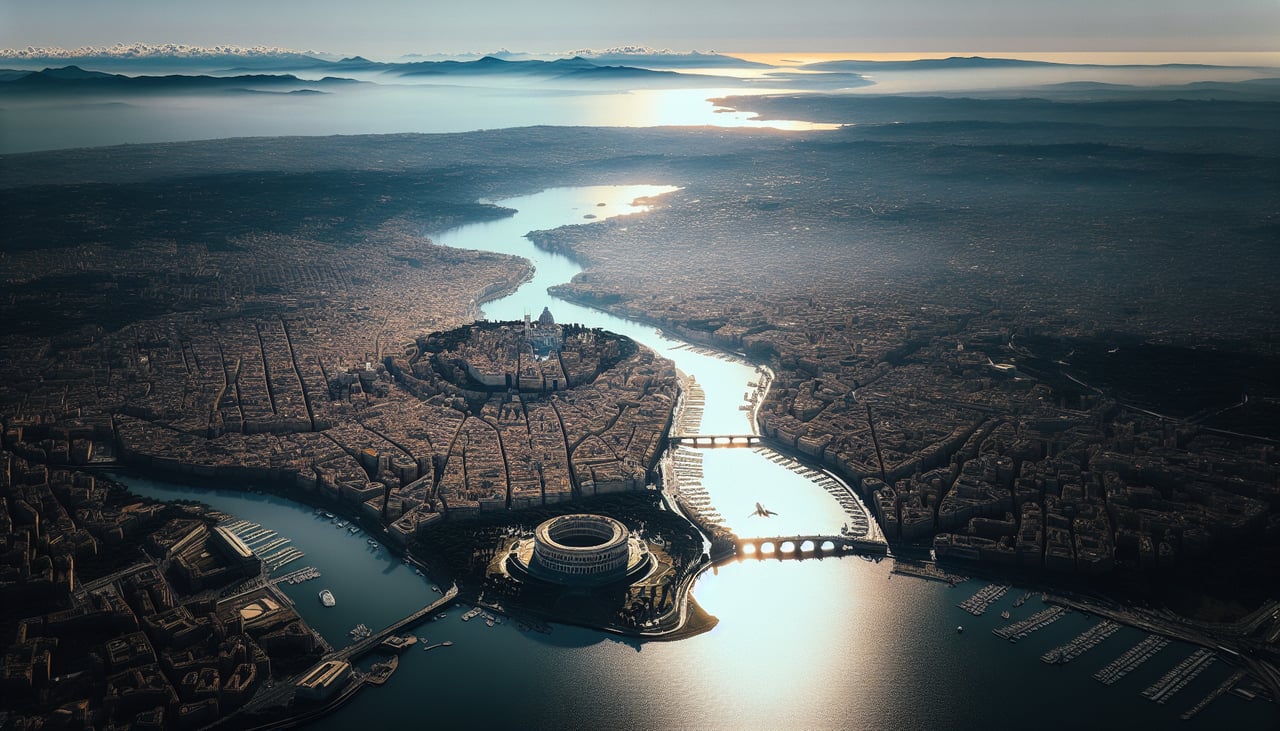
RIGHTOn the final approach into FCO, arrivals from the north typically track south along the coast before turning onto the runway, putting the Tyrrhenian Sea and the Tiber's mouth on the right side. The left side instead faces inland toward the flatter Roman countryside, which is far less visually striking.
Landmarks on this routeAll landmarks →
Will your flight be in sunlight?
See exactly which side of the plane gets sun and shade at your departure time.
About This Route
Which side of the plane should I sit on flying from Luton (LTN) to Fiumicino (FCO)?
Sit on the Left side of the plane for the best views on flights from London to Rome. The left side wins overall because the cruise phase offers a genuine crossing of the Western Alps, with snow-capped peaks near Mont Blanc and the Matterhorn visible in the distance — a dramatic contrast to the flatter scenery on the right during that same stretch. The right side's advantage is limited to the final coastal approach, which isn't enough to outweigh a full Alps traverse.
What can I see during takeoff from Luton in London?
During takeoff from Luton (LTN), sit on the Left side for the best views. LTN's runway 25 departure heads west before turning south toward Rome, and during that left-hand turn passengers on the left side get a brief but genuine view back toward London's skyline in the distance, plus the patchwork Hertfordshire farmland below. The right side mostly just sees the turn's outward horizon with little of interest. Notable sights include: Luton town directly below, Chiltern Hills escarpment, distant London skyline (Shard, City towers) on the horizon.
What can I see when landing at Fiumicino in Rome?
When landing at Fiumicino (FCO), sit on the Right side for the best views. On the final approach into FCO, arrivals from the north typically track south along the coast before turning onto the runway, putting the Tyrrhenian Sea and the Tiber's mouth on the right side. The left side instead faces inland toward the flatter Roman countryside, which is far less visually striking. Notable sights include: Tyrrhenian Sea coastline, Fiumicino harbor and marina, Tiber river mouth near Ostia.
How long is the flight from London to Rome?
The flight from Luton (LTN) to Fiumicino (FCO) takes 2h 35m.
What does the London to Rome flight path pass over?
Western Alps near Mont Blanc and the Matterhorn massif, the Po Valley in northern Italy, and the Apennine ridgeline running down through Tuscany and Umbria before the descent toward Rome