The left side misses the best of Cincinnati departure but wins decisively on landing with the full Rocky Mountain Front Range panorama. Across the cruise portion heading west, the left side also picks up better views of the Kansas plains transitioning to Colorado high plains. The Front Range arrival view alone makes left the overall winner.
Flight Path
The route crosses southern Indiana and Illinois farmland, the Mississippi River near St. Louis, the flat Missouri and Kansas agricultural plains, and the gradual rise of the Colorado high plains before the dramatic Front Range appears on the western horizon roughly 100 miles out from Denver.
Great circle distance and headings ›Phase by phase
Takeoff from LUK
RIGHTLunken typically departs runway 21L/21R heading southwest, then turns westward toward the route. The right side captures the Ohio River bending through Cincinnati, the downtown skyline, and the Kentucky hills to the south. Left side faces east toward suburban sprawl with less visual interest.
Landing at DEN
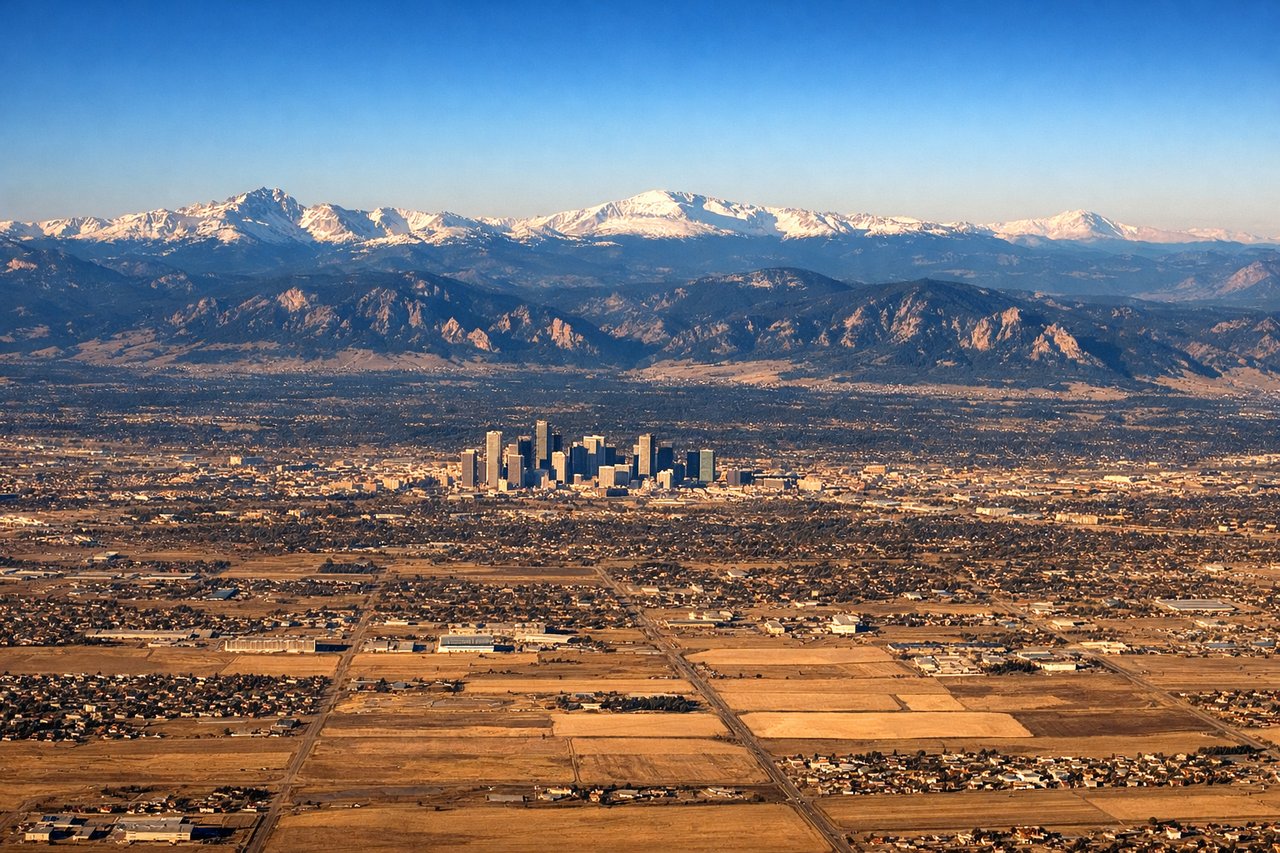
LEFTDEN typically lands on runways oriented east-west or on the north-south 16/34 complex. Approaching from the east, the left side faces south and southwest, giving a clear view of the entire Front Range including Pikes Peak, the Denver metro grid, and the Rocky Mountain foothills. The right side faces north with less dramatic terrain.
Will your flight be in sunlight?
See exactly which side of the plane gets sun and shade at your departure time.
About This Route
Which side of the plane should I sit on flying from Cincinnati Muni Lunken Fld (LUK) to Denver International (DEN)?
Sit on the Left side of the plane for the best views on flights from Cincinnati to Denver. The left side misses the best of Cincinnati departure but wins decisively on landing with the full Rocky Mountain Front Range panorama. Across the cruise portion heading west, the left side also picks up better views of the Kansas plains transitioning to Colorado high plains. The Front Range arrival view alone makes left the overall winner.
What can I see during takeoff from Cincinnati Muni Lunken Fld in Cincinnati?
During takeoff from Cincinnati Muni Lunken Fld (LUK), sit on the Right side for the best views. Lunken typically departs runway 21L/21R heading southwest, then turns westward toward the route. The right side captures the Ohio River bending through Cincinnati, the downtown skyline, and the Kentucky hills to the south. Left side faces east toward suburban sprawl with less visual interest. Notable sights include: Ohio River bends, Cincinnati downtown skyline, Newport/Covington KY waterfront, Eden Park hillside.
What can I see when landing at Denver International in Denver?
When landing at Denver International (DEN), sit on the Left side for the best views. DEN typically lands on runways oriented east-west or on the north-south 16/34 complex. Approaching from the east, the left side faces south and southwest, giving a clear view of the entire Front Range including Pikes Peak, the Denver metro grid, and the Rocky Mountain foothills. The right side faces north with less dramatic terrain. Notable sights include: Rocky Mountain Front Range, Pikes Peak (distant south), Denver metro grid, Cherry Creek Reservoir.
How long is the flight from Cincinnati to Denver?
The flight from Cincinnati Muni Lunken Fld (LUK) to Denver International (DEN) takes Approximately 3 hours 15 minutes.
What does the Cincinnati to Denver flight path pass over?
The route crosses southern Indiana and Illinois farmland, the Mississippi River near St. Louis, the flat Missouri and Kansas agricultural plains, and the gradual rise of the Colorado high plains before the dramatic Front Range appears on the western horizon roughly 100 miles out from Denver.