Manchester to Grants is 4,884 miles (7,860 km), a flight of about 9 hours.
Right-side seats dominate both segments: Pennine Hills on departure and the San Juan/Jemez mountain scenery on arrival. The left side offers little of geographic interest on either end.
Flight Path
The flight crosses the Atlantic Ocean (no landmarks visible), then enters North American airspace over Newfoundland and Labrador. Crossing the Canadian Shield and Great Lakes region (if routed south), then the Great Plains of the central USA. The Rocky Mountain chain becomes visible on the western approach, with the Colorado Plateau and high desert terrain of New Mexico dominating the final descent segment.
Great circle distance and headings ›
.jpg?width=600)
.jpg?width=600)
Phase by phase
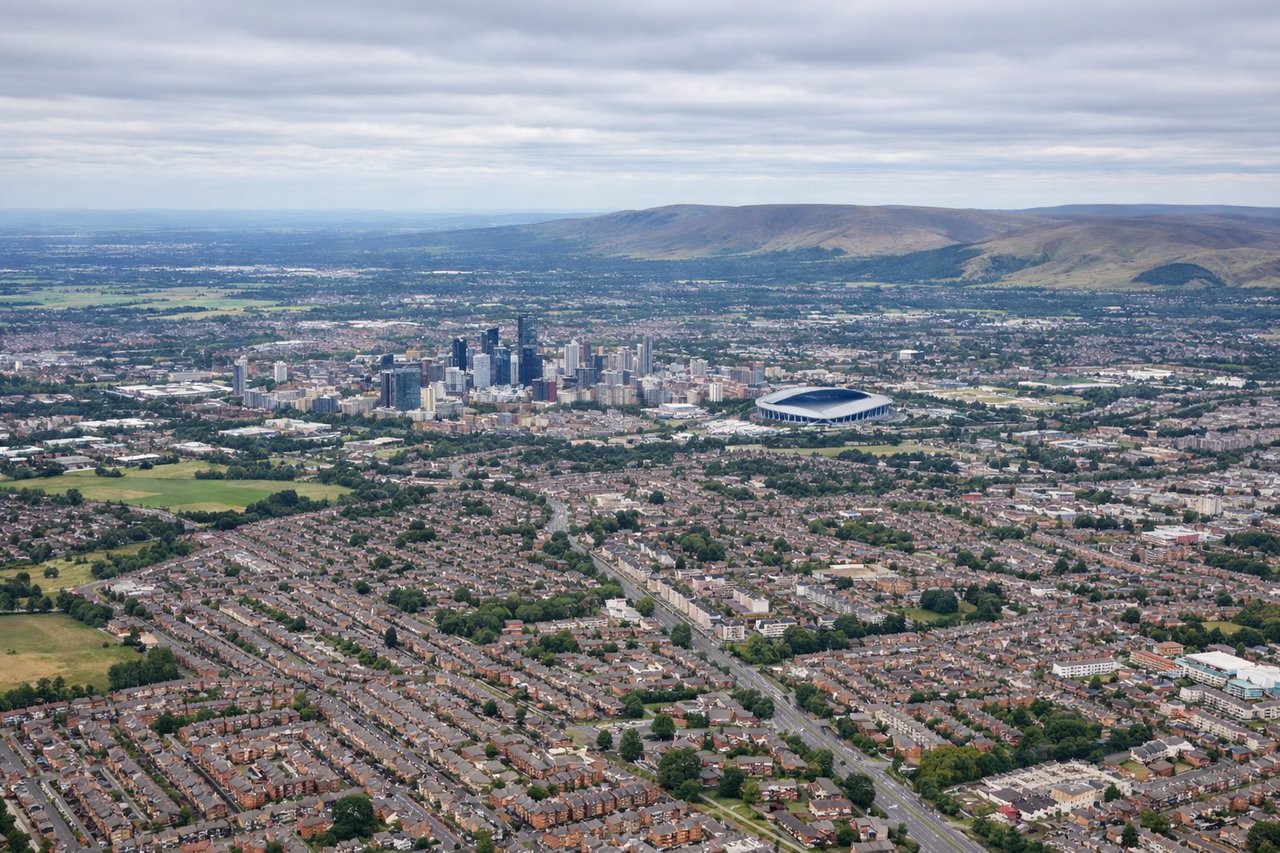
Takeoff from MAN
RIGHTManchester typically departs runways 05L/05R or 23L/23R. Right-side seats offer views of the Pennine Hills to the east during eastbound climbs, and the Manchester conurbation sprawl (Stockport, Tameside) below. Left side faces toward the Irish Sea and flat Cheshire plains—less dramatic.
Landing at GNT
RIGHTApproaching Grants from the east (typical routing), right-side seats face the San Juan Mountains and the high desert terrain of north-central New Mexico. The landscape is visually striking—sparse vegetation, mesas, and distant peaks. Left side shows relatively featureless high desert plateau.
Landmarks on this routeAll landmarks →
Will your flight be in sunlight?
Pick a date and time in the Sun Map to watch the sun move across your whole flight.
About This Route
Which side of the plane should I sit on flying from Manchester (MAN) to Grants Milan Muni (GNT)?
Sit on the Right side of the plane for the best views on flights from Manchester to Grants. Right-side seats dominate both segments: Pennine Hills on departure and the San Juan/Jemez mountain scenery on arrival. The left side offers little of geographic interest on either end.
What can I see during takeoff from Manchester in Manchester?
During takeoff from Manchester (MAN), sit on the Right side for the best views. Manchester typically departs runways 05L/05R or 23L/23R. Right-side seats offer views of the Pennine Hills to the east during eastbound climbs, and the Manchester conurbation sprawl (Stockport, Tameside) below. Left side faces toward the Irish Sea and flat Cheshire plains—less dramatic. Notable sights include: Pennine Hills (eastern horizon), Manchester city center and suburbs (directly below during initial climb), Stockport town (southeast), Cheshire Plain (western side).
What can I see when landing at Grants Milan Muni in Grants?
When landing at Grants Milan Muni (GNT), sit on the Right side for the best views. Approaching Grants from the east (typical routing), right-side seats face the San Juan Mountains and the high desert terrain of north-central New Mexico. The landscape is visually striking—sparse vegetation, mesas, and distant peaks. Left side shows relatively featureless high desert plateau. Notable sights include: San Juan Mountains (southern horizon), Rio Grande valley (if visible to the west), Jemez Mountains (western approach), high desert scrubland and mesas (foreground and middle distance).
How long is the flight from Manchester to Grants?
The flight from Manchester (MAN) to Grants Milan Muni (GNT) takes about 9 hours. The shortest flight path between them is 4,884 miles (7,860 km); winds and air traffic control usually add a few percent.
What does the Manchester to Grants flight path pass over?
The flight crosses the Atlantic Ocean (no landmarks visible), then enters North American airspace over Newfoundland and Labrador. Crossing the Canadian Shield and Great Lakes region (if routed south), then the Great Plains of the central USA. The Rocky Mountain chain becomes visible on the western approach, with the Colorado Plateau and high desert terrain of New Mexico dominating the final descent segment.