The right side wins on both ends of the flight, combining the Kansas City skyline and river confluence at departure with the Dallas skyline and Lake Grapevine on arrival, while the cruise phase over the Great Plains offers little differentiation between sides.
Flight Path
Flat agricultural plains of eastern Kansas and Oklahoma, with the Arkansas River visible near Wichita's longitude
Great circle distance and headings ›Phase by phase
Takeoff from MCI
RIGHTDeparting MCI southbound, the right side offers views over downtown Kansas City's skyline and the Missouri/Kansas River confluence before leveling into cruise, while the left shows mostly flat farmland.
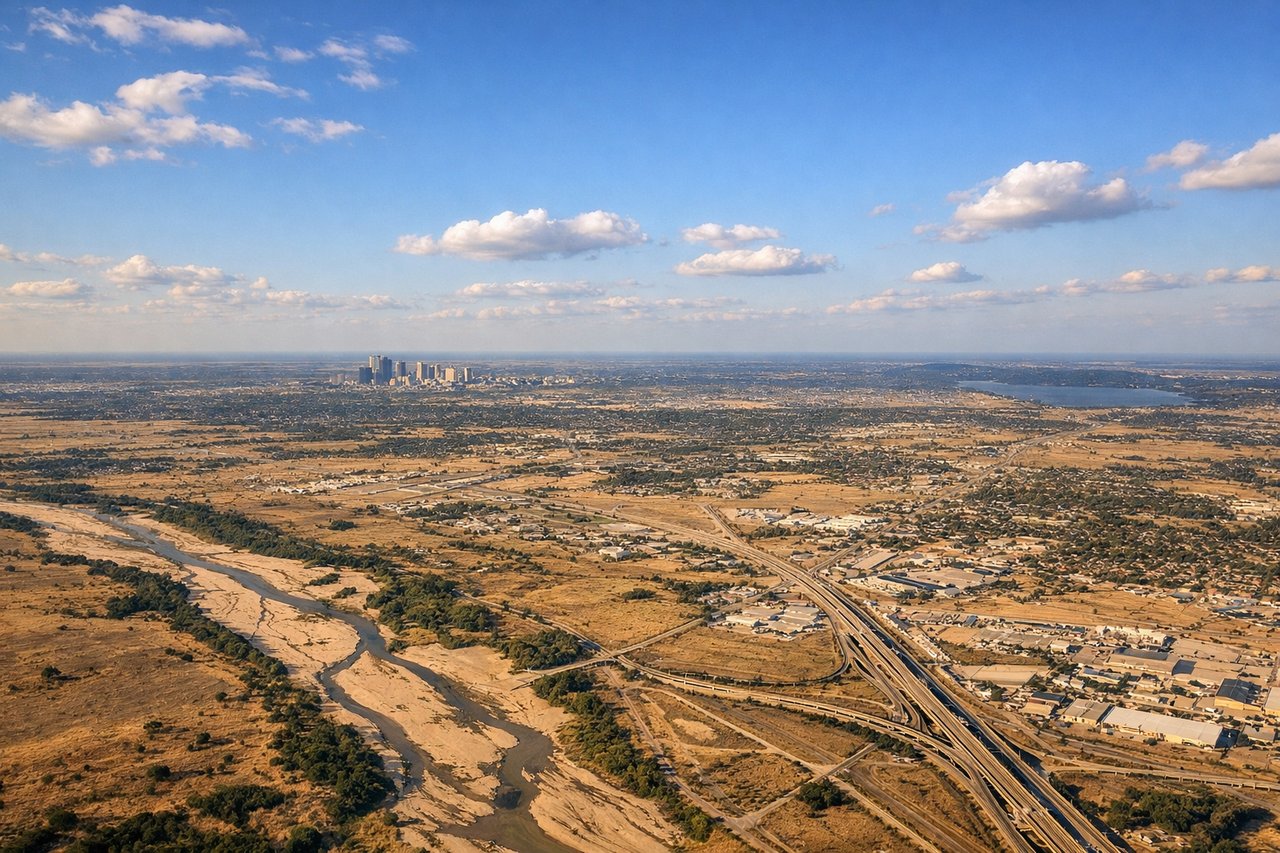
Landing at DFW
RIGHTOn approach into DFW from the north, the right side gives passengers a view of the Dallas downtown skyline and the dense urban sprawl of the Metroplex, while the left side faces mostly suburban Fort Worth flatland.
Will your flight be in sunlight?
See exactly which side of the plane gets sun and shade at your departure time.
About This Route
Which side of the plane should I sit on flying from Kansas City International (MCI) to Dallas Fort Worth International (DFW)?
Sit on the Right side of the plane for the best views on flights from Kansas City to Dallas-Fort Worth. The right side wins on both ends of the flight, combining the Kansas City skyline and river confluence at departure with the Dallas skyline and Lake Grapevine on arrival, while the cruise phase over the Great Plains offers little differentiation between sides.
What can I see during takeoff from Kansas City International in Kansas City?
During takeoff from Kansas City International (MCI), sit on the Right side for the best views. Departing MCI southbound, the right side offers views over downtown Kansas City's skyline and the Missouri/Kansas River confluence before leveling into cruise, while the left shows mostly flat farmland. Notable sights include: Downtown Kansas City skyline, Missouri River, Kansas River confluence, Kauffman/Arrowhead Stadiums complex.
What can I see when landing at Dallas Fort Worth International in Dallas-Fort Worth?
When landing at Dallas Fort Worth International (DFW), sit on the Right side for the best views. On approach into DFW from the north, the right side gives passengers a view of the Dallas downtown skyline and the dense urban sprawl of the Metroplex, while the left side faces mostly suburban Fort Worth flatland. Notable sights include: Downtown Dallas skyline, Lake Grapevine, DFW terminal complex, Las Colinas towers.
How long is the flight from Kansas City to Dallas-Fort Worth?
The flight from Kansas City International (MCI) to Dallas Fort Worth International (DFW) takes 1h 25m.
What does the Kansas City to Dallas-Fort Worth flight path pass over?
Flat agricultural plains of eastern Kansas and Oklahoma, with the Arkansas River visible near Wichita's longitude