While takeoff favors the right for Orlando's lake-filled landscape, the landing view of the Mississippi River delta and New Orleans' unique geography from the left side is more dramatic and geographically significant. The river approach is the standout feature of this route.
Flown MCO to MSY? Did we get it right?
Flight Path
Orlando to New Orleans is 551 miles (886 km), a flight of about 2 hours 15 minutes.
The flight path crosses central Florida's lake district, then transitions over the Gulf of Mexico or the Florida Panhandle depending on routing. Notable midpoint features include the Suwannee River valley in northern Florida, the Big Bend region's coastal marshes, and the approach to the Mississippi River delta with its extensive bayou system and wetlands. The terrain gradually transitions from Florida's rolling terrain and lakes to the completely flat, water-dominated landscape of Louisiana's coastal plain.
Great circle distance and headings ›
Phase by phase

Takeoff from MCO
RIGHTRight side seats capture the sprawl of greater Orlando and the chain of lakes that define central Florida's geography. MCO typically departs to the east or northeast, and right-side views show the urban corridor extending inland from the coast.
Landing at MSY
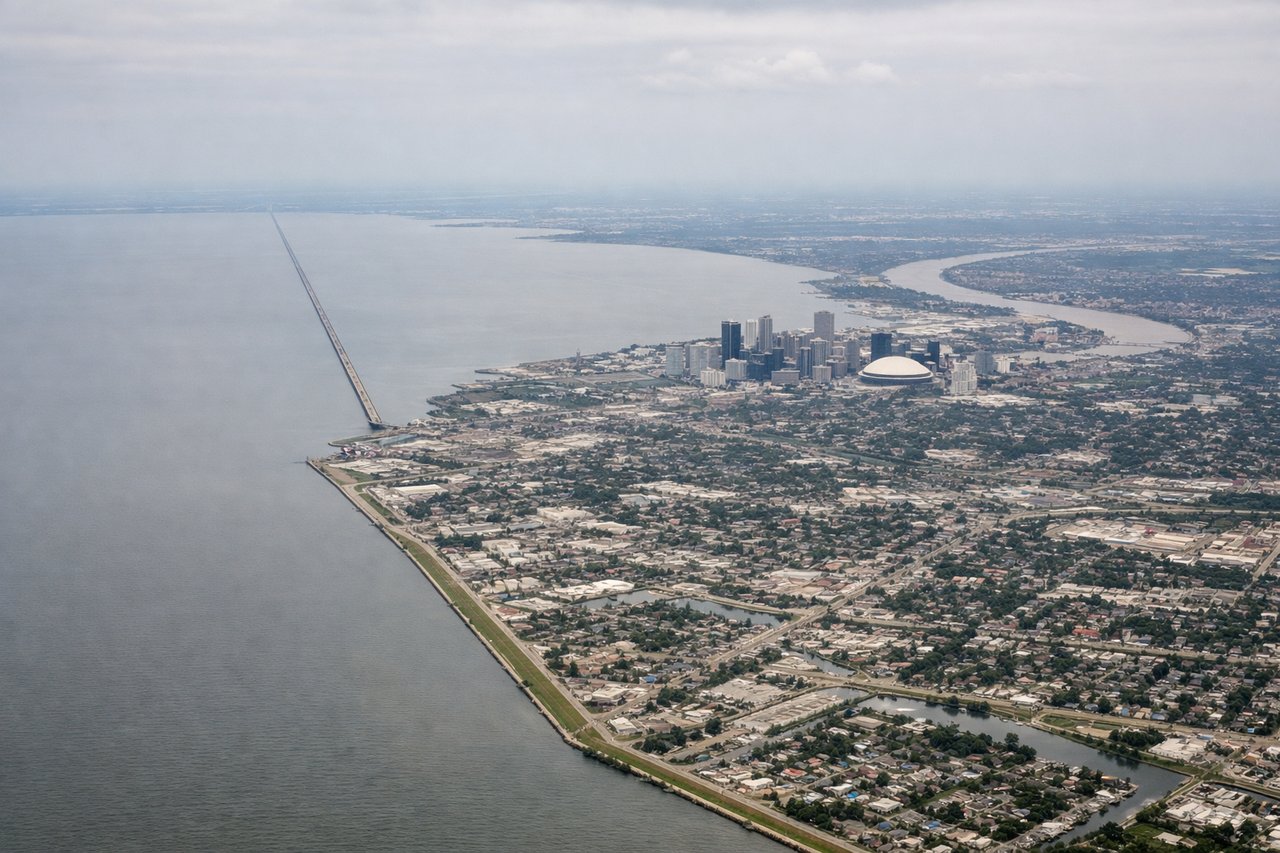
LEFTLeft side provides the best approach views of the Mississippi River delta and New Orleans' distinctive geography. MSY approaches typically use runways aligned north-south, and left-side seats show the river's massive curves and the city's position relative to Lake Pontchartrain.
Will your flight be in sunlight?
Pick a date and time in the Sun Map to watch the sun move across your whole flight.
About This Route
Which side of the plane should I sit on flying from Orlando International (MCO) to Louis Armstrong New Orleans International (MSY)?
Sit on the Left side of the plane for the best views on flights from Orlando to New Orleans. While takeoff favors the right for Orlando's lake-filled landscape, the landing view of the Mississippi River delta and New Orleans' unique geography from the left side is more dramatic and geographically significant. The river approach is the standout feature of this route.
What can I see during takeoff from Orlando International in Orlando?
During takeoff from Orlando International (MCO), sit on the Right side for the best views. Right side seats capture the sprawl of greater Orlando and the chain of lakes that define central Florida's geography. MCO typically departs to the east or northeast, and right-side views show the urban corridor extending inland from the coast. Notable sights include: Lake Apopka (large freshwater lake west of downtown), downtown Orlando skyline, the chain of smaller lakes dotting the landscape southward, Interstate 4 corridor.
What can I see when landing at Louis Armstrong New Orleans International in New Orleans?
When landing at Louis Armstrong New Orleans International (MSY), sit on the Left side for the best views. Left side provides the best approach views of the Mississippi River delta and New Orleans' distinctive geography. MSY approaches typically use runways aligned north-south, and left-side seats show the river's massive curves and the city's position relative to Lake Pontchartrain. Notable sights include: Mississippi River with its characteristic meanders and oxbow lakes, Lake Pontchartrain to the north, the New Orleans urban area and French Quarter district, the industrial corridor along the river.
How long is the flight from Orlando to New Orleans?
The flight from Orlando International (MCO) to Louis Armstrong New Orleans International (MSY) takes about 2 hours 15 minutes. The shortest flight path between them is 551 miles (886 km); winds and air traffic control usually add a few percent.
What does the Orlando to New Orleans flight path pass over?
The flight path crosses central Florida's lake district, then transitions over the Gulf of Mexico or the Florida Panhandle depending on routing. Notable midpoint features include the Suwannee River valley in northern Florida, the Big Bend region's coastal marshes, and the approach to the Mississippi River delta with its extensive bayou system and wetlands. The terrain gradually transitions from Florida's rolling terrain and lakes to the completely flat, water-dominated landscape of Louisiana's coastal plain.