Chicago to New York is 730 miles (1,174 km), a flight of about 2 hours 10 minutes.
The right side delivers the dramatic Chicago lakefront departure, and during cruise at 30,000 feet over northern Indiana and Ohio the right side also looks toward Lake Erie in the distance. The left side wins at landing for Jamaica Bay, but the Chicago departure view is the highlight of the flight and gives right side the overall edge.
Flight Path
The flight tracks roughly east-northeast across northern Indiana, then over Toledo and Cleveland areas of Ohio, crossing the southern shore of Lake Erie, then into Pennsylvania over the Allegheny Plateau before descending over New Jersey and Long Island. Lake Erie is visible to the right side during the Ohio segment. The Allegheny Plateau appears as rolling forested terrain with no dramatic relief. No major mountain ranges are crossed — the Appalachians are well to the south of this routing.
Great circle distance and headings ›

.jpeg?width=600)
.jpg?width=600)
Phase by phase
Takeoff from MDW
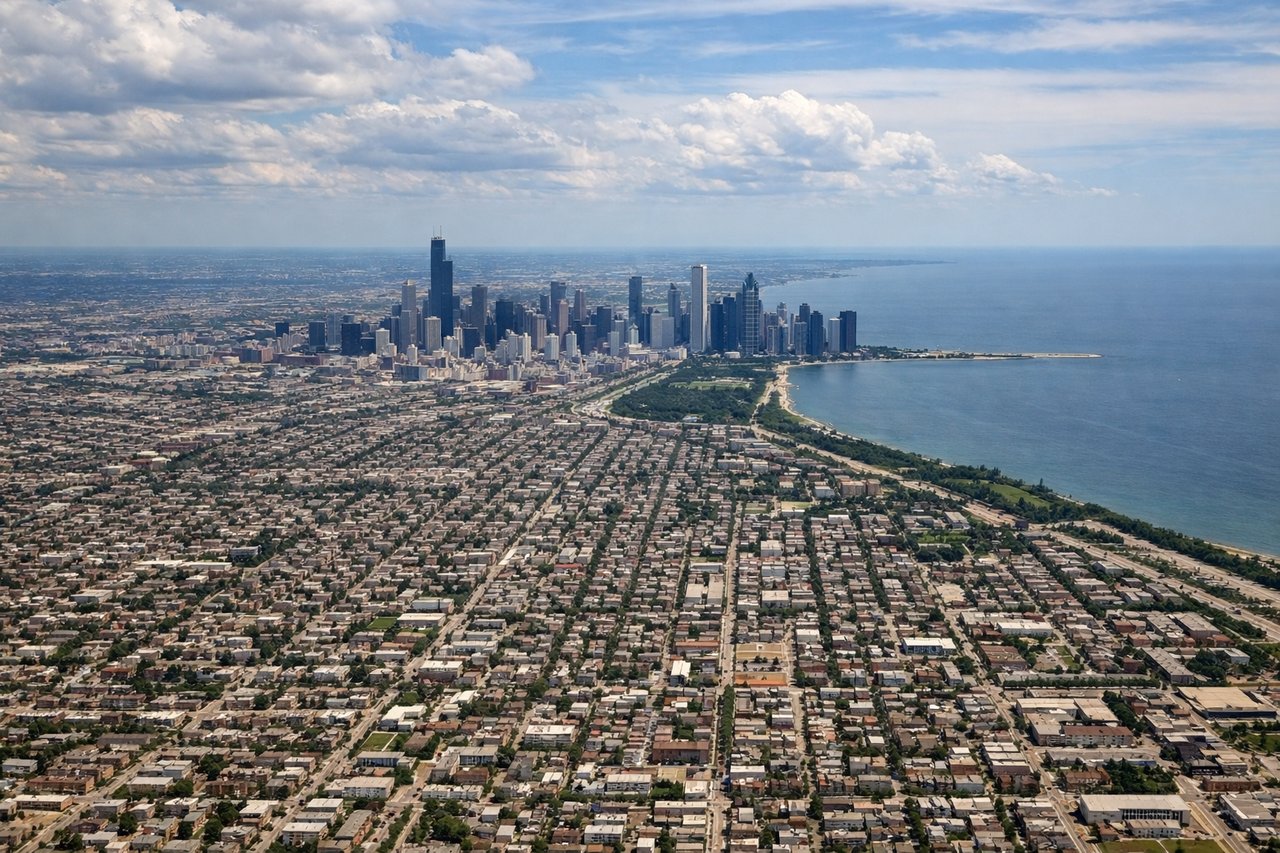
RIGHTMDW's most common departure is runway 31L/31R heading northwest, then aircraft turn eastbound. A right-side seat captures the Chicago skyline and Lake Michigan shoreline as the plane banks east. You get a clear view of the downtown Loop and the lakefront from a few thousand feet.
Landing at JFK
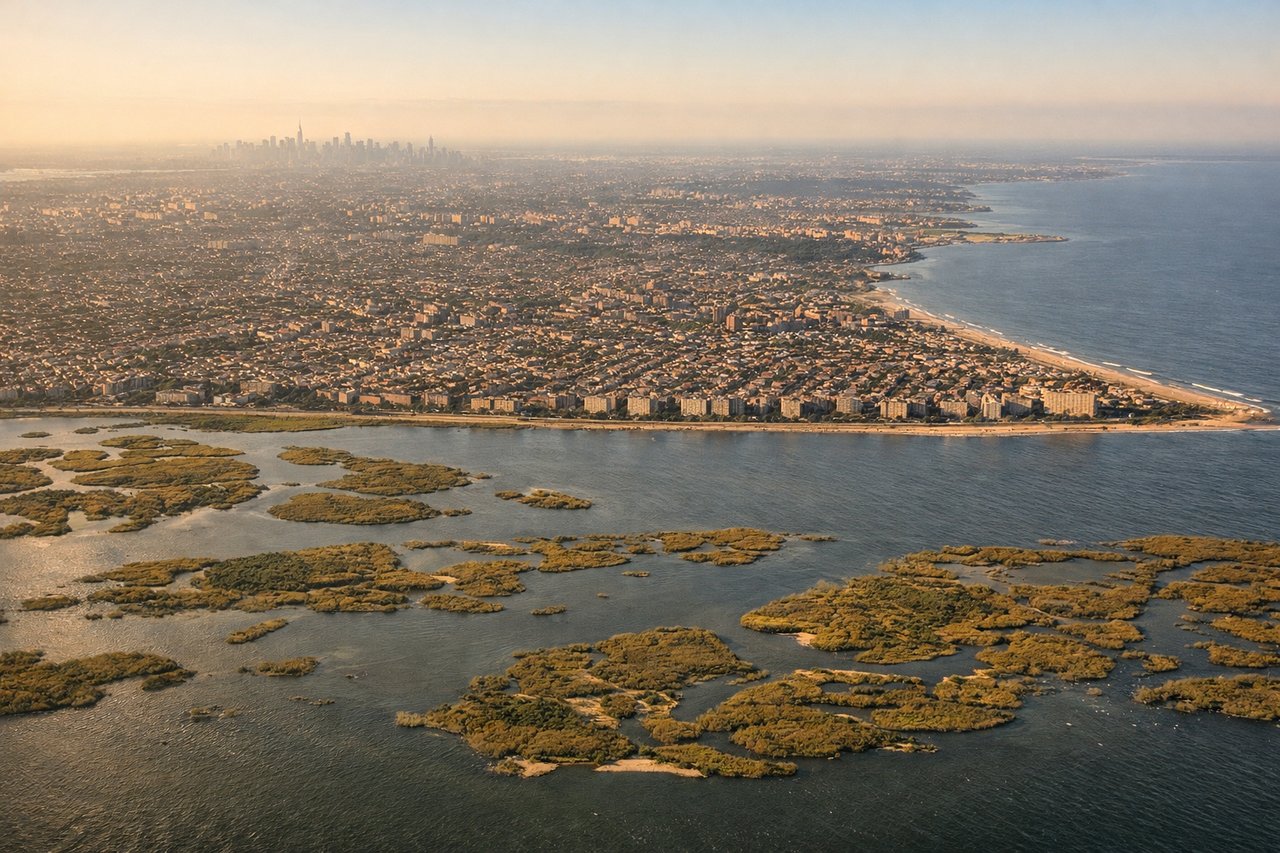
LEFTJFK's most common approach is from the west or southwest on runway 31L/31R or 22L, meaning the aircraft tracks over Long Island. A left-side seat looks south toward Jamaica Bay, the Rockaways barrier beach, and the Atlantic Ocean just beyond. You also get a clear view of lower Manhattan and the Verrazano-Narrows Bridge in the distance during the approach.
Landmarks on this routeAll landmarks →
Will your flight be in sunlight?
Pick a date and time in the Sun Map to watch the sun move across your whole flight.
About This Route
Which side of the plane should I sit on flying from Chicago Midway International (MDW) to John F Kennedy International (JFK)?
Sit on the Right side of the plane for the best views on flights from Chicago to New York. The right side delivers the dramatic Chicago lakefront departure, and during cruise at 30,000 feet over northern Indiana and Ohio the right side also looks toward Lake Erie in the distance. The left side wins at landing for Jamaica Bay, but the Chicago departure view is the highlight of the flight and gives right side the overall edge.
What can I see during takeoff from Chicago Midway International in Chicago?
During takeoff from Chicago Midway International (MDW), sit on the Right side for the best views. MDW's most common departure is runway 31L/31R heading northwest, then aircraft turn eastbound. A right-side seat captures the Chicago skyline and Lake Michigan shoreline as the plane banks east. You get a clear view of the downtown Loop and the lakefront from a few thousand feet. Notable sights include: Chicago Loop skyline, Lake Michigan shoreline, Grant Park and Museum Campus, Millennium Park area.
What can I see when landing at John F Kennedy International in New York?
When landing at John F Kennedy International (JFK), sit on the Left side for the best views. JFK's most common approach is from the west or southwest on runway 31L/31R or 22L, meaning the aircraft tracks over Long Island. A left-side seat looks south toward Jamaica Bay, the Rockaways barrier beach, and the Atlantic Ocean just beyond. You also get a clear view of lower Manhattan and the Verrazano-Narrows Bridge in the distance during the approach. Notable sights include: Jamaica Bay, Rockaway Peninsula barrier beach, lower Manhattan skyline, Verrazano-Narrows Bridge.
How long is the flight from Chicago to New York?
The flight from Chicago Midway International (MDW) to John F Kennedy International (JFK) takes about 2 hours 10 minutes. The shortest flight path between them is 730 miles (1,174 km); winds and air traffic control usually add a few percent.
What does the Chicago to New York flight path pass over?
The flight tracks roughly east-northeast across northern Indiana, then over Toledo and Cleveland areas of Ohio, crossing the southern shore of Lake Erie, then into Pennsylvania over the Allegheny Plateau before descending over New Jersey and Long Island. Lake Erie is visible to the right side during the Ohio segment. The Allegheny Plateau appears as rolling forested terrain with no dramatic relief. No major mountain ranges are crossed — the Appalachians are well to the south of this routing.