The route tracks roughly parallel to Australia's east coast, so the right-hand side offers repeated glimpses of the coastline, Fraser Island, the Whitsundays, and the Coral Sea, plus a reef-and-rainforest arrival into Cairns. The left side mostly shows the interior Great Dividing Range and dry inland plains, which are far less visually varied.
Flight Path
Great Dividing Range foothills, Fraser Island and the Coral Sea coastline, Whitsunday Islands visible in the distance to the east
Great circle distance and headings ›Phase by phase
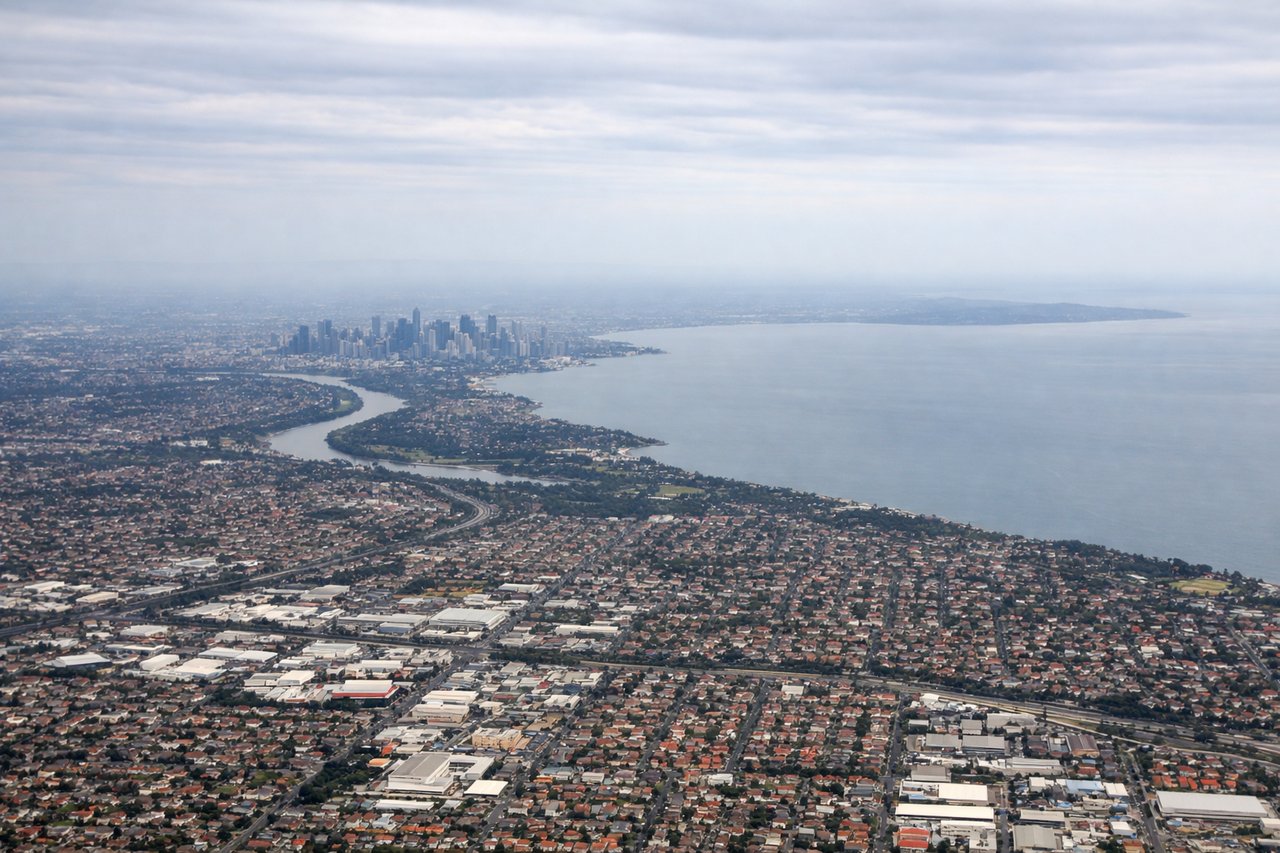
Takeoff from MEL
RIGHTDeparting MEL runway 34 or 16, the right side offers a brief view of Port Phillip Bay and Melbourne's skyline before the aircraft turns north over Victoria. The left side shows only flat farmland stretching inland.
Landing at CNS
RIGHTOn approach to CNS runway 15, the right side (east) reveals the turquoise waters and reef patches of the Coral Sea along with the Cairns coastline, while the left side faces the forested Atherton Tablelands with less contrast.
Will your flight be in sunlight?
See exactly which side of the plane gets sun and shade at your departure time.
About This Route
Which side of the plane should I sit on flying from Melbourne International (MEL) to Cairns International (CNS)?
Sit on the Right side of the plane for the best views on flights from Melbourne to Cairns. The route tracks roughly parallel to Australia's east coast, so the right-hand side offers repeated glimpses of the coastline, Fraser Island, the Whitsundays, and the Coral Sea, plus a reef-and-rainforest arrival into Cairns. The left side mostly shows the interior Great Dividing Range and dry inland plains, which are far less visually varied.
What can I see during takeoff from Melbourne International in Melbourne?
During takeoff from Melbourne International (MEL), sit on the Right side for the best views. Departing MEL runway 34 or 16, the right side offers a brief view of Port Phillip Bay and Melbourne's skyline before the aircraft turns north over Victoria. The left side shows only flat farmland stretching inland. Notable sights include: Port Phillip Bay, Melbourne CBD skyline, Westernport Bay.
What can I see when landing at Cairns International in Cairns?
When landing at Cairns International (CNS), sit on the Right side for the best views. On approach to CNS runway 15, the right side (east) reveals the turquoise waters and reef patches of the Coral Sea along with the Cairns coastline, while the left side faces the forested Atherton Tablelands with less contrast. Notable sights include: Coral Sea and outer reef patches, Cairns coastline, Trinity Inlet, rainforest-covered coastal ranges.
How long is the flight from Melbourne to Cairns?
The flight from Melbourne International (MEL) to Cairns International (CNS) takes 2h 55m.
What does the Melbourne to Cairns flight path pass over?
Great Dividing Range foothills, Fraser Island and the Coral Sea coastline, Whitsunday Islands visible in the distance to the east