The left side wins on both ends of the flight — the Great Barrier Reef and Coral Sea at departure, and Melbourne's skyline and Port Phillip Bay at arrival — while the long inland cruise over flat outback Queensland and NSW offers little scenery on either side.
Flight Path
The route's midpoint lies over the flat, arid plains of central-western Queensland near the channel country, with the Great Dividing Range's western slopes forming a low ridge to the west; further south the flight crosses the Darling Downs and eventually the Murray River basin before descending into Victorian farmland near Melbourne.
Great circle distance and headings ›Phase by phase
Takeoff from CNS
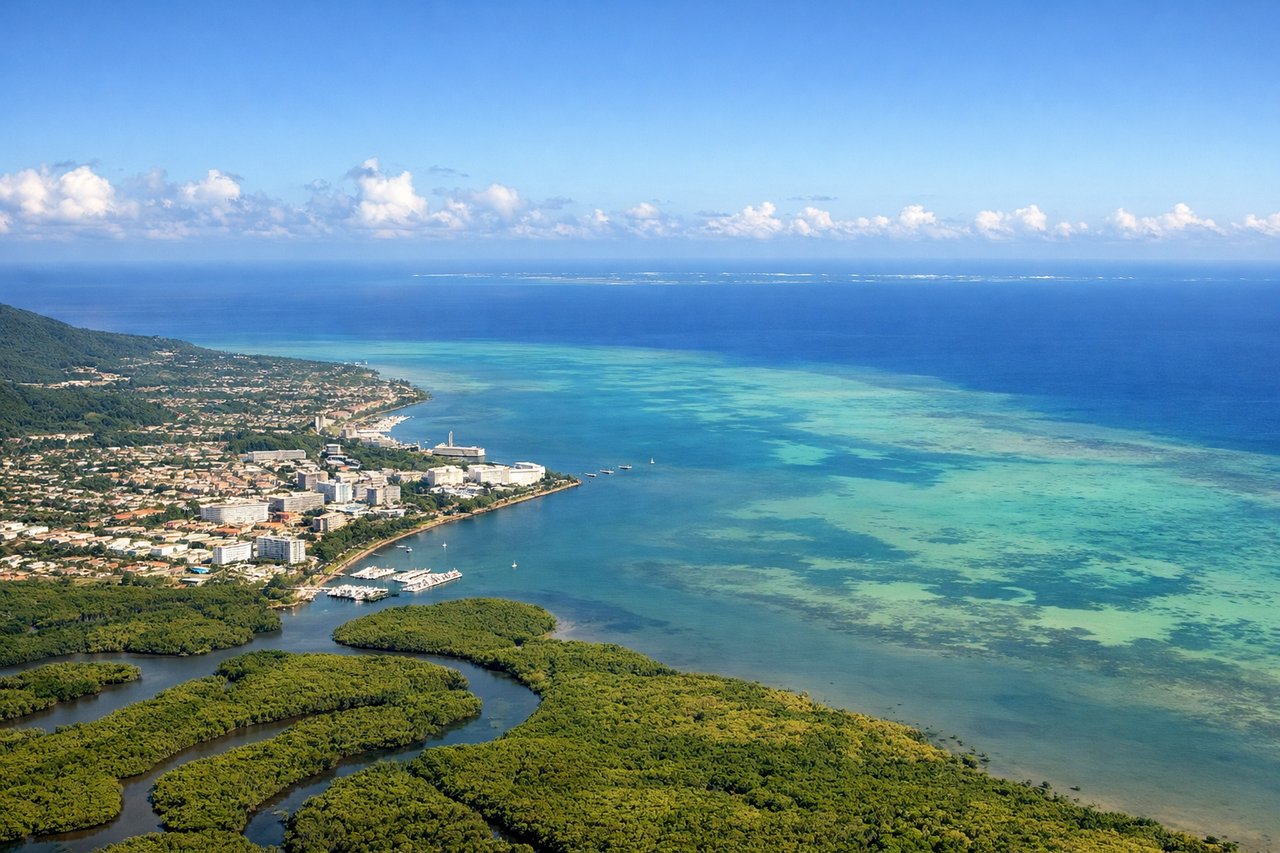
LEFTDeparting CNS on runway 15, the climb heads south with the Coral Sea and Great Barrier Reef fringing reefs visible out the left (east) side, along with Cairns' harbor and Trinity Inlet directly below. The right side shows the Atherton Tablelands' rainforest peaks, which are scenic but less distinctive than the reef.
Landing at MEL
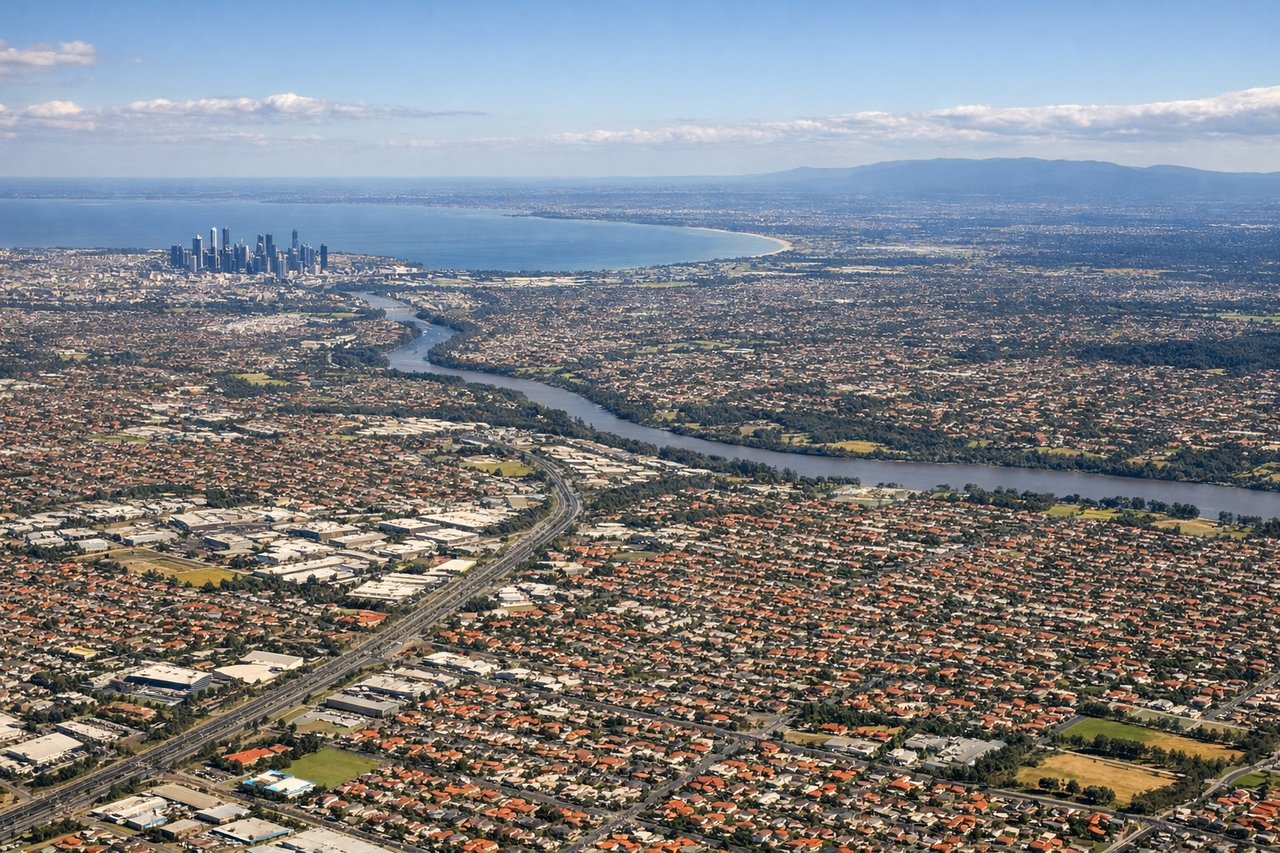
LEFTOn approach into MEL from the north, the left (east) side offers views of Melbourne's CBD skyline, the Yarra River, and Port Phillip Bay opening up beyond the city, while the right side mostly shows flat western suburbs and paddocks. The bay and skyline combination gives the left side a stronger arrival sequence.
Will your flight be in sunlight?
See exactly which side of the plane gets sun and shade at your departure time.
About This Route
Which side of the plane should I sit on flying from Cairns International (CNS) to Melbourne International (MEL)?
Sit on the Left side of the plane for the best views on flights from Cairns to Melbourne. The left side wins on both ends of the flight — the Great Barrier Reef and Coral Sea at departure, and Melbourne's skyline and Port Phillip Bay at arrival — while the long inland cruise over flat outback Queensland and NSW offers little scenery on either side.
What can I see during takeoff from Cairns International in Cairns?
During takeoff from Cairns International (CNS), sit on the Left side for the best views. Departing CNS on runway 15, the climb heads south with the Coral Sea and Great Barrier Reef fringing reefs visible out the left (east) side, along with Cairns' harbor and Trinity Inlet directly below. The right side shows the Atherton Tablelands' rainforest peaks, which are scenic but less distinctive than the reef. Notable sights include: Trinity Inlet and Cairns Marina, Coral Sea with scattered fringing reefs, Green Island and Fitzroy Island, distant Great Barrier Reef coral formations.
What can I see when landing at Melbourne International in Melbourne?
When landing at Melbourne International (MEL), sit on the Left side for the best views. On approach into MEL from the north, the left (east) side offers views of Melbourne's CBD skyline, the Yarra River, and Port Phillip Bay opening up beyond the city, while the right side mostly shows flat western suburbs and paddocks. The bay and skyline combination gives the left side a stronger arrival sequence. Notable sights include: Melbourne CBD skyline (Eureka Tower), Yarra River, Port Phillip Bay, Docklands precinct.
How long is the flight from Cairns to Melbourne?
The flight from Cairns International (CNS) to Melbourne International (MEL) takes 3h 25m.
What does the Cairns to Melbourne flight path pass over?
The route's midpoint lies over the flat, arid plains of central-western Queensland near the channel country, with the Great Dividing Range's western slopes forming a low ridge to the west; further south the flight crosses the Darling Downs and eventually the Murray River basin before descending into Victorian farmland near Melbourne.