Left side wins at both ends of the flight. At departure you get the Great Barrier Reef and Coral Sea; at arrival you get Tokyo Bay and the metropolitan area. Over the open Pacific mid-flight there is little to distinguish sides, but the bookend views strongly favor left.
Flight Path
The route crosses the Coral Sea northeast of Australia, then tracks over the open western Pacific passing east of the Philippines and Taiwan. The Ryukyu Islands chain (Okinawa and surrounding islands) may be faintly visible as small specks on clear days. The vast majority of the mid-flight is open ocean with no significant land features until the Japanese archipelago appears on approach.
Great circle distance and headings ›

Phase by phase
Takeoff from CNS
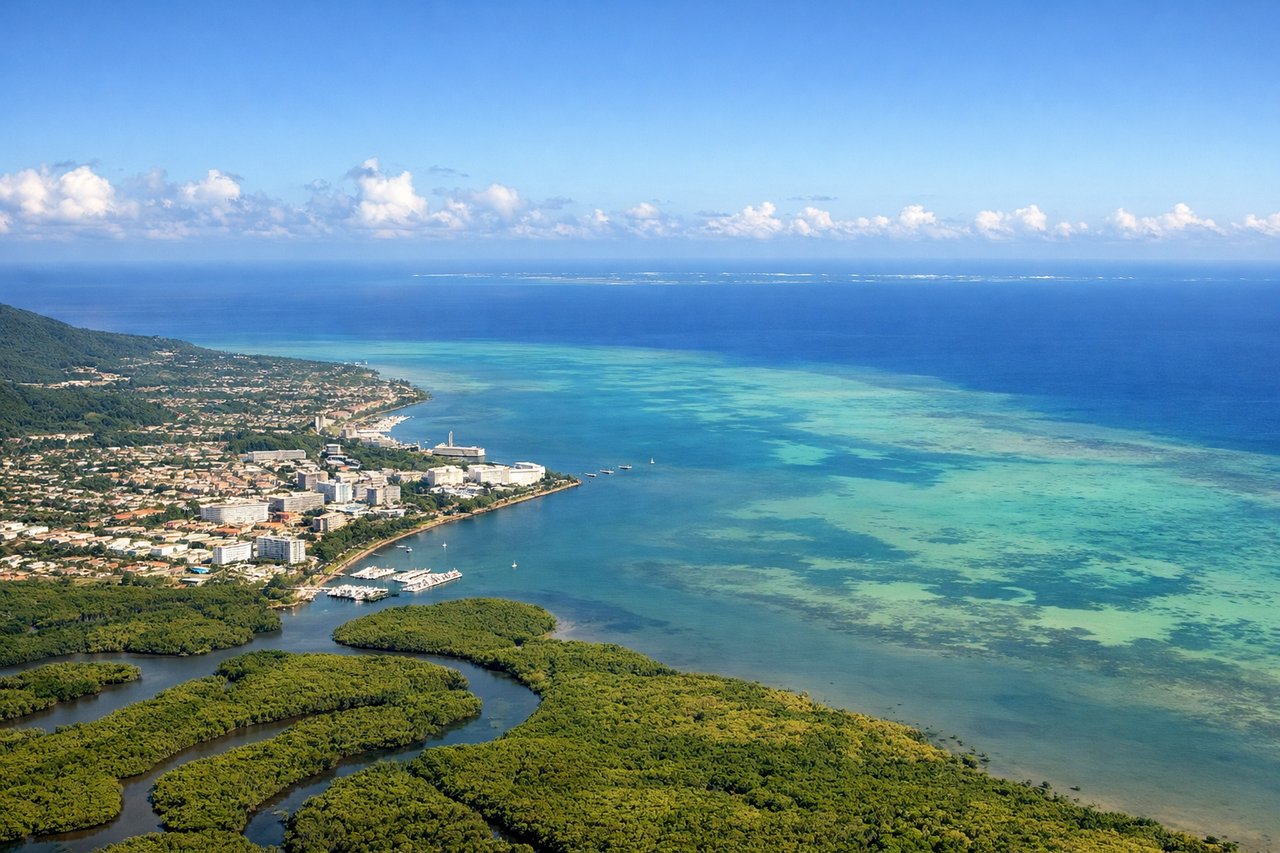
LEFTCairns airport runway 15/33 means northbound departures typically head north-northwest over the city before turning. A left seat gives you the Coral Sea and the Great Barrier Reef's inner reef structures as you climb out over Trinity Inlet and Trinity Bay. The reef's shallow turquoise lagoons and cays are unmistakable from low altitude.
Landing at NRT
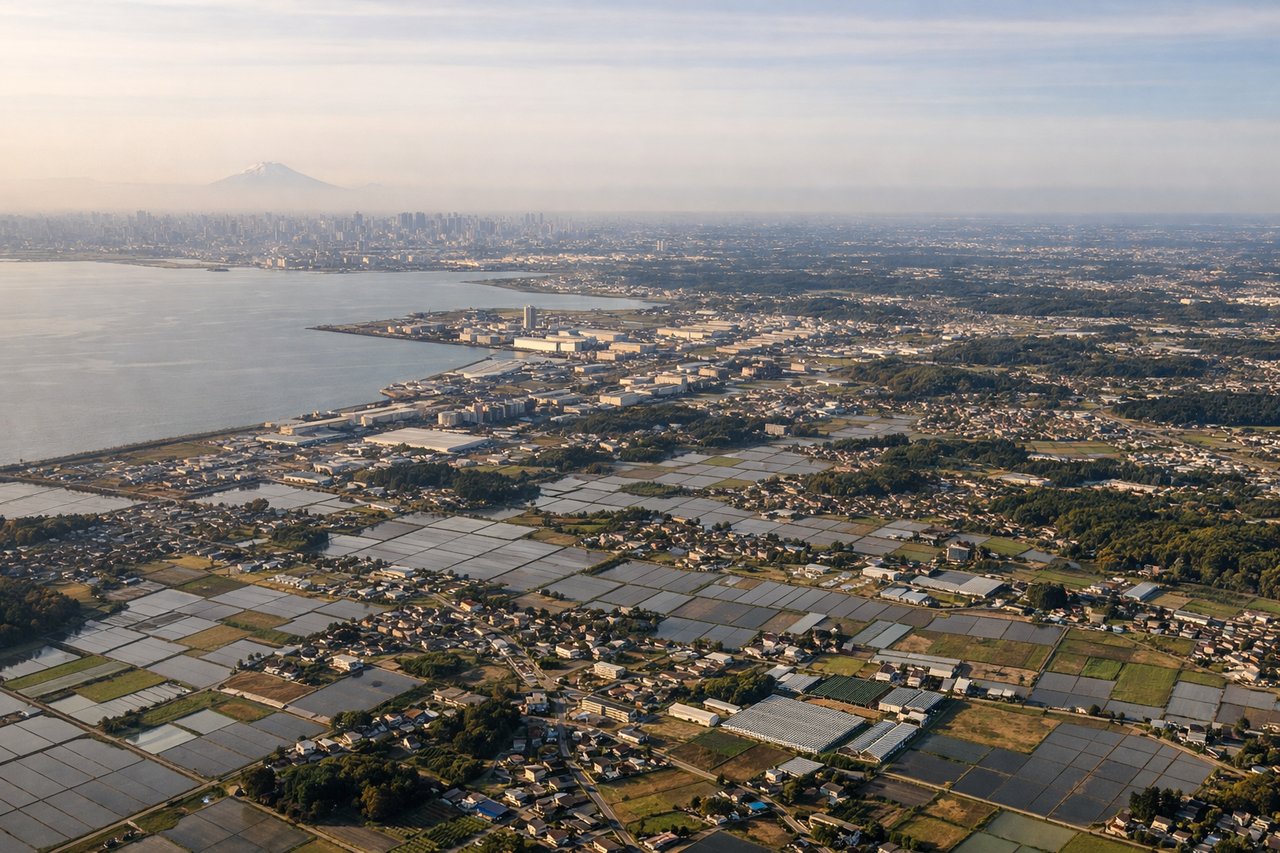
LEFTNarita airport sits east of Tokyo, and aircraft typically approach from the east or southeast on runway 16/34. A left seat on approach gives you views over the Boso Peninsula, Tokyo Bay, and the sprawling Tokyo metropolitan area including the distinctive bay reclamation zones. Mount Fuji may be visible far to the southwest on clear days.
Landmarks on this routeAll landmarks →
Will your flight be in sunlight?
See exactly which side of the plane gets sun and shade at your departure time.
About This Route
Which side of the plane should I sit on flying from Cairns International (CNS) to New Tokyo International (NRT)?
Sit on the Left side of the plane for the best views on flights from Cairns to Tokyo. Left side wins at both ends of the flight. At departure you get the Great Barrier Reef and Coral Sea; at arrival you get Tokyo Bay and the metropolitan area. Over the open Pacific mid-flight there is little to distinguish sides, but the bookend views strongly favor left.
What can I see during takeoff from Cairns International in Cairns?
During takeoff from Cairns International (CNS), sit on the Left side for the best views. Cairns airport runway 15/33 means northbound departures typically head north-northwest over the city before turning. A left seat gives you the Coral Sea and the Great Barrier Reef's inner reef structures as you climb out over Trinity Inlet and Trinity Bay. The reef's shallow turquoise lagoons and cays are unmistakable from low altitude. Notable sights include: Trinity Inlet and Trinity Bay, Great Barrier Reef inner reef lagoons and cays, Cairns city waterfront and esplanade, Coral Sea open water to the northeast.
What can I see when landing at New Tokyo International in Tokyo?
When landing at New Tokyo International (NRT), sit on the Left side for the best views. Narita airport sits east of Tokyo, and aircraft typically approach from the east or southeast on runway 16/34. A left seat on approach gives you views over the Boso Peninsula, Tokyo Bay, and the sprawling Tokyo metropolitan area including the distinctive bay reclamation zones. Mount Fuji may be visible far to the southwest on clear days. Notable sights include: Tokyo Bay and reclaimed waterfront districts, Boso Peninsula coastline, Tokyo metropolitan sprawl, Mount Fuji on the distant southwestern horizon (clear days only).
How long is the flight from Cairns to Tokyo?
The flight from Cairns International (CNS) to New Tokyo International (NRT) takes Approximately 8 to 9 hours.
What does the Cairns to Tokyo flight path pass over?
The route crosses the Coral Sea northeast of Australia, then tracks over the open western Pacific passing east of the Philippines and Taiwan. The Ryukyu Islands chain (Okinawa and surrounding islands) may be faintly visible as small specks on clear days. The vast majority of the mid-flight is open ocean with no significant land features until the Japanese archipelago appears on approach.