While takeoff favors the right side for Malta's harbor view, the cruise phase over the Peloponnese, Athens region, and the Cyclades islands, followed by the scenic Bosphorus-area approach into Istanbul, gives the left side more sustained and varied scenery overall.
Flight Path
Route crosses the Ionian Sea, passes near the Peloponnese peninsula and Athens, continues over the Aegean Sea and Cycladic islands, then crosses western Anatolia toward the Sea of Marmara.
Great circle distance and headings ›.jpg?width=600)
_in_Istanbul.jpg?width=600)
Phase by phase
Takeoff from MLA
RIGHTDeparting MLA on runway 31 heads northwest out over the sea, and the climb-out typically curves right (east) toward Istanbul, giving right-side passengers a sweeping view back over Valletta's Grand Harbour and the fortified coastline of Malta before the island falls away.
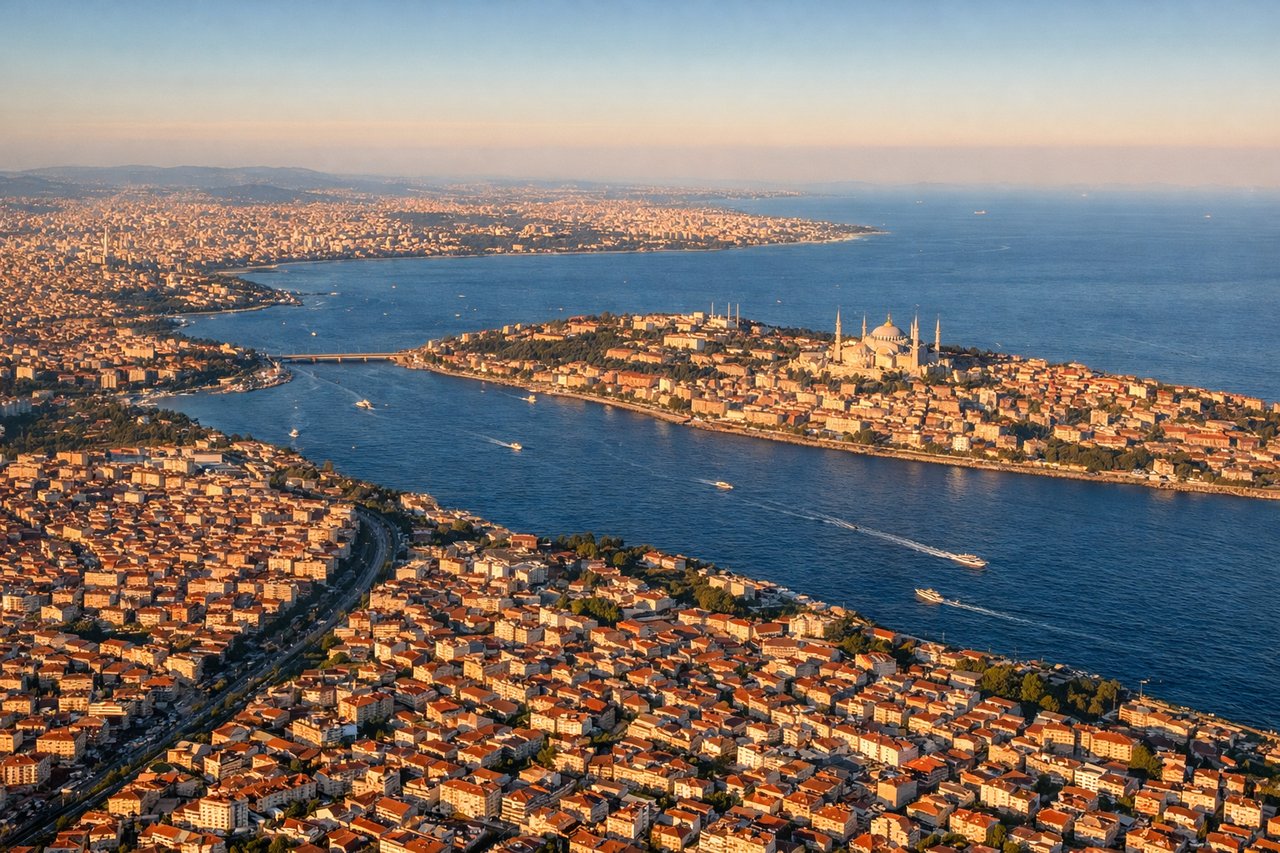
Landing at IST
LEFTArrivals into IST from the south or west often bank left to align with the northern runways, briefly revealing the Sea of Marmara, the mouth of the Bosphorus, and Istanbul's dense skyline stretching along both continents.
Landmarks on this routeAll landmarks →
Will your flight be in sunlight?
See exactly which side of the plane gets sun and shade at your departure time.
About This Route
Which side of the plane should I sit on flying from Luqa (MLA) to İstanbul Airport (IST)?
Sit on the Left side of the plane for the best views on flights from Malta to Istanbul. While takeoff favors the right side for Malta's harbor view, the cruise phase over the Peloponnese, Athens region, and the Cyclades islands, followed by the scenic Bosphorus-area approach into Istanbul, gives the left side more sustained and varied scenery overall.
What can I see during takeoff from Luqa in Malta?
During takeoff from Luqa (MLA), sit on the Right side for the best views. Departing MLA on runway 31 heads northwest out over the sea, and the climb-out typically curves right (east) toward Istanbul, giving right-side passengers a sweeping view back over Valletta's Grand Harbour and the fortified coastline of Malta before the island falls away. Notable sights include: Valletta and the Grand Harbour, Sliema coastline, Malta's limestone cliffs, the Mediterranean meeting the island's edge.
What can I see when landing at İstanbul Airport in Istanbul?
When landing at İstanbul Airport (IST), sit on the Left side for the best views. Arrivals into IST from the south or west often bank left to align with the northern runways, briefly revealing the Sea of Marmara, the mouth of the Bosphorus, and Istanbul's dense skyline stretching along both continents. Notable sights include: Sea of Marmara, Bosphorus Strait entrance, Istanbul's European and Asian shorelines, Princes' Islands.
How long is the flight from Malta to Istanbul?
The flight from Luqa (MLA) to İstanbul Airport (IST) takes 2h50m.
What does the Malta to Istanbul flight path pass over?
Route crosses the Ionian Sea, passes near the Peloponnese peninsula and Athens, continues over the Aegean Sea and Cycladic islands, then crosses western Anatolia toward the Sea of Marmara.