Takeoff views of the Mediterranean and Provençal coastline are more visually distinctive than landing views of the Great Lakes region. The Massif de l'Estérel and sea cliffs provide stronger geographic character than the relatively flat approach into Detroit.
Flight Path
The flight path crosses the Atlantic Ocean for roughly 6-7 hours. Notable waypoints include the Irish coast (if routed north), the North Atlantic, and eventual approach over Newfoundland or the Canadian Maritimes. The midpoint offers primarily open ocean with occasional cloud formations; no major landmarks are visible at cruise altitude over the Atlantic itself. As the flight approaches North America, the Canadian Shield and Great Lakes region become visible in the final 2-3 hours.
Great circle distance and headings ›.jpeg?width=600)

Phase by phase
Takeoff from MRS
RIGHTMarseille typically departs runway 32L/R (northwesterly heading). Right-side seats face the Mediterranean Sea and the Massif de l'Estérel coastline during initial climb. Left seats look inland toward less dramatic terrain.
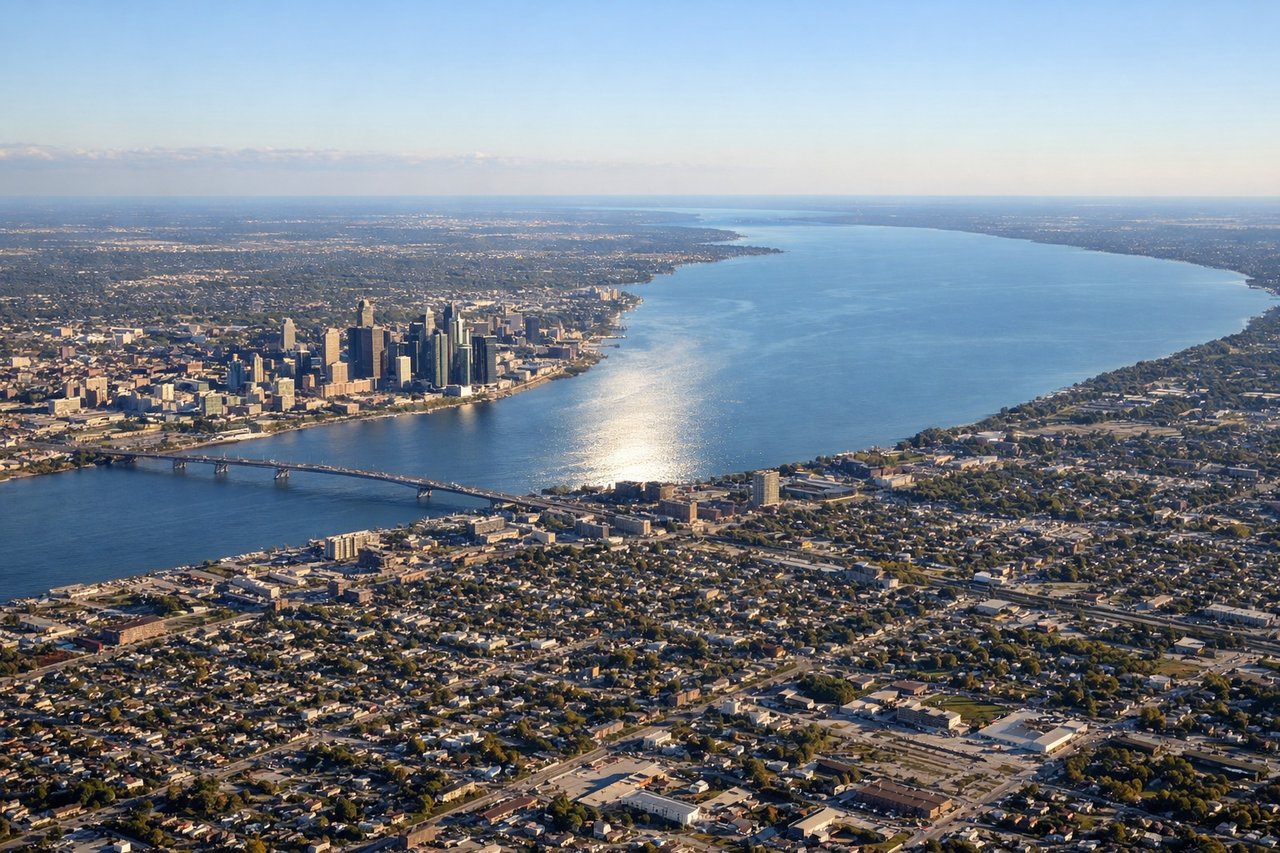
Landing at DTW
LEFTDetroit Metro typically lands runway 03L/R (northerly heading) or 21L/R (southerly). On approach from the east, left-side seats offer views of Lake St. Clair and the Detroit River system. Right seats face inland toward less distinctive suburban sprawl.
Landmarks on this routeAll landmarks →
Will your flight be in sunlight?
See exactly which side of the plane gets sun and shade at your departure time.
About This Route
Which side of the plane should I sit on flying from Provence (MRS) to Detroit Metro Wayne Co (DTW)?
Sit on the Right side of the plane for the best views on flights from Marseille to Detroit. Takeoff views of the Mediterranean and Provençal coastline are more visually distinctive than landing views of the Great Lakes region. The Massif de l'Estérel and sea cliffs provide stronger geographic character than the relatively flat approach into Detroit.
What can I see during takeoff from Provence in Marseille?
During takeoff from Provence (MRS), sit on the Right side for the best views. Marseille typically departs runway 32L/R (northwesterly heading). Right-side seats face the Mediterranean Sea and the Massif de l'Estérel coastline during initial climb. Left seats look inland toward less dramatic terrain. Notable sights include: Mediterranean Sea (immediate right), Massif de l'Estérel (reddish rocky hills southeast), Îles d'Hyères archipelago (small islands visible on horizon), Gulf of Lion coastline.
What can I see when landing at Detroit Metro Wayne Co in Detroit?
When landing at Detroit Metro Wayne Co (DTW), sit on the Left side for the best views. Detroit Metro typically lands runway 03L/R (northerly heading) or 21L/R (southerly). On approach from the east, left-side seats offer views of Lake St. Clair and the Detroit River system. Right seats face inland toward less distinctive suburban sprawl. Notable sights include: Lake St. Clair (large freshwater lake), Detroit River (narrow waterway connecting to Lake Erie), Lake Erie (southern horizon), Windsor, Ontario across the river.
How long is the flight from Marseille to Detroit?
The flight from Provence (MRS) to Detroit Metro Wayne Co (DTW) takes Approximately 9.5 to 10.5 hours.
What does the Marseille to Detroit flight path pass over?
The flight path crosses the Atlantic Ocean for roughly 6-7 hours. Notable waypoints include the Irish coast (if routed north), the North Atlantic, and eventual approach over Newfoundland or the Canadian Maritimes. The midpoint offers primarily open ocean with occasional cloud formations; no major landmarks are visible at cruise altitude over the Atlantic itself. As the flight approaches North America, the Canadian Shield and Great Lakes region become visible in the final 2-3 hours.