While the landing approach favors left seats, the takeoff from Nassau offers more dramatic and visually distinctive scenery—the Bahama Banks' turquoise waters and color gradients are more striking than New Jersey's industrial waterfront. Right-side seats capture the flight's most memorable visual moment.
Flown NAS to EWR? Did we get it right?
Flight Path
Nassau to Newark is 1,098 miles (1,767 km), a flight of about 3 hours 15 minutes.
The flight path crosses the Atlantic Ocean northeast from Nassau. Notable features include the Gulf Stream's darker blue waters (visible as a distinct color band), the Carolina coast with the Outer Banks appearing as thin barrier islands, and the continental shelf edge where water color transitions from light turquoise to deep blue. Over the Atlantic, the flight passes east of Bermuda (not visible from typical cruising altitude and flight path). As the aircraft approaches the U.S. mainland, the Delaware and Chesapeake Bay regions become visible, followed by the New Jersey coast and Hudson River estuary.
Great circle distance and headings ›


Phase by phase

Takeoff from NAS
RIGHTRight-side seats offer the best views during Nassau departure. The aircraft typically climbs northwestward, giving right-side passengers clear views of the Bahama Banks' shallow turquoise waters and the Nassau harbor complex as it recedes below.
Landing at EWR
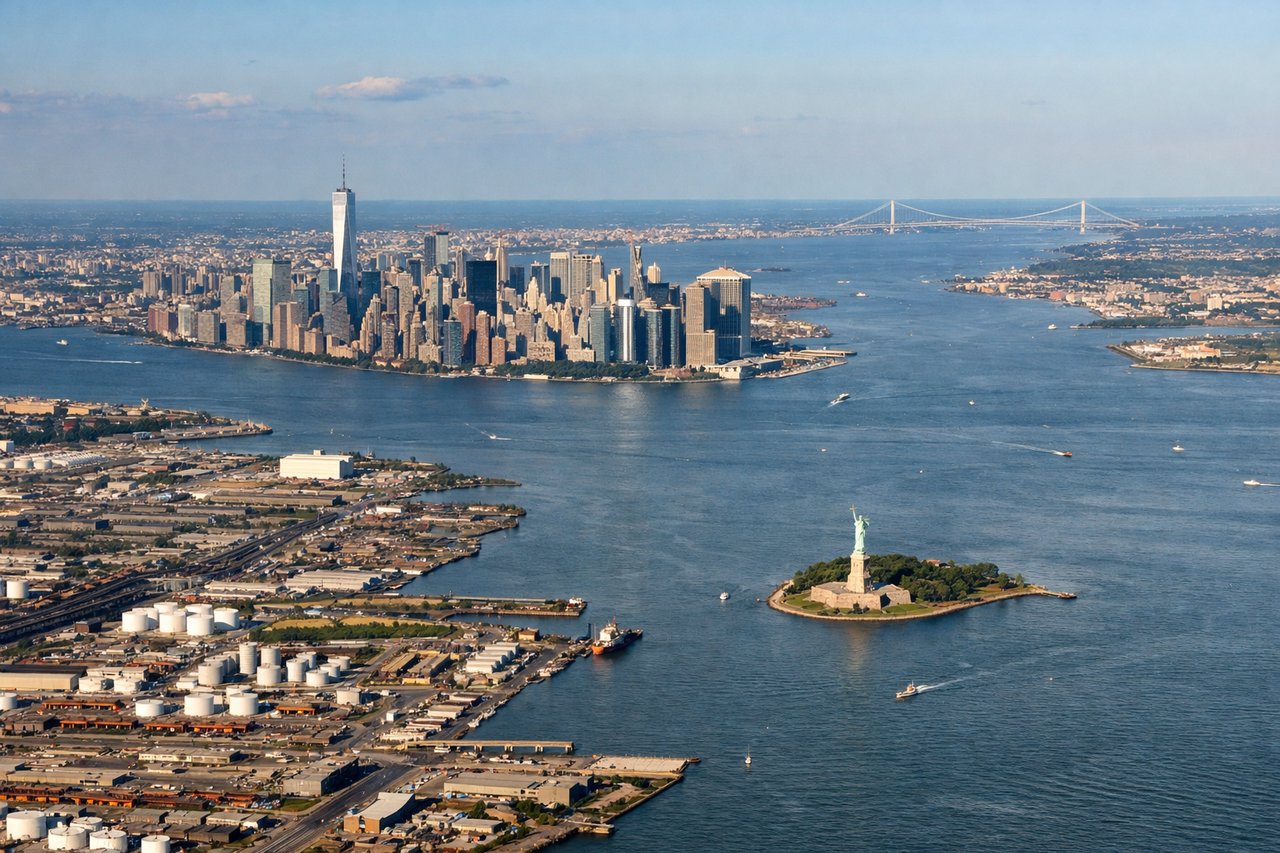
LEFTLeft-side seats provide superior views during Newark approach. Aircraft descend from the southwest over New Jersey, and left-side passengers see the Hudson River, Manhattan skyline, and the New Jersey Palisades as the plane lines up for runway approach into Newark.
Will your flight be in sunlight?
Pick a date and time in the Sun Map to watch the sun move across your whole flight.
About This Route
Which side of the plane should I sit on flying from Nassau International (NAS) to Newark Liberty International (EWR)?
Sit on the Right side of the plane for the best views on flights from Nassau to Newark. While the landing approach favors left seats, the takeoff from Nassau offers more dramatic and visually distinctive scenery—the Bahama Banks' turquoise waters and color gradients are more striking than New Jersey's industrial waterfront. Right-side seats capture the flight's most memorable visual moment.
What can I see during takeoff from Nassau International in Nassau?
During takeoff from Nassau International (NAS), sit on the Right side for the best views. Right-side seats offer the best views during Nassau departure. The aircraft typically climbs northwestward, giving right-side passengers clear views of the Bahama Banks' shallow turquoise waters and the Nassau harbor complex as it recedes below. Notable sights include: Nassau harbor and downtown Nassau, Bahama Banks (shallow turquoise waters), Paradise Island, New Providence Island coastline.
What can I see when landing at Newark Liberty International in Newark?
When landing at Newark Liberty International (EWR), sit on the Left side for the best views. Left-side seats provide superior views during Newark approach. Aircraft descend from the southwest over New Jersey, and left-side passengers see the Hudson River, Manhattan skyline, and the New Jersey Palisades as the plane lines up for runway approach into Newark. Notable sights include: Hudson River, Manhattan skyline, New Jersey Palisades, Newark Bay and industrial waterfront.
How long is the flight from Nassau to Newark?
The flight from Nassau International (NAS) to Newark Liberty International (EWR) takes about 3 hours 15 minutes. The shortest flight path between them is 1,098 miles (1,767 km); winds and air traffic control usually add a few percent.
What does the Nassau to Newark flight path pass over?
The flight path crosses the Atlantic Ocean northeast from Nassau. Notable features include the Gulf Stream's darker blue waters (visible as a distinct color band), the Carolina coast with the Outer Banks appearing as thin barrier islands, and the continental shelf edge where water color transitions from light turquoise to deep blue. Over the Atlantic, the flight passes east of Bermuda (not visible from typical cruising altitude and flight path). As the aircraft approaches the U.S. mainland, the Delaware and Chesapeake Bay regions become visible, followed by the New Jersey coast and Hudson River estuary.