New Orleans to Cancun is 638 miles (1,027 km), a flight of about 2 hours 15 minutes.
Right-side seats win both takeoff and landing. The departure offers the dramatic Mississippi delta and Gulf transition, while arrival showcases Cancun's iconic Caribbean turquoise waters and beach development—the most visually distinctive segments of this route.
Flight Path
The flight path crosses the Gulf of Mexico in a south-southeast direction. Notable features include the Yucatan Channel (the deep water passage between Cuba and Mexico's Yucatan Peninsula), visible as a darker blue zone in the water. The Yucatan Peninsula's northern coastline becomes visible during descent, showing the distinctive limestone karst terrain and cenote formations (though individual cenotes aren't visible at cruise altitude). The shallow Campeche Bank waters transition to deeper Caribbean blue as you approach Cancun. No major islands or mountain ranges are visible on this route—it's primarily water and low-lying coastal terrain.
Great circle distance and headings ›
Phase by phase
Takeoff from NBG
RIGHTNAS JRB typically departs eastbound (Runway 18L/R or 01L/R depending on wind). Right-side seats offer views of Lake Pontchartrain's northern shore and the Mississippi River delta as you climb out over the Gulf of Mexico approach zone.
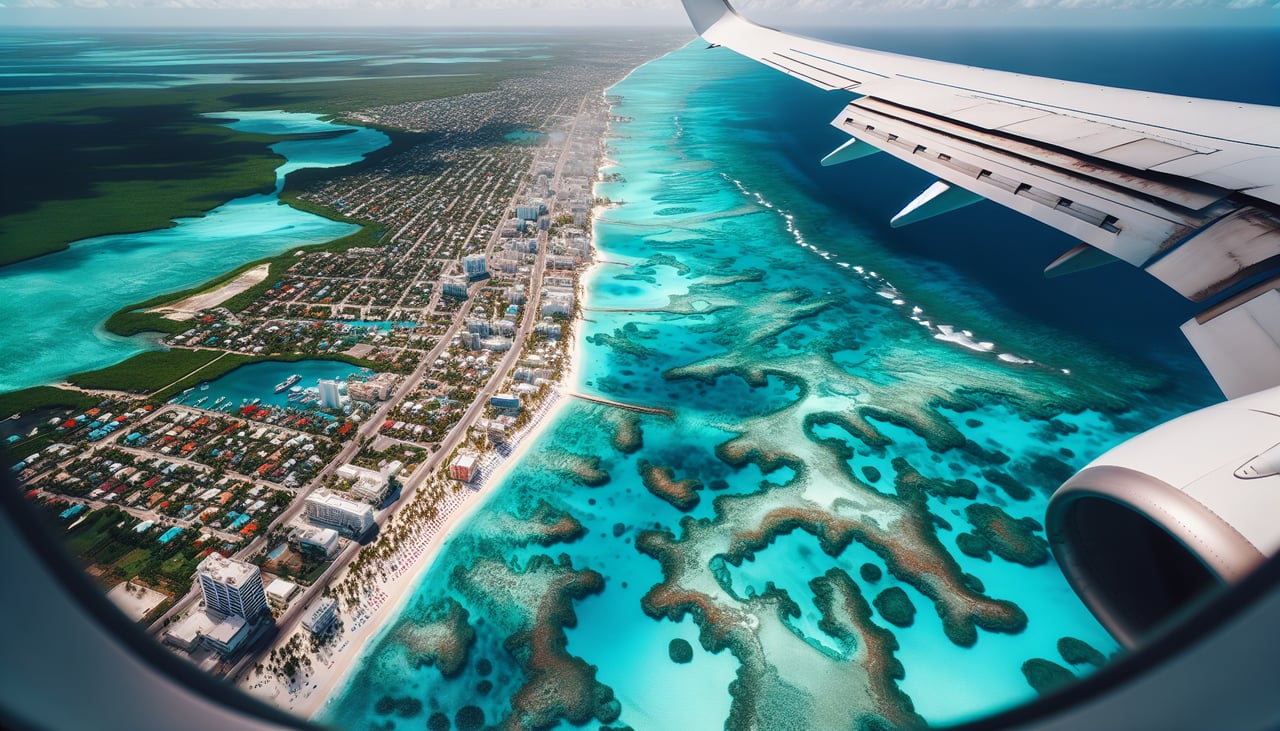
Landing at CUN
RIGHTCancun typically lands westbound (Runway 09). Right-side seats provide views of the Yucatan Peninsula's Caribbean coastline, Cancun's hotel zone along the beach, and the turquoise shallow waters of the Caribbean Sea during descent.
Landmarks on this routeAll landmarks →
Will your flight be in sunlight?
Pick a date and time in the Sun Map to watch the sun move across your whole flight.
About This Route
Which side of the plane should I sit on flying from New Orleans Nas Jrb (NBG) to Cancun International (CUN)?
Sit on the Right side of the plane for the best views on flights from New Orleans to Cancun. Right-side seats win both takeoff and landing. The departure offers the dramatic Mississippi delta and Gulf transition, while arrival showcases Cancun's iconic Caribbean turquoise waters and beach development—the most visually distinctive segments of this route.
What can I see during takeoff from New Orleans Nas Jrb in New Orleans?
During takeoff from New Orleans Nas Jrb (NBG), sit on the Right side for the best views. NAS JRB typically departs eastbound (Runway 18L/R or 01L/R depending on wind). Right-side seats offer views of Lake Pontchartrain's northern shore and the Mississippi River delta as you climb out over the Gulf of Mexico approach zone. Notable sights include: Lake Pontchartrain (immediate north), Mississippi River delta and distributaries (southeast), Gulf of Mexico (east), New Orleans metro sprawl (west/southwest).
What can I see when landing at Cancun International in Cancun?
When landing at Cancun International (CUN), sit on the Right side for the best views. Cancun typically lands westbound (Runway 09). Right-side seats provide views of the Yucatan Peninsula's Caribbean coastline, Cancun's hotel zone along the beach, and the turquoise shallow waters of the Caribbean Sea during descent. Notable sights include: Caribbean Sea and shallow turquoise waters (east/right), Cancun hotel zone beachfront (north), Yucatan Peninsula limestone terrain (west/inland), Laguna Nichupté (south of hotel zone).
How long is the flight from New Orleans to Cancun?
The flight from New Orleans Nas Jrb (NBG) to Cancun International (CUN) takes about 2 hours 15 minutes. The shortest flight path between them is 638 miles (1,027 km); winds and air traffic control usually add a few percent.
What does the New Orleans to Cancun flight path pass over?
The flight path crosses the Gulf of Mexico in a south-southeast direction. Notable features include the Yucatan Channel (the deep water passage between Cuba and Mexico's Yucatan Peninsula), visible as a darker blue zone in the water. The Yucatan Peninsula's northern coastline becomes visible during descent, showing the distinctive limestone karst terrain and cenote formations (though individual cenotes aren't visible at cruise altitude). The shallow Campeche Bank waters transition to deeper Caribbean blue as you approach Cancun. No major islands or mountain ranges are visible on this route—it's primarily water and low-lying coastal terrain.