While takeoff offers dramatic Rift Valley geology, the landing approach into Paris provides more sustained scenic interest over a longer portion of the flight. The Seine's meanders and the transition from rural Île-de-France to Paris proper offer more varied visual landmarks during the critical final descent phase.
Flown NBO to CDG? Did we get it right?
Flight Path
Nairobi to Paris is 4,036 miles (6,495 km), a flight of about 7 hours 15 minutes.
The flight path crosses the Sahara Desert (minimal visual interest—sand and sparse terrain), then transitions over the Mediterranean coast near Libya or Tunisia (coastline visible), continues over southern Italy or Sicily (Mediterranean islands and coastlines), and approaches Europe via the Alps or southern France depending on routing. The Mediterranean crossing and Alpine approaches offer the most notable midpoint scenery.
Great circle distance and headings ›


Phase by phase
Takeoff from NBO
LEFTLeft side offers immediate views of the Nairobi plateau and the Rift Valley escarpment as the aircraft climbs northwestward. The terrain drops dramatically to the west, creating distinctive visual relief.
Landing at CDG
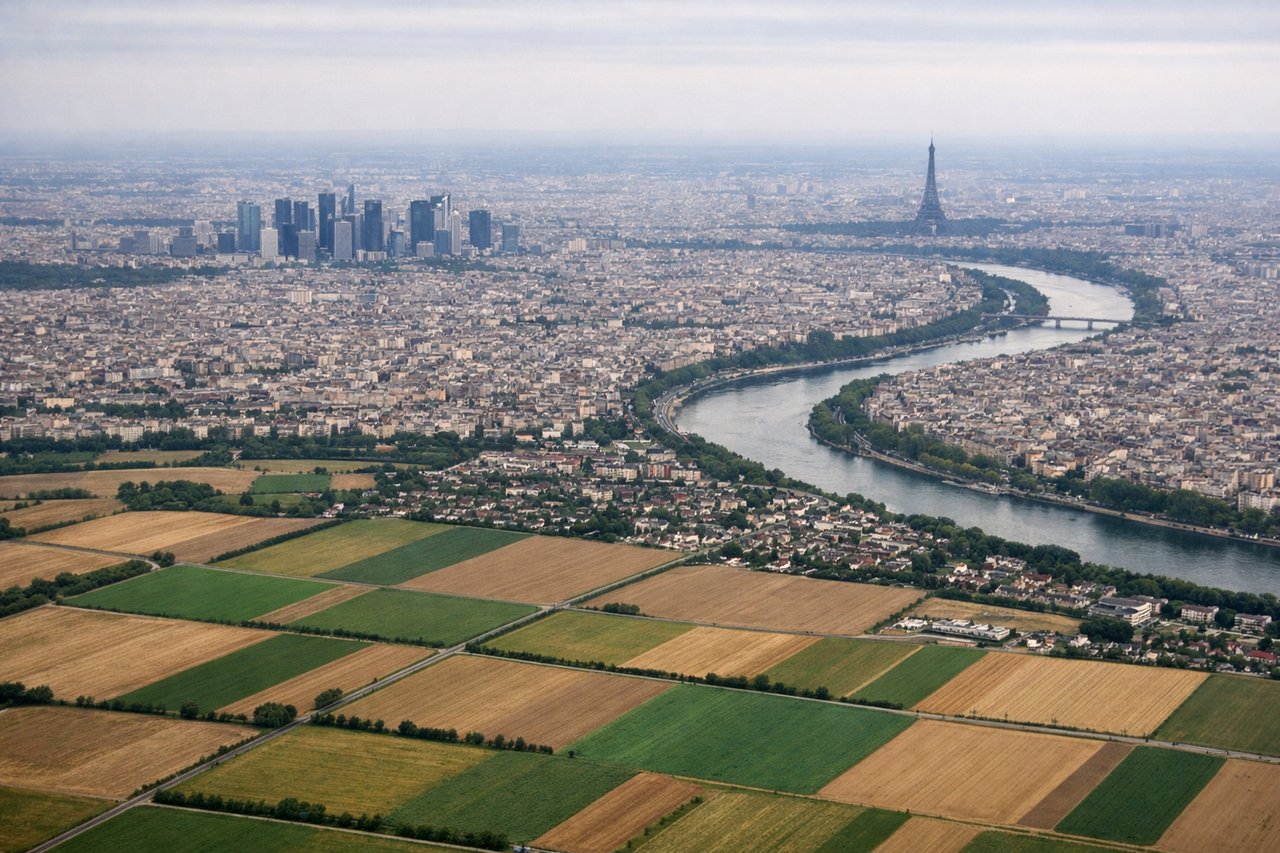
RIGHTRight side provides views of the Seine River's distinctive loops through the Île-de-France region and the approach to Paris from the southeast. The river's meanders and the surrounding patchwork of agricultural fields create clear visual landmarks during descent.
Will your flight be in sunlight?
Pick a date and time in the Sun Map to watch the sun move across your whole flight.
About This Route
Which side of the plane should I sit on flying from Jomo Kenyatta International (NBO) to Charles De Gaulle (CDG)?
Sit on the Right side of the plane for the best views on flights from Nairobi to Paris. While takeoff offers dramatic Rift Valley geology, the landing approach into Paris provides more sustained scenic interest over a longer portion of the flight. The Seine's meanders and the transition from rural Île-de-France to Paris proper offer more varied visual landmarks during the critical final descent phase.
What can I see during takeoff from Jomo Kenyatta International in Nairobi?
During takeoff from Jomo Kenyatta International (NBO), sit on the Left side for the best views. Left side offers immediate views of the Nairobi plateau and the Rift Valley escarpment as the aircraft climbs northwestward. The terrain drops dramatically to the west, creating distinctive visual relief. Notable sights include: Nairobi city grid, Rift Valley escarpment, Mount Kenya (distant northeastern horizon during climb), Aberdare Range (western skyline).
What can I see when landing at Charles De Gaulle in Paris?
When landing at Charles De Gaulle (CDG), sit on the Right side for the best views. Right side provides views of the Seine River's distinctive loops through the Île-de-France region and the approach to Paris from the southeast. The river's meanders and the surrounding patchwork of agricultural fields create clear visual landmarks during descent. Notable sights include: Seine River with characteristic meanders, Île-de-France agricultural grid, Orly Airport (southern approach), Paris city center with Seine islands.
How long is the flight from Nairobi to Paris?
The flight from Jomo Kenyatta International (NBO) to Charles De Gaulle (CDG) takes about 7 hours 15 minutes. The shortest flight path between them is 4,036 miles (6,495 km); winds and air traffic control usually add a few percent.
What does the Nairobi to Paris flight path pass over?
The flight path crosses the Sahara Desert (minimal visual interest—sand and sparse terrain), then transitions over the Mediterranean coast near Libya or Tunisia (coastline visible), continues over southern Italy or Sicily (Mediterranean islands and coastlines), and approaches Europe via the Alps or southern France depending on routing. The Mediterranean crossing and Alpine approaches offer the most notable midpoint scenery.