While the Nairobi departure offers dramatic Rift Valley terrain, the JFK approach delivers superior scenery with Manhattan's iconic skyline, New York Harbor, and the Atlantic coastline—landmarks of global recognition and visual impact. The landing sequence on the right side outweighs the takeoff advantage on the left. The transatlantic cruise itself is predominantly open ocean (5+ hours), which limits both sides equally, but the destination arrival is significantly more scenic on the right.
Flown NBO to JFK? Did we get it right?
Flight Path
Nairobi to New York is 7,355 miles (11,837 km), a flight of about 15 hours 20 minutes.
The flight path crosses the Sahara Desert (featureless tan expanse), the Atlas Mountains near Morocco (if visible during daylight), the Atlantic Ocean (5+ hours of open water with occasional cloud formations), and approaches the North American continent over Newfoundland and the Canadian Maritimes before descending toward the northeastern United States. The Appalachian Mountains may be visible during the final approach phase if flying over Pennsylvania or New York state, but most of the cruise is open ocean with minimal landmark visibility.
Great circle distance and headings ›


Phase by phase
Takeoff from NBO
LEFTNairobi departure offers immediate views of the East African highlands and the city's urban sprawl. Left side captures the Rift Valley escarpment and surrounding plateau terrain during climb-out.
Landing at JFK
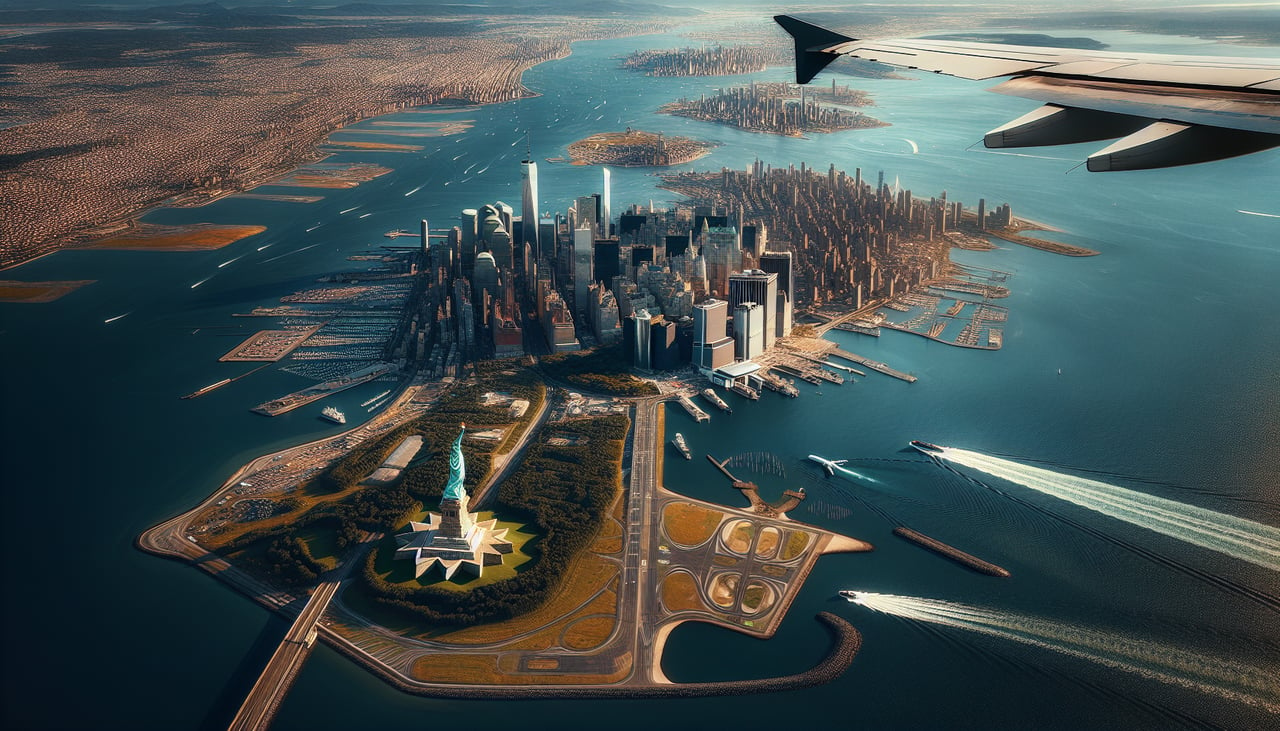
RIGHTThe approach to JFK from the southwest provides superior scenery: the Hudson River estuary, Manhattan's skyline, and the Atlantic coastline. Right side captures the iconic urban landscape and water features during descent.
Will your flight be in sunlight?
Pick a date and time in the Sun Map to watch the sun move across your whole flight.
About This Route
Which side of the plane should I sit on flying from Jomo Kenyatta International (NBO) to John F Kennedy International (JFK)?
Sit on the Right side of the plane for the best views on flights from Nairobi to New York. While the Nairobi departure offers dramatic Rift Valley terrain, the JFK approach delivers superior scenery with Manhattan's iconic skyline, New York Harbor, and the Atlantic coastline—landmarks of global recognition and visual impact. The landing sequence on the right side outweighs the takeoff advantage on the left. The transatlantic cruise itself is predominantly open ocean (5+ hours), which limits both sides equally, but the destination arrival is significantly more scenic on the right.
What can I see during takeoff from Jomo Kenyatta International in Nairobi?
During takeoff from Jomo Kenyatta International (NBO), sit on the Left side for the best views. Nairobi departure offers immediate views of the East African highlands and the city's urban sprawl. Left side captures the Rift Valley escarpment and surrounding plateau terrain during climb-out. Notable sights include: Nairobi city grid and suburbs, Rift Valley western escarpment, Central Highlands plateau, Mount Kenya (visible on clear days to the northeast, but left side shows the terrain leading toward it).
What can I see when landing at John F Kennedy International in New York?
When landing at John F Kennedy International (JFK), sit on the Right side for the best views. The approach to JFK from the southwest provides superior scenery: the Hudson River estuary, Manhattan's skyline, and the Atlantic coastline. Right side captures the iconic urban landscape and water features during descent. Notable sights include: Manhattan skyline and East River, Hudson River estuary, New York Harbor with Governors Island and Liberty Island, Atlantic coastline and Rockaway Peninsula.
How long is the flight from Nairobi to New York?
The flight from Jomo Kenyatta International (NBO) to John F Kennedy International (JFK) takes about 15 hours 20 minutes. The shortest flight path between them is 7,355 miles (11,837 km); winds and air traffic control usually add a few percent.
What does the Nairobi to New York flight path pass over?
The flight path crosses the Sahara Desert (featureless tan expanse), the Atlas Mountains near Morocco (if visible during daylight), the Atlantic Ocean (5+ hours of open water with occasional cloud formations), and approaches the North American continent over Newfoundland and the Canadian Maritimes before descending toward the northeastern United States. The Appalachian Mountains may be visible during the final approach phase if flying over Pennsylvania or New York state, but most of the cruise is open ocean with minimal landmark visibility.