The right side wins mainly on the strength of the Nice departure, which offers a genuinely dramatic combination of Riviera coastline, harbor towns, and Alpine foothills — a stronger sustained scene than the brief, distant Paris skyline glimpse on landing.
Flight Path
Rhone Valley and the western edge of the French Alps near Grenoble, followed by the rolling vineyard country of Burgundy before descending into the flat Paris basin
Great circle distance and headings ›
.jpg?width=600)
Phase by phase
Takeoff from NCE
RIGHTNice departs on runway 22 over the Mediterranean, then banks north toward Paris, giving right-side passengers a sweeping view back over the Baie des Anges, the Nice waterfront, and the foothills of the Alps rising behind Cap Ferrat and Monaco. Left-side passengers mostly see open sea during this turn.
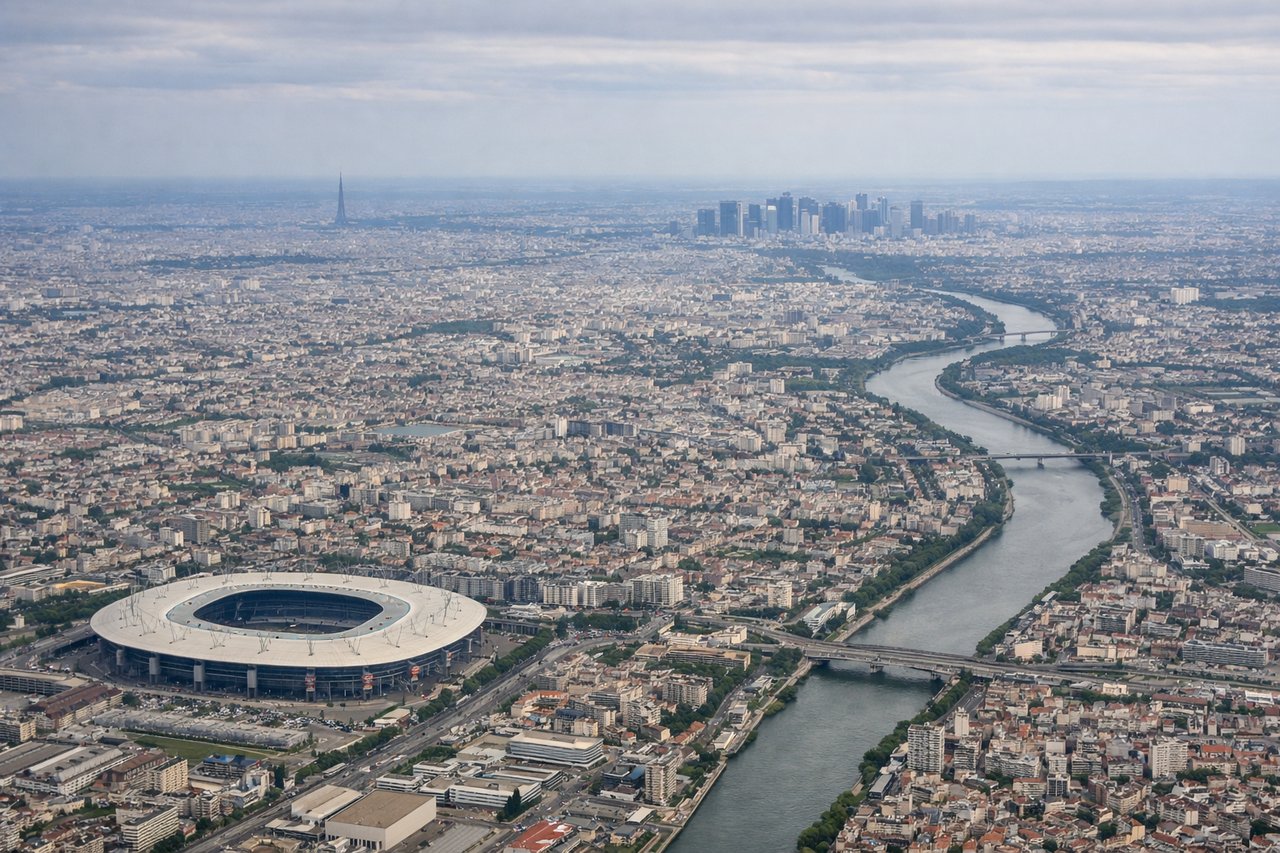
Landing at CDG
LEFTArrivals into CDG from the south typically loop toward the west runways, and during this turn the left side often faces central Paris, offering a distant but recognizable view of the Eiffel Tower and the Seine winding through the city before the final descent over farmland north of Paris.
Landmarks on this routeAll landmarks →
Will your flight be in sunlight?
See exactly which side of the plane gets sun and shade at your departure time.
About This Route
Which side of the plane should I sit on flying from Cote D Azur (NCE) to Charles De Gaulle (CDG)?
Sit on the Right side of the plane for the best views on flights from Nice to Paris. The right side wins mainly on the strength of the Nice departure, which offers a genuinely dramatic combination of Riviera coastline, harbor towns, and Alpine foothills — a stronger sustained scene than the brief, distant Paris skyline glimpse on landing.
What can I see during takeoff from Cote D Azur in Nice?
During takeoff from Cote D Azur (NCE), sit on the Right side for the best views. Nice departs on runway 22 over the Mediterranean, then banks north toward Paris, giving right-side passengers a sweeping view back over the Baie des Anges, the Nice waterfront, and the foothills of the Alps rising behind Cap Ferrat and Monaco. Left-side passengers mostly see open sea during this turn. Notable sights include: Baie des Anges, Cap Ferrat, Monaco coastline, Alpes-Maritimes foothills.
What can I see when landing at Charles De Gaulle in Paris?
When landing at Charles De Gaulle (CDG), sit on the Left side for the best views. Arrivals into CDG from the south typically loop toward the west runways, and during this turn the left side often faces central Paris, offering a distant but recognizable view of the Eiffel Tower and the Seine winding through the city before the final descent over farmland north of Paris. Notable sights include: Eiffel Tower, Seine River, La Défense skyline, Paris northern suburbs.
How long is the flight from Nice to Paris?
The flight from Cote D Azur (NCE) to Charles De Gaulle (CDG) takes 1h20m.
What does the Nice to Paris flight path pass over?
Rhone Valley and the western edge of the French Alps near Grenoble, followed by the rolling vineyard country of Burgundy before descending into the flat Paris basin