Oakland to Amsterdam is 5,449 miles (8,769 km), a flight of about 10 hours 30 minutes.
Left side wins at both ends of the flight. At departure you get San Francisco Bay and the Golden Gate, and at arrival you get Amsterdam's canal ring on approach. Over the Arctic routing the scenery is largely symmetric, so the departure and arrival views are the deciding factor.
Flight Path
The polar great circle route takes the flight north over the Sierra Nevada, then across the Canadian Rockies and Hudson Bay, over southern Greenland's ice sheet and coastal fjords, across the North Atlantic, over Iceland or just south of it, then across the Norwegian Sea and into northern Denmark before descending into the Netherlands. Greenland's ice cap and the Greenlandic fjord coastline are the most visually dramatic midpoint features, visible on clear days from either side depending on exact routing.
Great circle distance and headings ›
.jpg?width=600)


Phase by phase
Takeoff from OAK
LEFTOAK typically departs westward over the bay on runway 28L/28R, then turns northwest. Left side gives you San Francisco, the Bay Bridge, and the full sweep of San Francisco Bay before climbing over Marin County. The city skyline and Golden Gate are clearly visible on the left as you bank north.
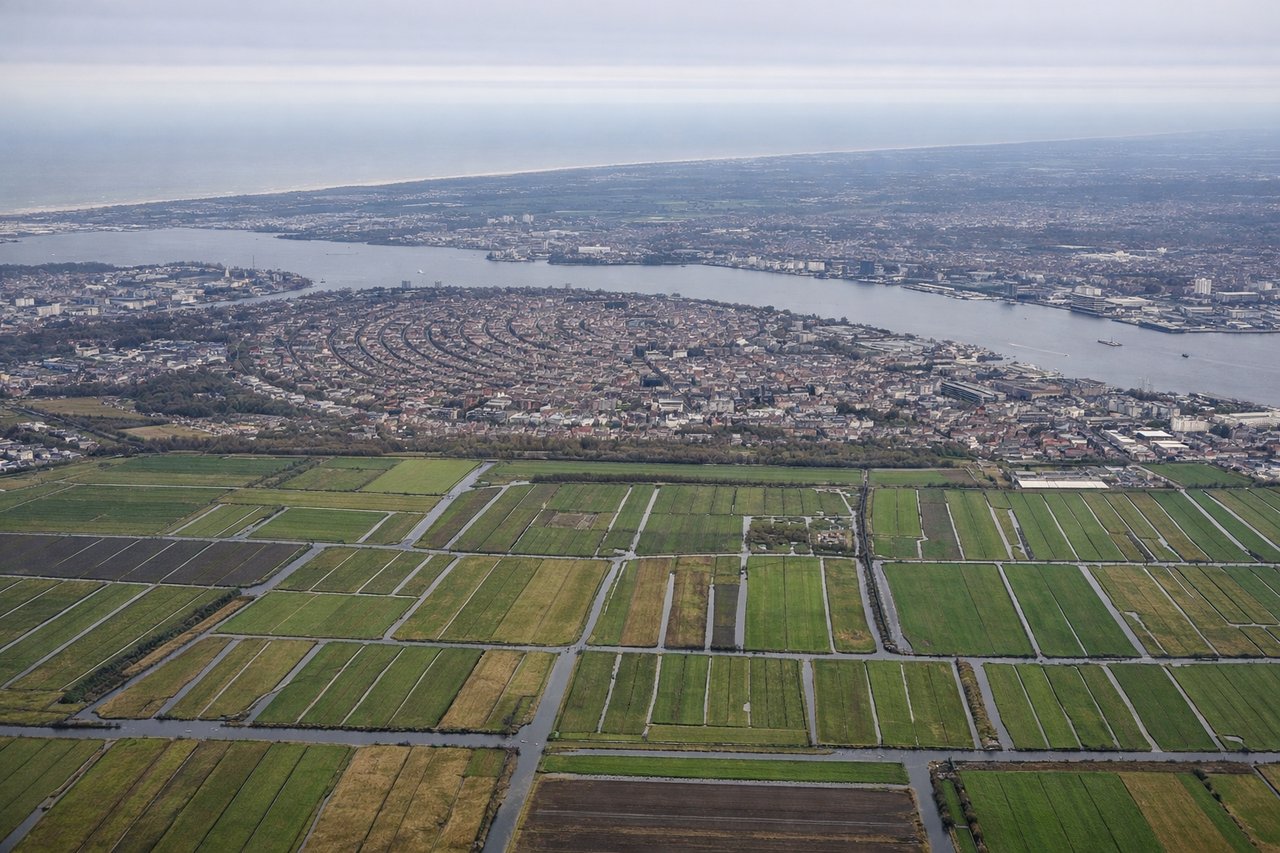
Landing at AMS
LEFTSchiphol typically lands from the east or southeast on runways 18R, 22, or 36C depending on wind. On the common easterly approach, the left side faces south toward Amsterdam's canal ring and the city center, which is clearly visible a few miles northeast of the airport. The flat Dutch polder landscape with its geometric fields and waterways is spread out below on both sides, but the left side captures Amsterdam proper.
Landmarks on this routeAll landmarks →
Will your flight be in sunlight?
Pick a date and time in the Sun Map to watch the sun move across your whole flight.
About This Route
Which side of the plane should I sit on flying from Metropolitan Oakland International (OAK) to Schiphol (AMS)?
Sit on the Left side of the plane for the best views on flights from Oakland to Amsterdam. Left side wins at both ends of the flight. At departure you get San Francisco Bay and the Golden Gate, and at arrival you get Amsterdam's canal ring on approach. Over the Arctic routing the scenery is largely symmetric, so the departure and arrival views are the deciding factor.
What can I see during takeoff from Metropolitan Oakland International in Oakland?
During takeoff from Metropolitan Oakland International (OAK), sit on the Left side for the best views. OAK typically departs westward over the bay on runway 28L/28R, then turns northwest. Left side gives you San Francisco, the Bay Bridge, and the full sweep of San Francisco Bay before climbing over Marin County. The city skyline and Golden Gate are clearly visible on the left as you bank north. Notable sights include: San Francisco skyline, Bay Bridge, Golden Gate Bridge, Marin Headlands.
What can I see when landing at Schiphol in Amsterdam?
When landing at Schiphol (AMS), sit on the Left side for the best views. Schiphol typically lands from the east or southeast on runways 18R, 22, or 36C depending on wind. On the common easterly approach, the left side faces south toward Amsterdam's canal ring and the city center, which is clearly visible a few miles northeast of the airport. The flat Dutch polder landscape with its geometric fields and waterways is spread out below on both sides, but the left side captures Amsterdam proper. Notable sights include: Amsterdam canal ring, IJmeer lake, Dutch polder farmland grid, Westpoort industrial harbor.
How long is the flight from Oakland to Amsterdam?
The flight from Metropolitan Oakland International (OAK) to Schiphol (AMS) takes about 10 hours 30 minutes. The shortest flight path between them is 5,449 miles (8,769 km); winds and air traffic control usually add a few percent.
What does the Oakland to Amsterdam flight path pass over?
The polar great circle route takes the flight north over the Sierra Nevada, then across the Canadian Rockies and Hudson Bay, over southern Greenland's ice sheet and coastal fjords, across the North Atlantic, over Iceland or just south of it, then across the Norwegian Sea and into northern Denmark before descending into the Netherlands. Greenland's ice cap and the Greenlandic fjord coastline are the most visually dramatic midpoint features, visible on clear days from either side depending on exact routing.