Oklahoma City to Chicago is 692 miles (1,114 km), a flight of about 1 hour 55 minutes.
The left side misses the OKC departure views but delivers the superior payoff: the Chicago lakefront approach is one of the most dramatic urban arrivals in the US, with the Loop skyline and Lake Michigan filling the window. The right side wins at takeoff but the left side Chicago arrival is the highlight of this route.
Flight Path
The flight tracks northeast across the southern Great Plains, crossing the Kansas Flint Hills — a subtle but visible transition from flat cropland to rolling tallgrass prairie terrain around Wichita. The Missouri River crossing near Kansas City appears as a wide brown ribbon cutting through the urban grid. Northern Missouri and central Illinois are dominated by flat, intensively farmed corn and soybean fields in a dense rectangular grid pattern, with occasional small towns and river drainage systems visible from altitude.
Great circle distance and headings ›

Phase by phase
Takeoff from OKC
RIGHTOKC typically departs northeast on runway 17L/35R or 13/31. A northeast departure puts the Oklahoma City downtown skyline and the Oklahoma River to the right side. The right seat also captures Lake Hefner as the aircraft climbs out over the northwest suburbs.
Landing at ORD
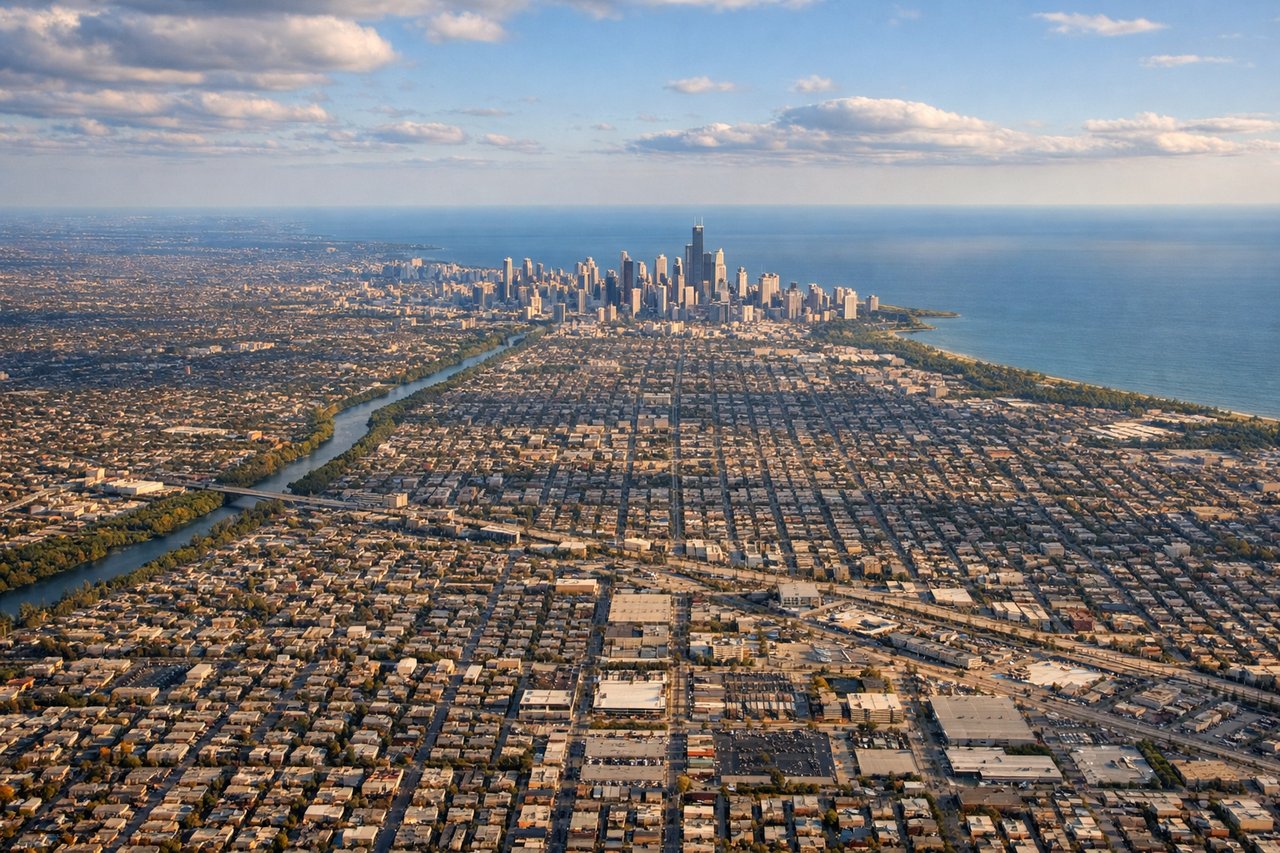
LEFTO'Hare arrivals from the south typically use runways 10L/R or 28L/R, with southerly approaches bringing aircraft over the Chicago metro from the south. The left seat on approach from the southwest gives a clear view of the Chicago lakefront, Grant Park, and the Loop skyline against Lake Michigan.
Landmarks on this routeAll landmarks →
Will your flight be in sunlight?
Pick a date and time in the Sun Map to watch the sun move across your whole flight.
About This Route
Which side of the plane should I sit on flying from Will Rogers World (OKC) to Chicago Ohare International (ORD)?
Sit on the Left side of the plane for the best views on flights from Oklahoma City to Chicago. The left side misses the OKC departure views but delivers the superior payoff: the Chicago lakefront approach is one of the most dramatic urban arrivals in the US, with the Loop skyline and Lake Michigan filling the window. The right side wins at takeoff but the left side Chicago arrival is the highlight of this route.
What can I see during takeoff from Will Rogers World in Oklahoma City?
During takeoff from Will Rogers World (OKC), sit on the Right side for the best views. OKC typically departs northeast on runway 17L/35R or 13/31. A northeast departure puts the Oklahoma City downtown skyline and the Oklahoma River to the right side. The right seat also captures Lake Hefner as the aircraft climbs out over the northwest suburbs. Notable sights include: Oklahoma City downtown skyline, Lake Hefner, Oklahoma River/Bricktown canal area, Will Rogers World Airport ramp and parallel runways.
What can I see when landing at Chicago Ohare International in Chicago?
When landing at Chicago Ohare International (ORD), sit on the Left side for the best views. O'Hare arrivals from the south typically use runways 10L/R or 28L/R, with southerly approaches bringing aircraft over the Chicago metro from the south. The left seat on approach from the southwest gives a clear view of the Chicago lakefront, Grant Park, and the Loop skyline against Lake Michigan. Notable sights include: Chicago Loop skyline, Lake Michigan shoreline, Grant Park and Museum Campus, O'Hare airport complex.
How long is the flight from Oklahoma City to Chicago?
The flight from Will Rogers World (OKC) to Chicago Ohare International (ORD) takes about 1 hour 55 minutes. The shortest flight path between them is 692 miles (1,114 km); winds and air traffic control usually add a few percent.
What does the Oklahoma City to Chicago flight path pass over?
The flight tracks northeast across the southern Great Plains, crossing the Kansas Flint Hills — a subtle but visible transition from flat cropland to rolling tallgrass prairie terrain around Wichita. The Missouri River crossing near Kansas City appears as a wide brown ribbon cutting through the urban grid. Northern Missouri and central Illinois are dominated by flat, intensively farmed corn and soybean fields in a dense rectangular grid pattern, with occasional small towns and river drainage systems visible from altitude.