While left offers better takeoff views of the San Gabriel Mountains, right seats dominate the landing experience with unobstructed views of the Hudson River, Manhattan, and the East River approach—the most iconic and visually rewarding segment of this cross-country flight.
Flown ONT to LGA? Did we get it right?
Flight Path
Ontario to New York is 2,419 miles (3,892 km), a flight of about 5 hours 15 minutes.
The flight path crosses the Mojave Desert (visible as tan, sparse terrain), then transitions over the Colorado Plateau and Rocky Mountains. Notable features include the Grand Canyon region (Arizona), the Mississippi River valley (Missouri/Illinois), and the Appalachian Mountains (Pennsylvania/New York). At cruise altitude, the curvature of the Earth becomes subtly visible, and on clear days, the Great Lakes region appears as a distinct geographic transition zone before reaching the Northeast.
Great circle distance and headings ›


Phase by phase
Takeoff from ONT
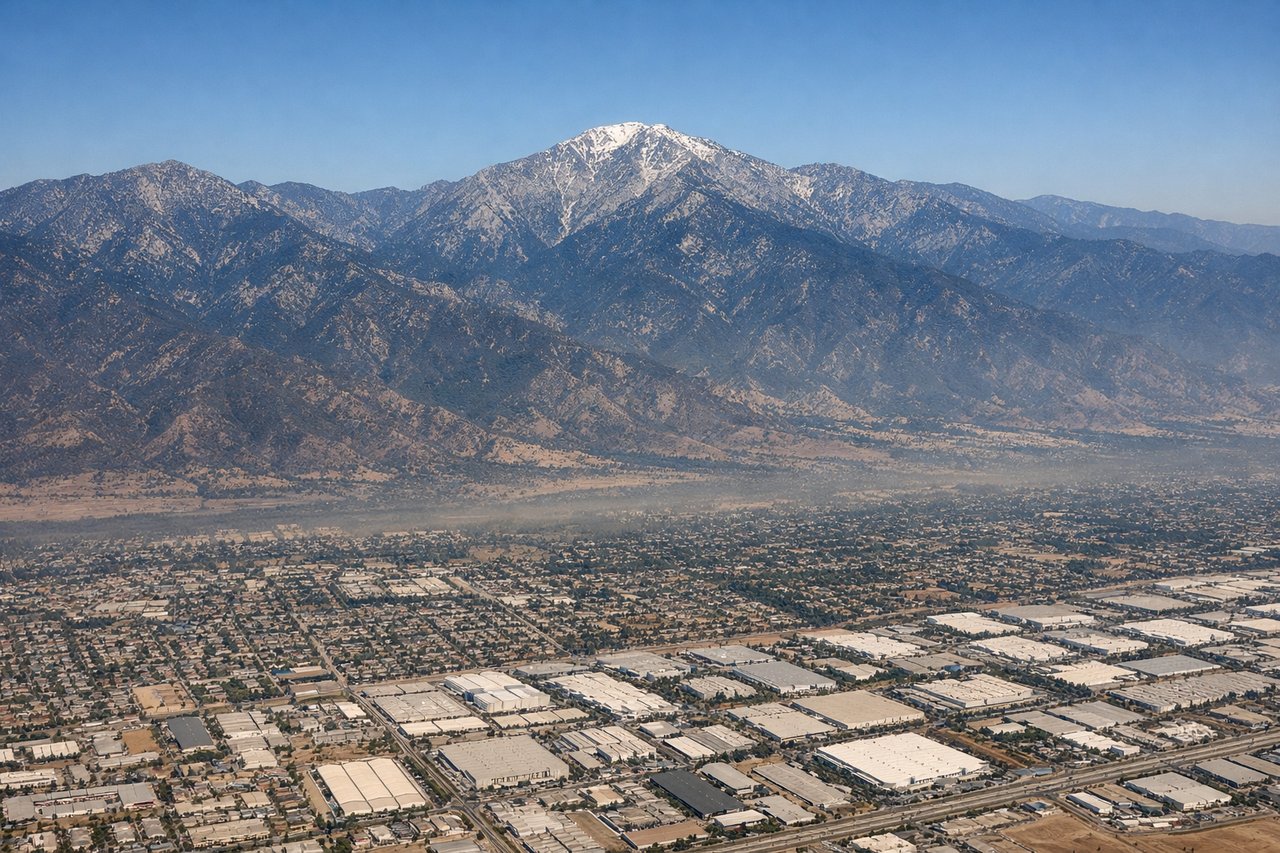
LEFTONT typically departs westbound (Runways 26L/26R). Left seats face north during initial climb, offering views of the San Gabriel Mountains and the Los Angeles basin sprawl. Right seats see only inland desert and mountains to the south.

Landing at LGA
RIGHTLGA has primary landing runways 04/22. Approaching from the west typically uses Runway 04 (heading northeast). Right seats face north and east during descent into the New York area, capturing the Hudson River, Manhattan skyline, and the East River approach corridor. Left seats see only New Jersey and western approaches.
Will your flight be in sunlight?
Pick a date and time in the Sun Map to watch the sun move across your whole flight.
About This Route
Which side of the plane should I sit on flying from Ontario International (ONT) to La Guardia (LGA)?
Sit on the Right side of the plane for the best views on flights from Ontario to New York. While left offers better takeoff views of the San Gabriel Mountains, right seats dominate the landing experience with unobstructed views of the Hudson River, Manhattan, and the East River approach—the most iconic and visually rewarding segment of this cross-country flight.
What can I see during takeoff from Ontario International in Ontario?
During takeoff from Ontario International (ONT), sit on the Left side for the best views. ONT typically departs westbound (Runways 26L/26R). Left seats face north during initial climb, offering views of the San Gabriel Mountains and the Los Angeles basin sprawl. Right seats see only inland desert and mountains to the south. Notable sights include: San Gabriel Mountains (north), San Bernardino Mountains (northeast), Los Angeles urban grid (northwest), Inland Empire sprawl (east).
What can I see when landing at La Guardia in New York?
When landing at La Guardia (LGA), sit on the Right side for the best views. LGA has primary landing runways 04/22. Approaching from the west typically uses Runway 04 (heading northeast). Right seats face north and east during descent into the New York area, capturing the Hudson River, Manhattan skyline, and the East River approach corridor. Left seats see only New Jersey and western approaches. Notable sights include: Hudson River (west of Manhattan), Manhattan skyline (center-east), East River (east of Manhattan), Queens and Long Island City (south and southeast).
How long is the flight from Ontario to New York?
The flight from Ontario International (ONT) to La Guardia (LGA) takes about 5 hours 15 minutes. The shortest flight path between them is 2,419 miles (3,892 km); winds and air traffic control usually add a few percent.
What does the Ontario to New York flight path pass over?
The flight path crosses the Mojave Desert (visible as tan, sparse terrain), then transitions over the Colorado Plateau and Rocky Mountains. Notable features include the Grand Canyon region (Arizona), the Mississippi River valley (Missouri/Illinois), and the Appalachian Mountains (Pennsylvania/New York). At cruise altitude, the curvature of the Earth becomes subtly visible, and on clear days, the Great Lakes region appears as a distinct geographic transition zone before reaching the Northeast.