While takeoff offers good mountain views from the right, the landing approach on the left provides the most dramatic and memorable scenery—the Na Pali Coast is one of the world's most visually striking coastal features and dominates the final descent into Lihue.
Flight Path
The flight path crosses the Pacific Ocean for roughly 2,000 nautical miles. After climbing out of Southern California, you'll pass over the open ocean with no significant landmarks visible—just the curvature of the Pacific. As you approach Hawaii, the Big Island (Hawaii) becomes visible first on the horizon, with Mauna Kea and Mauna Loa visible as massive shield volcanoes. Kauai appears last as you descend into Lihue, with the island's dramatic windward cliffs and central ridge dominating the approach.
Great circle distance and headings ›Phase by phase
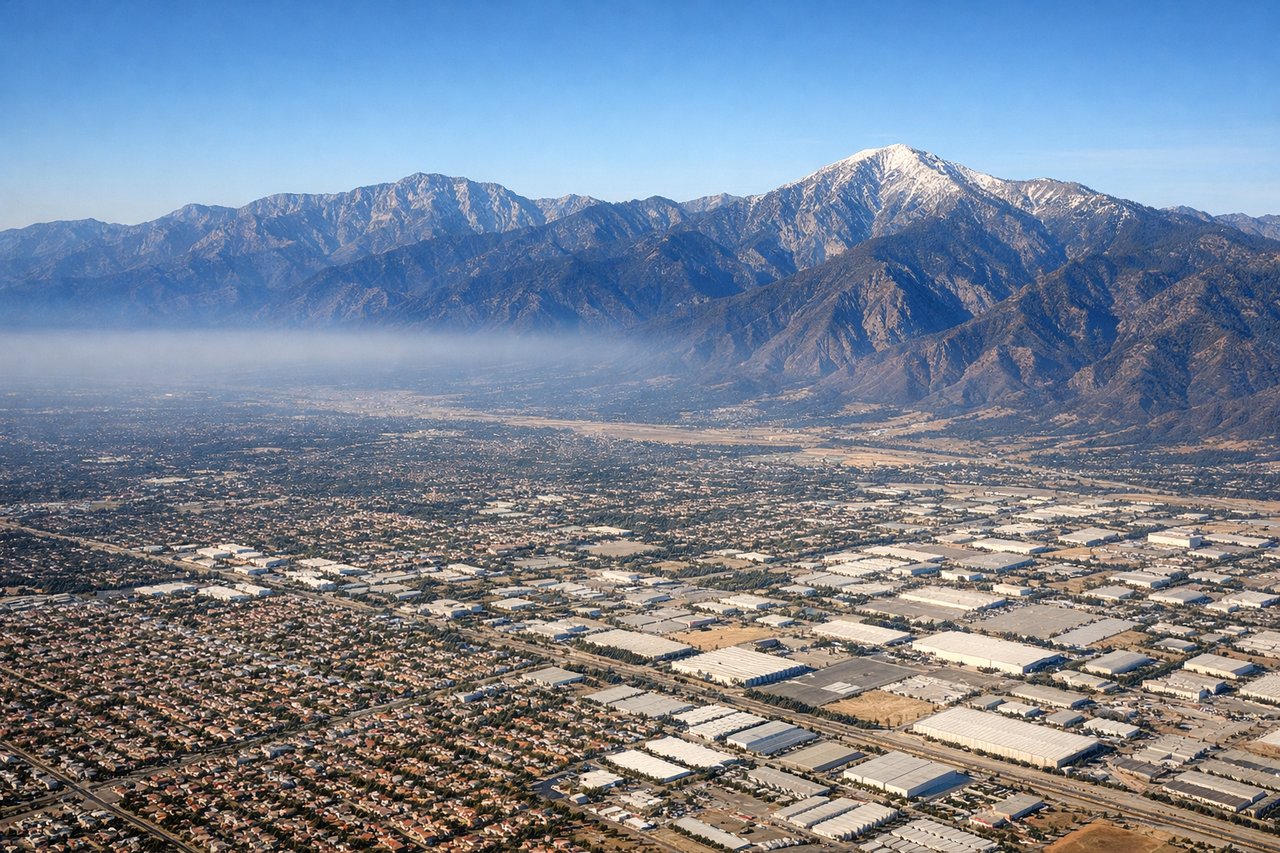
Takeoff from ONT
RIGHTOntario typically departs eastbound (Runways 26L/26R). Right-side seats face north during initial climb, offering views of the San Gabriel Mountains and the Los Angeles basin sprawl. Left seats see inland desert and are less visually interesting.
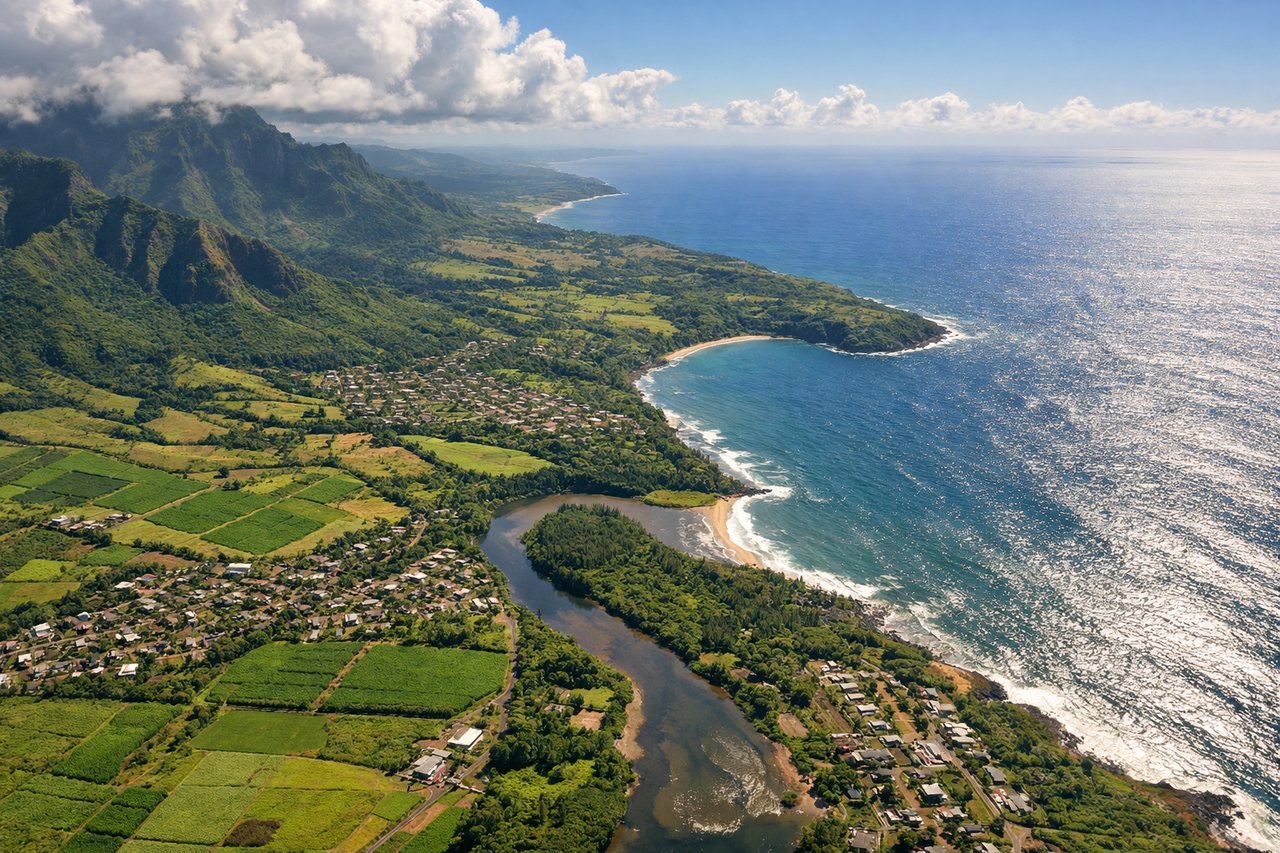
Landing at LIH
LEFTApproaching Lihue typically uses Runway 03 (northbound final). Left-side seats face west during descent, providing views of the Na Pali Coast cliffs and the dramatic windward side of Kauai. Right seats see the less scenic leeward plateau and airport approach.
Landmarks on this routeAll landmarks →
Will your flight be in sunlight?
See exactly which side of the plane gets sun and shade at your departure time.
About This Route
Which side of the plane should I sit on flying from Ontario International (ONT) to Lihue (LIH)?
Sit on the Left side of the plane for the best views on flights from Ontario to Lihue. While takeoff offers good mountain views from the right, the landing approach on the left provides the most dramatic and memorable scenery—the Na Pali Coast is one of the world's most visually striking coastal features and dominates the final descent into Lihue.
What can I see during takeoff from Ontario International in Ontario?
During takeoff from Ontario International (ONT), sit on the Right side for the best views. Ontario typically departs eastbound (Runways 26L/26R). Right-side seats face north during initial climb, offering views of the San Gabriel Mountains and the Los Angeles basin sprawl. Left seats see inland desert and are less visually interesting. Notable sights include: San Gabriel Mountains (north), Los Angeles urban grid extending west toward the coast, San Bernardino Valley (east), Inland Empire sprawl.
What can I see when landing at Lihue in Lihue?
When landing at Lihue (LIH), sit on the Left side for the best views. Approaching Lihue typically uses Runway 03 (northbound final). Left-side seats face west during descent, providing views of the Na Pali Coast cliffs and the dramatic windward side of Kauai. Right seats see the less scenic leeward plateau and airport approach. Notable sights include: Na Pali Coast (dramatic sea cliffs on northwest shore), Kauai's central ridge and valleys, Pacific Ocean, Hanalei Bay area.
How long is the flight from Ontario to Lihue?
The flight from Ontario International (ONT) to Lihue (LIH) takes Approximately 5 hours 15 minutes.
What does the Ontario to Lihue flight path pass over?
The flight path crosses the Pacific Ocean for roughly 2,000 nautical miles. After climbing out of Southern California, you'll pass over the open ocean with no significant landmarks visible—just the curvature of the Pacific. As you approach Hawaii, the Big Island (Hawaii) becomes visible first on the horizon, with Mauna Kea and Mauna Loa visible as massive shield volcanoes. Kauai appears last as you descend into Lihue, with the island's dramatic windward cliffs and central ridge dominating the approach.