The Austin approach edges out the Chicago departure because the Hill Country terrain and Lake Travis add real topographic variety right before landing, while the takeoff side offers only a brief skyline glimpse before flattening into featureless farmland.
Flight Path
Mississippi River crossing near southeastern Missouri, Ozark Plateau's low wooded hills, Arkansas River valley, and the Blackland Prairie of north-central Texas as the route approaches Austin
Great circle distance and headings ›

Phase by phase
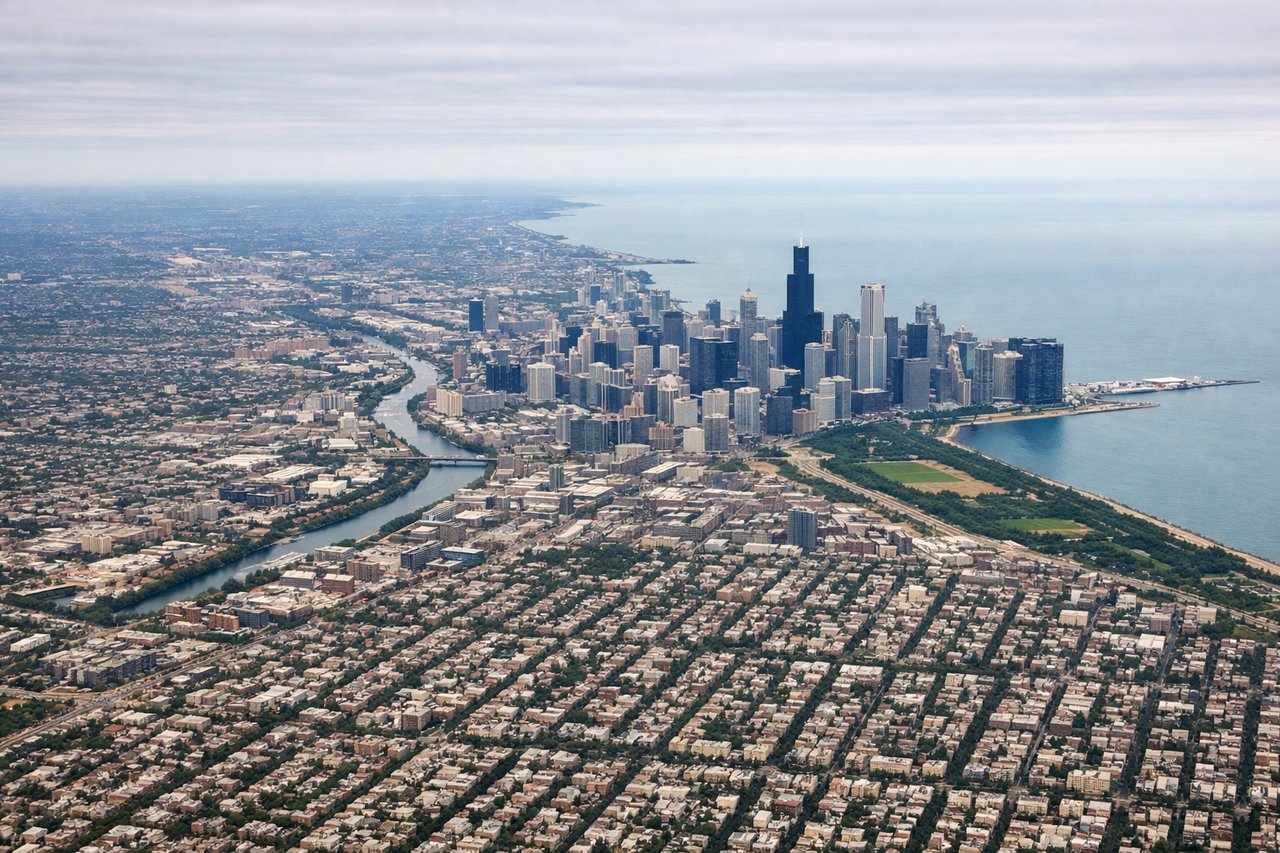
Takeoff from ORD
LEFTDepartures off ORD's westbound runways typically curve south toward Texas, swinging the Chicago skyline and a sliver of Lake Michigan into view on the left side during the climbing turn. After that, the route flattens out over Illinois farmland with little else to see.
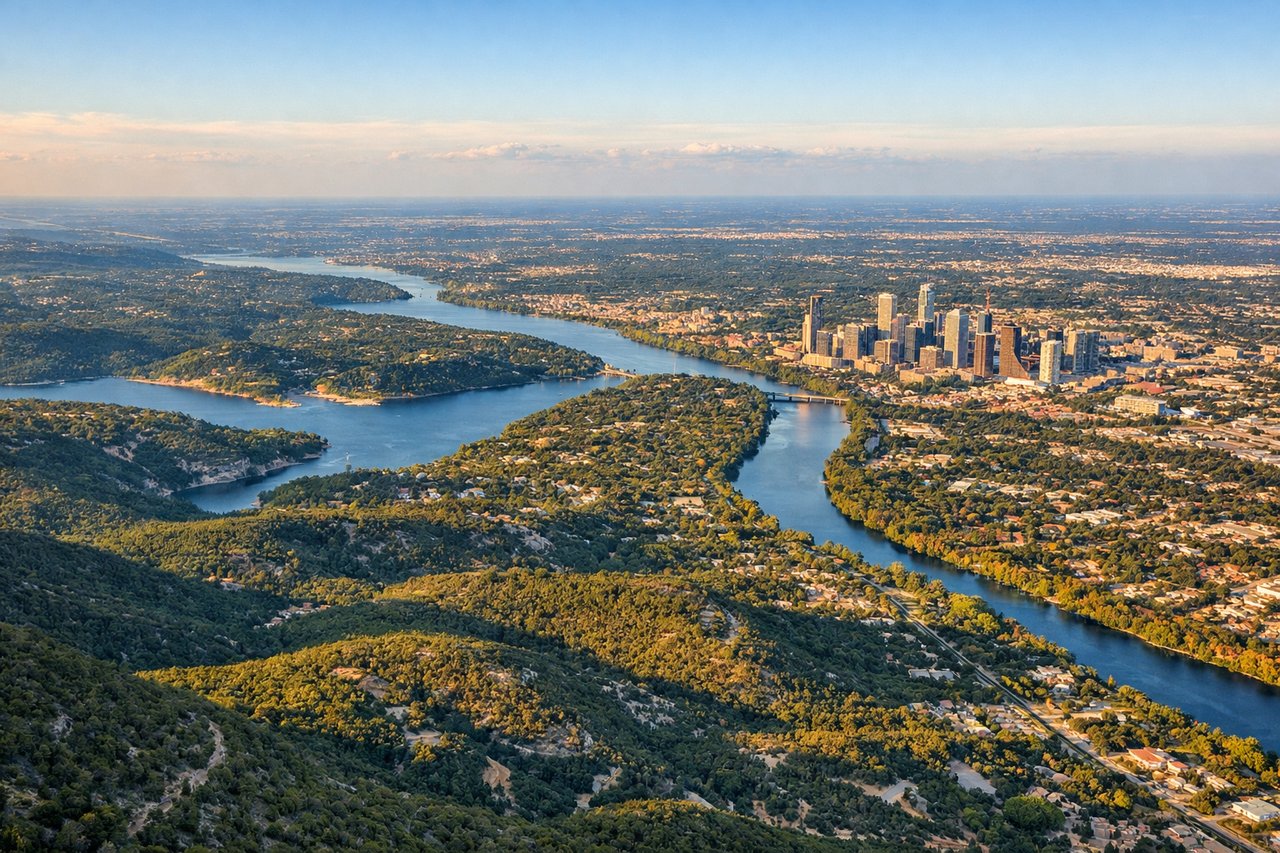
Landing at AUS
RIGHTOn the southbound approach into AUS, downtown Austin and Lake Travis sit off to the right side of the aircraft as it descends, giving passengers a good look at the city skyline and the Hill Country's rolling limestone terrain before touchdown. It's the most dramatic terrain change of the whole flight.
Landmarks on this routeAll landmarks →
Will your flight be in sunlight?
See exactly which side of the plane gets sun and shade at your departure time.
About This Route
Which side of the plane should I sit on flying from Chicago Ohare International (ORD) to Austin Bergstrom International (AUS)?
Sit on the Right side of the plane for the best views on flights from Chicago to Austin. The Austin approach edges out the Chicago departure because the Hill Country terrain and Lake Travis add real topographic variety right before landing, while the takeoff side offers only a brief skyline glimpse before flattening into featureless farmland.
What can I see during takeoff from Chicago Ohare International in Chicago?
During takeoff from Chicago Ohare International (ORD), sit on the Left side for the best views. Departures off ORD's westbound runways typically curve south toward Texas, swinging the Chicago skyline and a sliver of Lake Michigan into view on the left side during the climbing turn. After that, the route flattens out over Illinois farmland with little else to see. Notable sights include: Chicago skyline (Willis Tower, Loop), Lake Michigan shoreline, O'Hare's western suburbs, Illinois River valley.
What can I see when landing at Austin Bergstrom International in Austin?
When landing at Austin Bergstrom International (AUS), sit on the Right side for the best views. On the southbound approach into AUS, downtown Austin and Lake Travis sit off to the right side of the aircraft as it descends, giving passengers a good look at the city skyline and the Hill Country's rolling limestone terrain before touchdown. It's the most dramatic terrain change of the whole flight. Notable sights include: Downtown Austin skyline, Lake Travis, Texas Hill Country ridgelines, Colorado River.
How long is the flight from Chicago to Austin?
The flight from Chicago Ohare International (ORD) to Austin Bergstrom International (AUS) takes 2h 50m.
What does the Chicago to Austin flight path pass over?
Mississippi River crossing near southeastern Missouri, Ozark Plateau's low wooded hills, Arkansas River valley, and the Blackland Prairie of north-central Texas as the route approaches Austin