Chicago to Seattle is 1,716 miles (2,761 km), a flight of about 4 hours.
The right side wins overall because the Seattle arrival view of Elliott Bay, the downtown skyline, and Puget Sound is one of the most dramatic urban water approaches in the US. The left side has a strong Chicago departure, but the right side delivers both a decent departure view and the superior landing sequence into BFI.
Flight Path
The flight tracks northwest over southern Wisconsin, then crosses the Mississippi River near La Crosse, traverses the flat agricultural plains of Minnesota and South Dakota, crosses the Missouri River, then enters the dramatic terrain of Montana with the Rocky Mountain Front visible. The route passes over or near Glacier National Park, crosses the Cascades into Washington state, and descends over the Cascade foothills toward Seattle. The Rockies and Cascades are the dominant midpoint features, visible from both sides.
Great circle distance and headings ›

.jpg?width=600)

Phase by phase
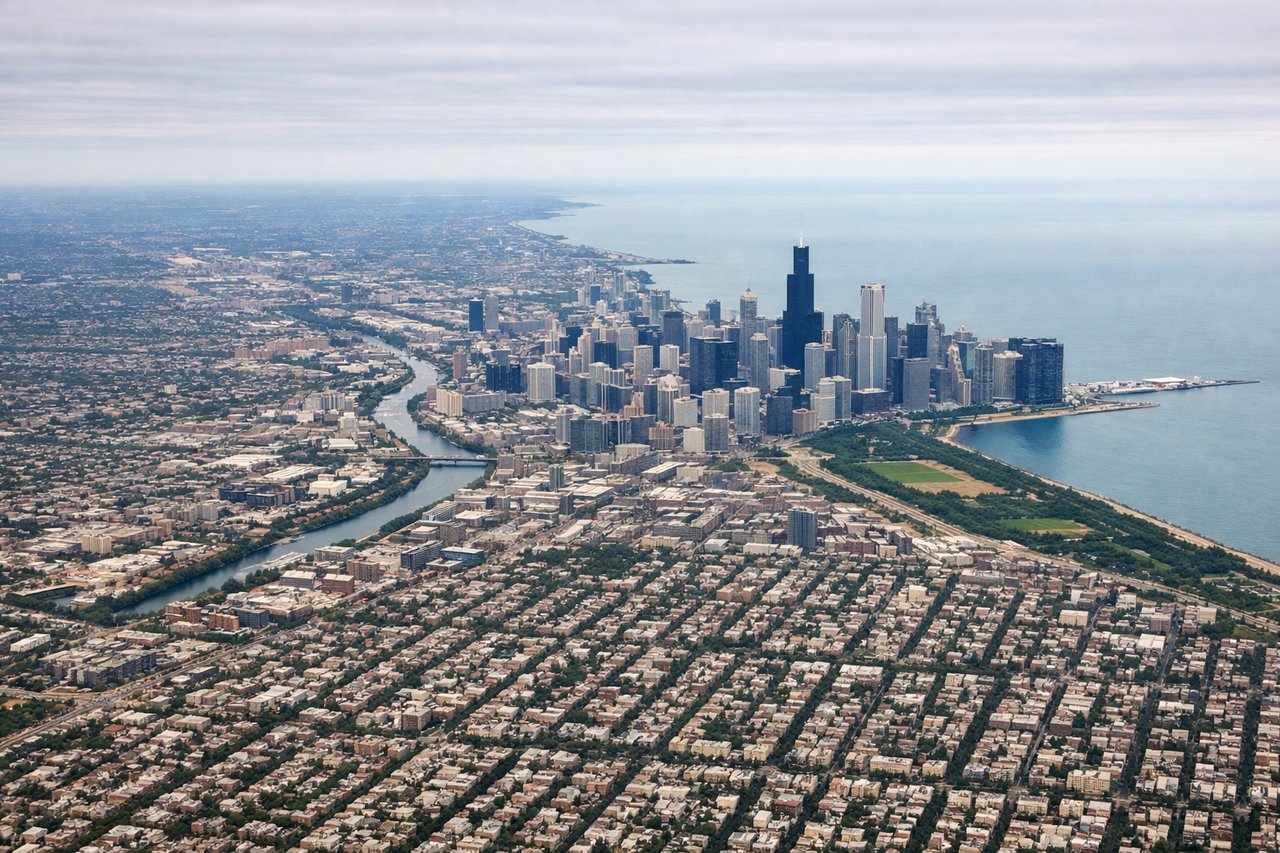
Takeoff from ORD
LEFTORD departures heading west or northwest on runways 10/28 or 9R/27L give left-side passengers a clear view back over the Chicago skyline and Lake Michigan shoreline as the aircraft banks northwest. The downtown Loop and lakefront are distinctly visible on the left during the climbing turn.

Landing at BFI
RIGHTBFI sits just south of downtown Seattle, and aircraft typically approach from the south or southeast on runway 13R/31L. Right-side passengers get a direct view of Elliott Bay, the Seattle skyline, and Puget Sound during the approach, while Mount Rainier is visible to the southeast on clear days.
Landmarks on this routeAll landmarks →
Will your flight be in sunlight?
Pick a date and time in the Sun Map to watch the sun move across your whole flight.
About This Route
Which side of the plane should I sit on flying from Chicago Ohare International (ORD) to Boeing Fld King Co International (BFI)?
Sit on the Right side of the plane for the best views on flights from Chicago to Seattle. The right side wins overall because the Seattle arrival view of Elliott Bay, the downtown skyline, and Puget Sound is one of the most dramatic urban water approaches in the US. The left side has a strong Chicago departure, but the right side delivers both a decent departure view and the superior landing sequence into BFI.
What can I see during takeoff from Chicago Ohare International in Chicago?
During takeoff from Chicago Ohare International (ORD), sit on the Left side for the best views. ORD departures heading west or northwest on runways 10/28 or 9R/27L give left-side passengers a clear view back over the Chicago skyline and Lake Michigan shoreline as the aircraft banks northwest. The downtown Loop and lakefront are distinctly visible on the left during the climbing turn. Notable sights include: Chicago Loop skyline, Lake Michigan shoreline, Navy Pier, O'Hare suburban grid spreading west.
What can I see when landing at Boeing Fld King Co International in Seattle?
When landing at Boeing Fld King Co International (BFI), sit on the Right side for the best views. BFI sits just south of downtown Seattle, and aircraft typically approach from the south or southeast on runway 13R/31L. Right-side passengers get a direct view of Elliott Bay, the Seattle skyline, and Puget Sound during the approach, while Mount Rainier is visible to the southeast on clear days. Notable sights include: Elliott Bay and Puget Sound, Seattle downtown skyline, Mount Rainier (southeast, on clear days), Lake Washington.
How long is the flight from Chicago to Seattle?
The flight from Chicago Ohare International (ORD) to Boeing Fld King Co International (BFI) takes about 4 hours. The shortest flight path between them is 1,716 miles (2,761 km); winds and air traffic control usually add a few percent.
What does the Chicago to Seattle flight path pass over?
The flight tracks northwest over southern Wisconsin, then crosses the Mississippi River near La Crosse, traverses the flat agricultural plains of Minnesota and South Dakota, crosses the Missouri River, then enters the dramatic terrain of Montana with the Rocky Mountain Front visible. The route passes over or near Glacier National Park, crosses the Cascades into Washington state, and descends over the Cascade foothills toward Seattle. The Rockies and Cascades are the dominant midpoint features, visible from both sides.