Right seats capture the dramatic departure over Lake Michigan and the crucial arrival sequence over the Arabian Sea, Sahyadri Mountains, and Mumbai harbor. The westbound departure and northeast approach favor the right side for the most geographically significant views.
Flown ORD to BOM? Did we get it right?
Flight Path
Chicago to Bombay is 8,042 miles (12,943 km), a flight of about 16 hours 30 minutes.
Flight path crosses the Atlantic over the North Atlantic shipping lanes and Greenland's southern tip (if routed via Iceland), then over continental Europe (Alps visible on clear days), Mediterranean Sea, Middle East (Persian Gulf region), Arabian Sea approach to India. Depending on exact routing, may pass over Caucasus Mountains, Caspian Sea region, or Iranian plateau. Sahyadri Mountains and Western Ghats form the final dramatic landfall before Mumbai descent.
Great circle distance and headings ›


Phase by phase
Takeoff from ORD
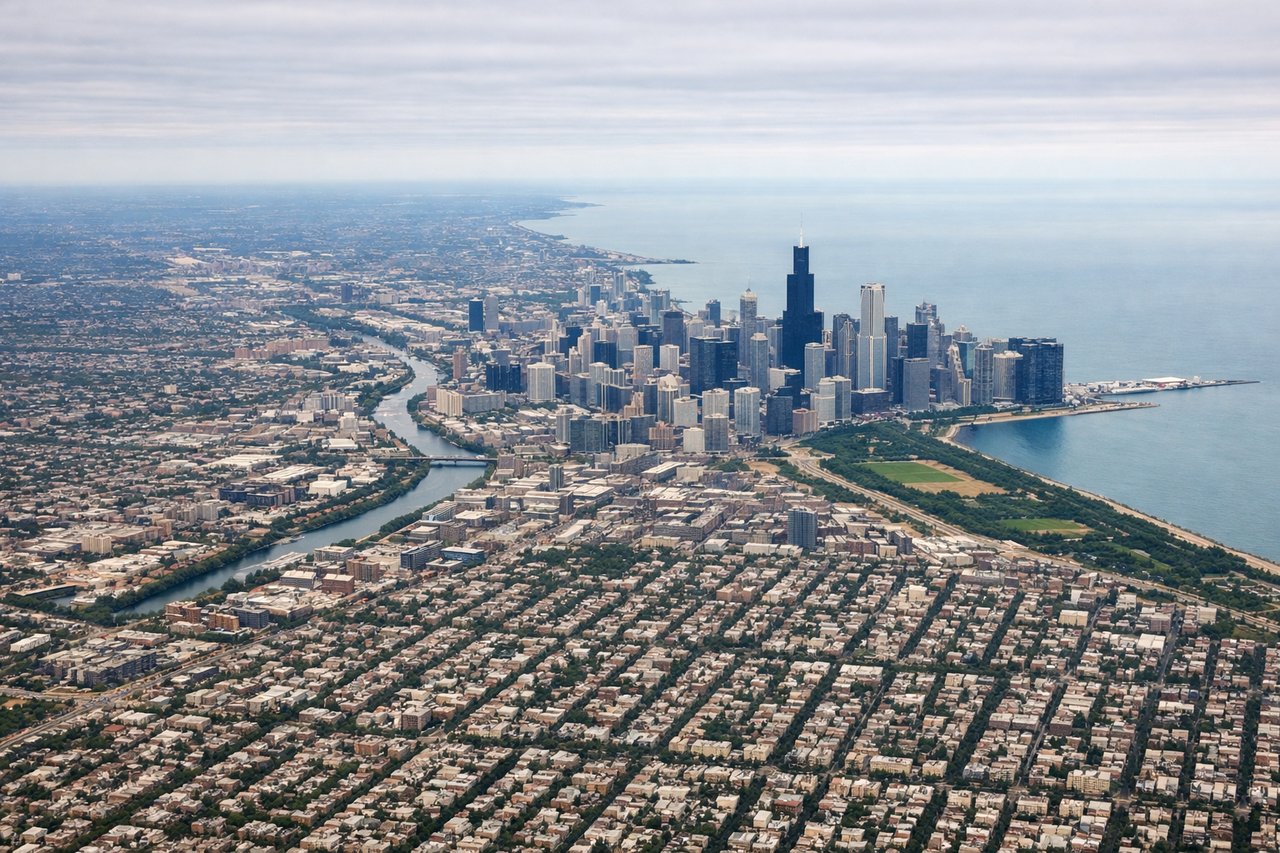
LEFTORD typically departs westbound on runways 10L/10R or 28L/28R depending on wind. Left seats offer views of Lake Michigan's eastern shoreline during initial climb, then the Chicago skyline recedes to the right while you track west over the Illinois plains. Right seats face inland immediately.
Landing at BOM
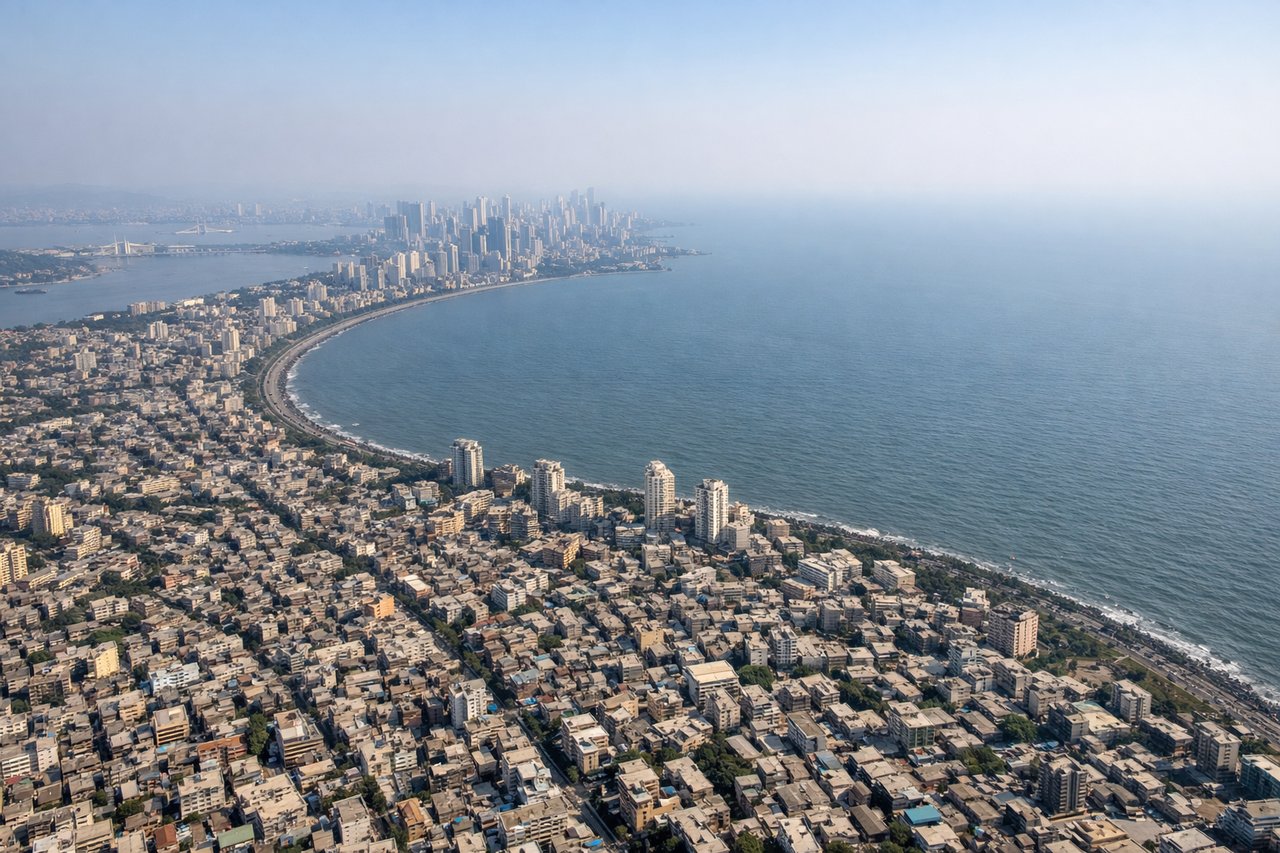
RIGHTBOM approaches from the northeast over the Arabian Sea. Right seats provide direct views of the Sahyadri Mountains (Western Ghats) as they rise inland from the coast, and the Mumbai harbor complex with its islands and shipping lanes. Left seats face the open ocean.
Will your flight be in sunlight?
Pick a date and time in the Sun Map to watch the sun move across your whole flight.
About This Route
Which side of the plane should I sit on flying from Chicago Ohare International (ORD) to Chhatrapati Shivaji International (BOM)?
Sit on the Right side of the plane for the best views on flights from Chicago to Bombay. Right seats capture the dramatic departure over Lake Michigan and the crucial arrival sequence over the Arabian Sea, Sahyadri Mountains, and Mumbai harbor. The westbound departure and northeast approach favor the right side for the most geographically significant views.
What can I see during takeoff from Chicago Ohare International in Chicago?
During takeoff from Chicago Ohare International (ORD), sit on the Left side for the best views. ORD typically departs westbound on runways 10L/10R or 28L/28R depending on wind. Left seats offer views of Lake Michigan's eastern shoreline during initial climb, then the Chicago skyline recedes to the right while you track west over the Illinois plains. Right seats face inland immediately. Notable sights include: Lake Michigan (eastern edge, visible for 10-15 minutes of climb), Chicago downtown skyline (receding to starboard), Des Plaines River valley (threading west below), Illinois prairie grid expanding westward.
What can I see when landing at Chhatrapati Shivaji International in Bombay?
When landing at Chhatrapati Shivaji International (BOM), sit on the Right side for the best views. BOM approaches from the northeast over the Arabian Sea. Right seats provide direct views of the Sahyadri Mountains (Western Ghats) as they rise inland from the coast, and the Mumbai harbor complex with its islands and shipping lanes. Left seats face the open ocean. Notable sights include: Sahyadri Mountains (Western Ghats) rising inland from the coast, Mumbai harbor and its islands (Elephanta, Salsette), Arabian Sea coastline with Colaba peninsula, Thane Creek estuary to the north.
How long is the flight from Chicago to Bombay?
The flight from Chicago Ohare International (ORD) to Chhatrapati Shivaji International (BOM) takes about 16 hours 30 minutes. The shortest flight path between them is 8,042 miles (12,943 km); winds and air traffic control usually add a few percent.
What does the Chicago to Bombay flight path pass over?
Flight path crosses the Atlantic over the North Atlantic shipping lanes and Greenland's southern tip (if routed via Iceland), then over continental Europe (Alps visible on clear days), Mediterranean Sea, Middle East (Persian Gulf region), Arabian Sea approach to India. Depending on exact routing, may pass over Caucasus Mountains, Caspian Sea region, or Iranian plateau. Sahyadri Mountains and Western Ghats form the final dramatic landfall before Mumbai descent.