Chicago to Detroit is 252 miles (406 km), a flight of about 50 minutes.
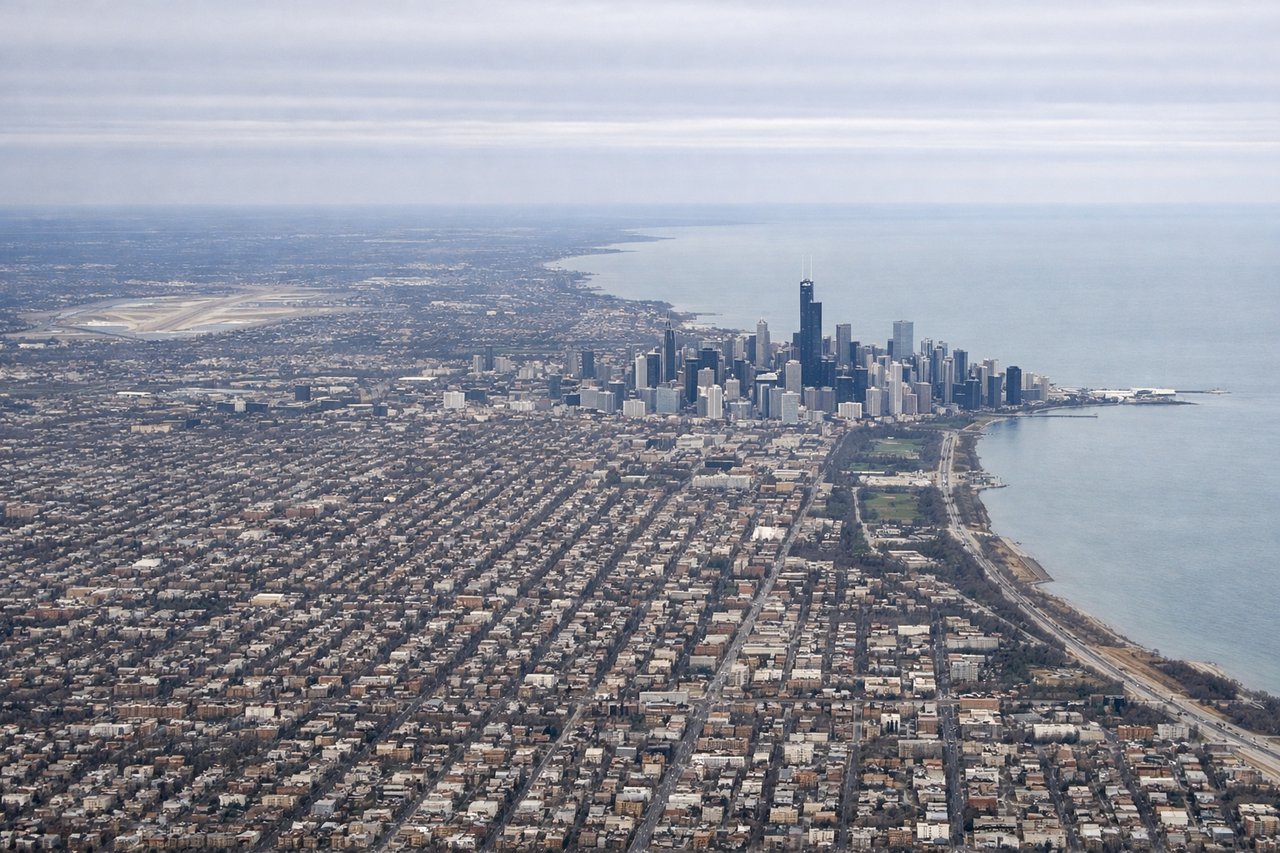
The right side delivers the most dramatic single moment of the flight — the Chicago skyline and Lake Michigan shoreline on departure. The landing views on the left are worthwhile but Detroit's skyline is modest. If forced to pick one side for the whole short flight, right gives the better payoff at takeoff.
Flight Path
The flight crosses the flat agricultural and suburban terrain of northern Indiana and southern Michigan. Lake Michigan may be briefly visible to the north on clear days. The Kalamazoo and Battle Creek areas of southwest Michigan pass to the north. The terrain is uniformly flat glaciated farmland with no significant topographic features — the visual interest is concentrated at the departure and arrival ends of this short route.
Great circle distance and headings ›

Phase by phase
Takeoff from ORD
RIGHTORD departures heading east toward Detroit typically use runways 10R/10L or 9R/9L, pointing roughly eastward. The right side gives you a clear view south over the Chicago metropolitan grid, the downtown skyline, and Lake Michigan's western shoreline as you climb out. The left side faces north toward suburban sprawl with fewer distinctive features.
Landing at DET
LEFTDetroit City Airport (DET) sits on the northeast side of Detroit. Approaches from the west on runway 33 or similar headings bring you in over the city. The left side faces south over the Detroit River, Windsor Ontario across the border, and the dense urban core of Detroit itself. The right side looks north over residential neighborhoods with less visual interest.
Landmarks on this routeAll landmarks →
Will your flight be in sunlight?
Pick a date and time in the Sun Map to watch the sun move across your whole flight.
About This Route
Which side of the plane should I sit on flying from Chicago Ohare International (ORD) to Detroit City (DET)?
Sit on the Right side of the plane for the best views on flights from Chicago to Detroit. The right side delivers the most dramatic single moment of the flight — the Chicago skyline and Lake Michigan shoreline on departure. The landing views on the left are worthwhile but Detroit's skyline is modest. If forced to pick one side for the whole short flight, right gives the better payoff at takeoff.
What can I see during takeoff from Chicago Ohare International in Chicago?
During takeoff from Chicago Ohare International (ORD), sit on the Right side for the best views. ORD departures heading east toward Detroit typically use runways 10R/10L or 9R/9L, pointing roughly eastward. The right side gives you a clear view south over the Chicago metropolitan grid, the downtown skyline, and Lake Michigan's western shoreline as you climb out. The left side faces north toward suburban sprawl with fewer distinctive features. Notable sights include: Chicago downtown skyline (Willis Tower, John Hancock), Lake Michigan western shoreline, Chicago River corridor, suburban grid of Cook County.
What can I see when landing at Detroit City in Detroit?
When landing at Detroit City (DET), sit on the Left side for the best views. Detroit City Airport (DET) sits on the northeast side of Detroit. Approaches from the west on runway 33 or similar headings bring you in over the city. The left side faces south over the Detroit River, Windsor Ontario across the border, and the dense urban core of Detroit itself. The right side looks north over residential neighborhoods with less visual interest. Notable sights include: Detroit River, Windsor Ontario waterfront, Detroit downtown skyline, Belle Isle in the Detroit River.
How long is the flight from Chicago to Detroit?
The flight from Chicago Ohare International (ORD) to Detroit City (DET) takes about 50 minutes. The shortest flight path between them is 252 miles (406 km); winds and air traffic control usually add a few percent.
What does the Chicago to Detroit flight path pass over?
The flight crosses the flat agricultural and suburban terrain of northern Indiana and southern Michigan. Lake Michigan may be briefly visible to the north on clear days. The Kalamazoo and Battle Creek areas of southwest Michigan pass to the north. The terrain is uniformly flat glaciated farmland with no significant topographic features — the visual interest is concentrated at the departure and arrival ends of this short route.