Right side scores higher due to superior scenic content on both takeoff and landing. Departure offers Lake Michigan and Chicago's iconic skyline; arrival provides the dramatic Arabian Sea coastline, Karachi's harbor, and urban waterfront. Left side is dominated by flat terrain with minimal landmarks on both ends of the flight.
Flown ORD to KHI? Did we get it right?
Flight Path
Chicago to Karachi is 7,549 miles (12,148 km), a flight of about 15 hours 20 minutes.
The flight path crosses the Atlantic Ocean (minimal scenic value—open water for 6+ hours), then transitions over Europe and the Mediterranean. Notable midpoint features include the Alps visible to the south during cruise over southern Europe, the Mediterranean Sea crossing, and the transition into Middle Eastern airspace. Over the Arabian Peninsula, passengers may glimpse the Persian Gulf region and the Makran Coast of Balochistan before descent into Karachi. The cruise phase is predominantly oceanic and desert terrain with limited landmark density.
Great circle distance and headings ›Phase by phase
Takeoff from ORD
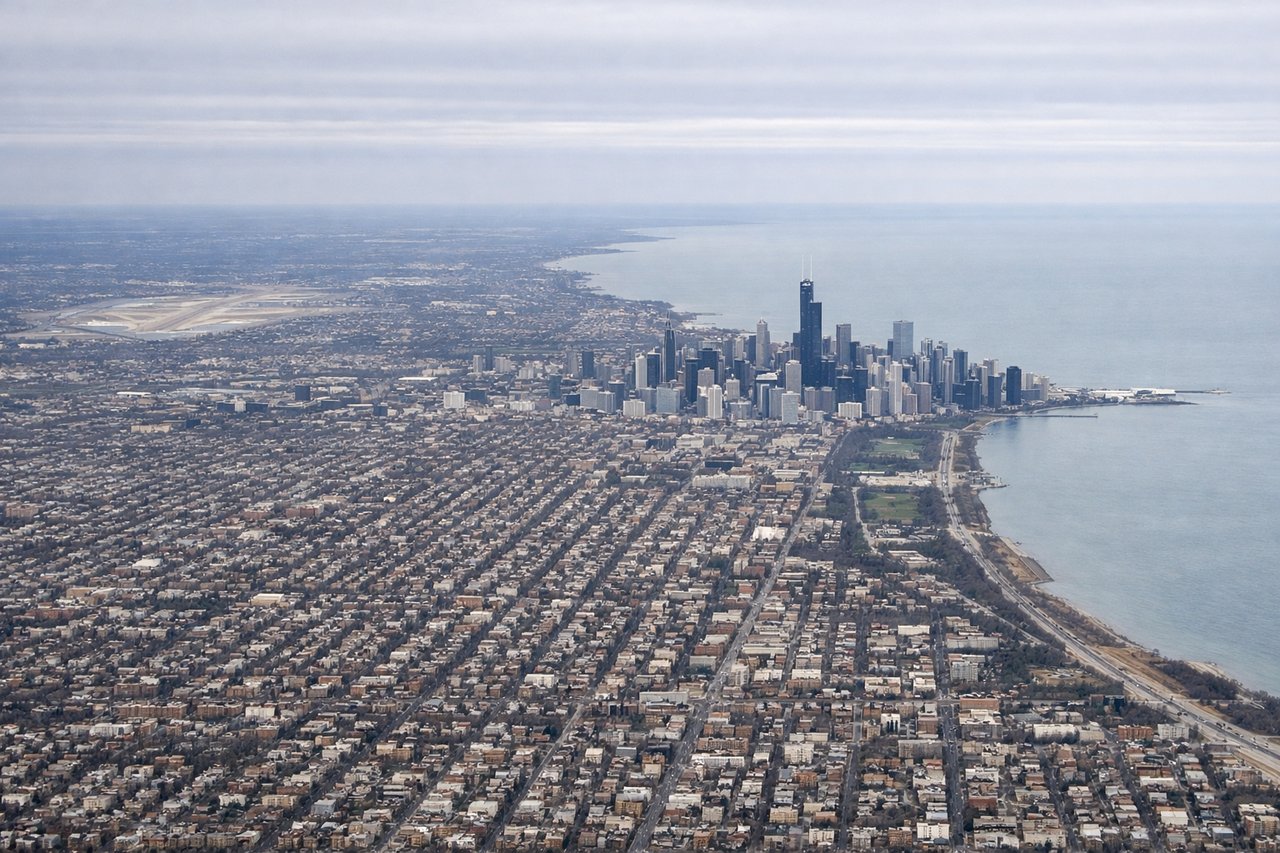
RIGHTRight side captures Chicago's urban skyline and Lake Michigan waterfront during initial climb. Left side faces inland toward flat Midwest terrain with minimal visual interest during departure.
Landing at KHI
RIGHTRight side offers the most dramatic approach into Karachi, with views of the Arabian Sea, Karachi's coastal development, and the city's harbor during descent. Left side faces inland toward the Sindh plains with minimal topographic variation.
Will your flight be in sunlight?
Pick a date and time in the Sun Map to watch the sun move across your whole flight.
About This Route
Which side of the plane should I sit on flying from Chicago Ohare International (ORD) to Jinnah International (KHI)?
Sit on the Right side of the plane for the best views on flights from Chicago to Karachi. Right side scores higher due to superior scenic content on both takeoff and landing. Departure offers Lake Michigan and Chicago's iconic skyline; arrival provides the dramatic Arabian Sea coastline, Karachi's harbor, and urban waterfront. Left side is dominated by flat terrain with minimal landmarks on both ends of the flight.
What can I see during takeoff from Chicago Ohare International in Chicago?
During takeoff from Chicago Ohare International (ORD), sit on the Right side for the best views. Right side captures Chicago's urban skyline and Lake Michigan waterfront during initial climb. Left side faces inland toward flat Midwest terrain with minimal visual interest during departure. Notable sights include: Lake Michigan shoreline, Chicago downtown skyline, Grant Park and Museum Campus.
What can I see when landing at Jinnah International in Karachi?
When landing at Jinnah International (KHI), sit on the Right side for the best views. Right side offers the most dramatic approach into Karachi, with views of the Arabian Sea, Karachi's coastal development, and the city's harbor during descent. Left side faces inland toward the Sindh plains with minimal topographic variation. Notable sights include: Arabian Sea coastline, Karachi harbor and port facilities, Karachi city sprawl, Manora Island and breakwaters.
How long is the flight from Chicago to Karachi?
The flight from Chicago Ohare International (ORD) to Jinnah International (KHI) takes about 15 hours 20 minutes. The shortest flight path between them is 7,549 miles (12,148 km); winds and air traffic control usually add a few percent.
What does the Chicago to Karachi flight path pass over?
The flight path crosses the Atlantic Ocean (minimal scenic value—open water for 6+ hours), then transitions over Europe and the Mediterranean. Notable midpoint features include the Alps visible to the south during cruise over southern Europe, the Mediterranean Sea crossing, and the transition into Middle Eastern airspace. Over the Arabian Peninsula, passengers may glimpse the Persian Gulf region and the Makran Coast of Balochistan before descent into Karachi. The cruise phase is predominantly oceanic and desert terrain with limited landmark density.