The left (south-facing) side offers brief but genuine landmark views at both ends of the flight — Chicago's skyline on departure and the Missouri River/Omaha skyline on arrival — while the right side has only flat, featureless farmland for the entire route.
Flown ORD to OMA? Did we get it right?
Flight Path
Chicago to Omaha is 415 miles (668 km), a flight of about 1 hour 45 minutes.
Mississippi River crossing near the Quad Cities (Davenport, Iowa and Rock Island/Moline, Illinois), followed by the rolling farmland of eastern and central Iowa
Great circle distance and headings ›

Phase by phase
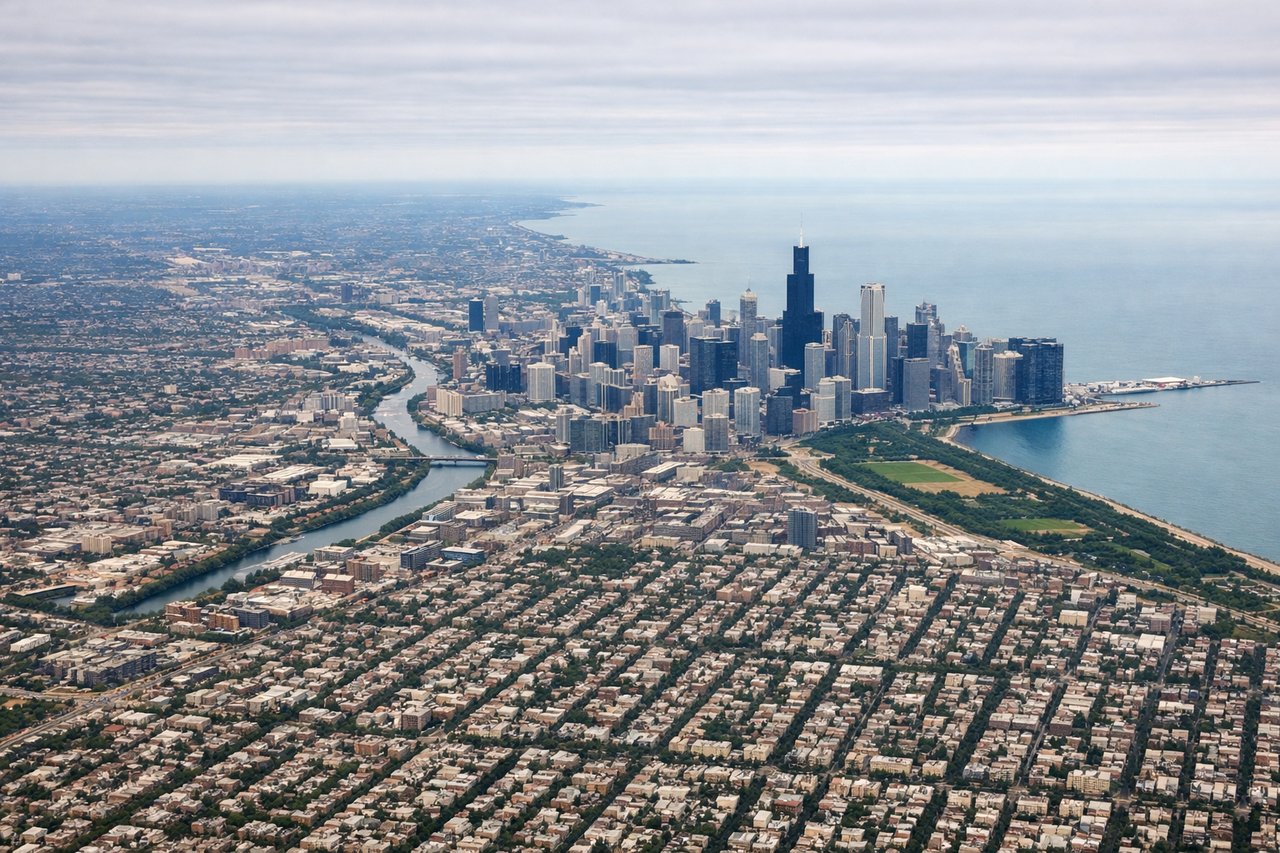
Takeoff from ORD
LEFTDeparting west from ORD, the initial climb puts Chicago's downtown skyline and southwest suburbs in view off the south-facing (left) side before the route flattens into farmland. The right side only shows O'Hare's northern suburbs and flat terrain with no distinguishing features.
Landing at OMA
LEFTOn approach into Omaha, the final descent path crosses near the Missouri River, giving south-side passengers a view of the river bend, downtown Omaha's skyline, and Council Bluffs on the Iowa side. The right side mostly faces open farmland with no comparable landmark.
Will your flight be in sunlight?
Pick a date and time in the Sun Map to watch the sun move across your whole flight.
About This Route
Which side of the plane should I sit on flying from Chicago Ohare International (ORD) to Eppley Afld (OMA)?
Sit on the Left side of the plane for the best views on flights from Chicago to Omaha. The left (south-facing) side offers brief but genuine landmark views at both ends of the flight — Chicago's skyline on departure and the Missouri River/Omaha skyline on arrival — while the right side has only flat, featureless farmland for the entire route.
What can I see during takeoff from Chicago Ohare International in Chicago?
During takeoff from Chicago Ohare International (ORD), sit on the Left side for the best views. Departing west from ORD, the initial climb puts Chicago's downtown skyline and southwest suburbs in view off the south-facing (left) side before the route flattens into farmland. The right side only shows O'Hare's northern suburbs and flat terrain with no distinguishing features. Notable sights include: Chicago downtown skyline (distant), DuPage County suburbs, grid-pattern farmland beginning west of the city.
What can I see when landing at Eppley Afld in Omaha?
When landing at Eppley Afld (OMA), sit on the Left side for the best views. On approach into Omaha, the final descent path crosses near the Missouri River, giving south-side passengers a view of the river bend, downtown Omaha's skyline, and Council Bluffs on the Iowa side. The right side mostly faces open farmland with no comparable landmark. Notable sights include: Missouri River, downtown Omaha skyline, Council Bluffs (Iowa side), Eppley Airfield runways.
How long is the flight from Chicago to Omaha?
The flight from Chicago Ohare International (ORD) to Eppley Afld (OMA) takes about 1 hour 45 minutes. The shortest flight path between them is 415 miles (668 km); winds and air traffic control usually add a few percent.
What does the Chicago to Omaha flight path pass over?
Mississippi River crossing near the Quad Cities (Davenport, Iowa and Rock Island/Moline, Illinois), followed by the rolling farmland of eastern and central Iowa