While the Chicago departure offers a brief skyline moment, the right side benefits from a longer, more visually rewarding payoff during descent, with Gulf of Mexico coastline, barrier islands, and river estuaries near Fort Myers—scenery that persists through much of the approach rather than a fleeting glimpse.
Flight Path
Flat farmland of Illinois and Indiana giving way to the rolling hills of Kentucky and Tennessee, with the distant southern Appalachian foothills occasionally visible to the east before the terrain flattens again over Georgia and the Florida peninsula.
Great circle distance and headings ›
.jpeg?width=600)
Phase by phase
Takeoff from ORD
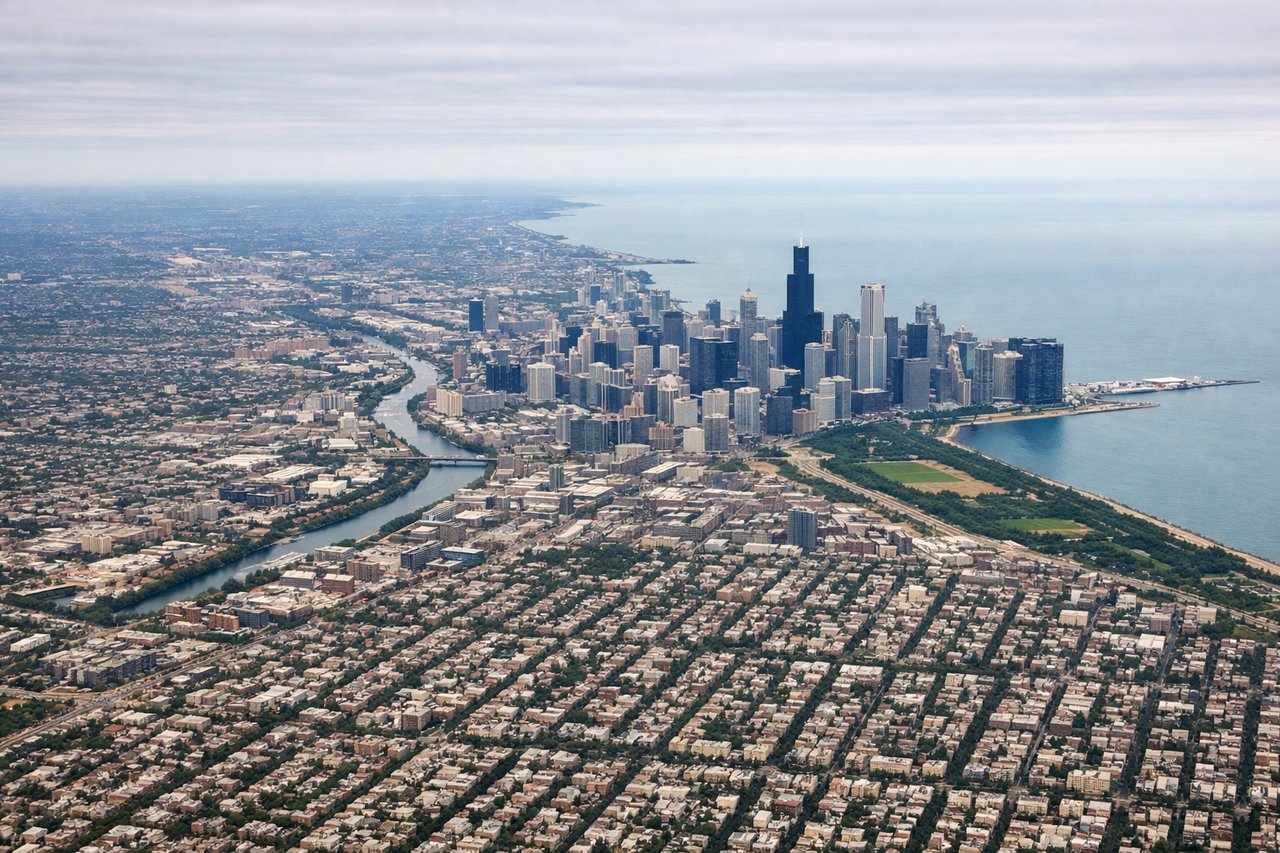
LEFTAs the aircraft climbs out of O'Hare and banks south, the Chicago skyline and Lake Michigan's shoreline become briefly visible to the east on the left side. This is the most dramatic moment of the flight before the route settles over flat farmland.
Landing at RSW
RIGHTOn approach into Fort Myers, the descent path crosses the Gulf coast, revealing barrier islands like Sanibel and the wide mouth of the Caloosahatchee River off the western side. This coastal, water-and-island scenery is far more distinctive than the flat interior seen from the left.
Landmarks on this routeAll landmarks →
Will your flight be in sunlight?
See exactly which side of the plane gets sun and shade at your departure time.
About This Route
Which side of the plane should I sit on flying from Chicago Ohare International (ORD) to Southwest Florida International (RSW)?
Sit on the Right side of the plane for the best views on flights from Chicago to Fort Myers. While the Chicago departure offers a brief skyline moment, the right side benefits from a longer, more visually rewarding payoff during descent, with Gulf of Mexico coastline, barrier islands, and river estuaries near Fort Myers—scenery that persists through much of the approach rather than a fleeting glimpse.
What can I see during takeoff from Chicago Ohare International in Chicago?
During takeoff from Chicago Ohare International (ORD), sit on the Left side for the best views. As the aircraft climbs out of O'Hare and banks south, the Chicago skyline and Lake Michigan's shoreline become briefly visible to the east on the left side. This is the most dramatic moment of the flight before the route settles over flat farmland. Notable sights include: Chicago skyline, Lake Michigan shoreline, Loop and Near North high-rises, O'Hare's runway grid receding below.
What can I see when landing at Southwest Florida International in Fort Myers?
When landing at Southwest Florida International (RSW), sit on the Right side for the best views. On approach into Fort Myers, the descent path crosses the Gulf coast, revealing barrier islands like Sanibel and the wide mouth of the Caloosahatchee River off the western side. This coastal, water-and-island scenery is far more distinctive than the flat interior seen from the left. Notable sights include: Sanibel and Captiva barrier islands, Caloosahatchee River mouth, Gulf of Mexico coastline, Pine Island Sound.
How long is the flight from Chicago to Fort Myers?
The flight from Chicago Ohare International (ORD) to Southwest Florida International (RSW) takes 2h 45m.
What does the Chicago to Fort Myers flight path pass over?
Flat farmland of Illinois and Indiana giving way to the rolling hills of Kentucky and Tennessee, with the distant southern Appalachian foothills occasionally visible to the east before the terrain flattens again over Georgia and the Florida peninsula.