Chicago to San Juan is 2,074 miles (3,338 km), a flight of about 4 hours.
The right side delivers the dramatic Chicago skyline and Lake Michigan on departure, and over the flight you track southeast over the Atlantic where both sides are open ocean. The San Juan approach favors the left, but the Chicago departure view is the more iconic and visually rewarding moment of the flight, giving the right side the overall edge.
Flight Path
After departing Chicago the route tracks southeast over Indiana and Ohio, then over the Appalachians in Virginia and the Carolinas — visible as a wrinkled ridge system from altitude. The flight then crosses over the Atlantic off the Carolinas coast and continues southeast over open ocean. The Bahamas archipelago — shallow turquoise banks and scattered cays — is visible below roughly 90 minutes before landing. Hispaniola's mountainous interior, including the Cordillera Central, appears on the horizon to the south before Puerto Rico comes into view.
Great circle distance and headings ›

Phase by phase
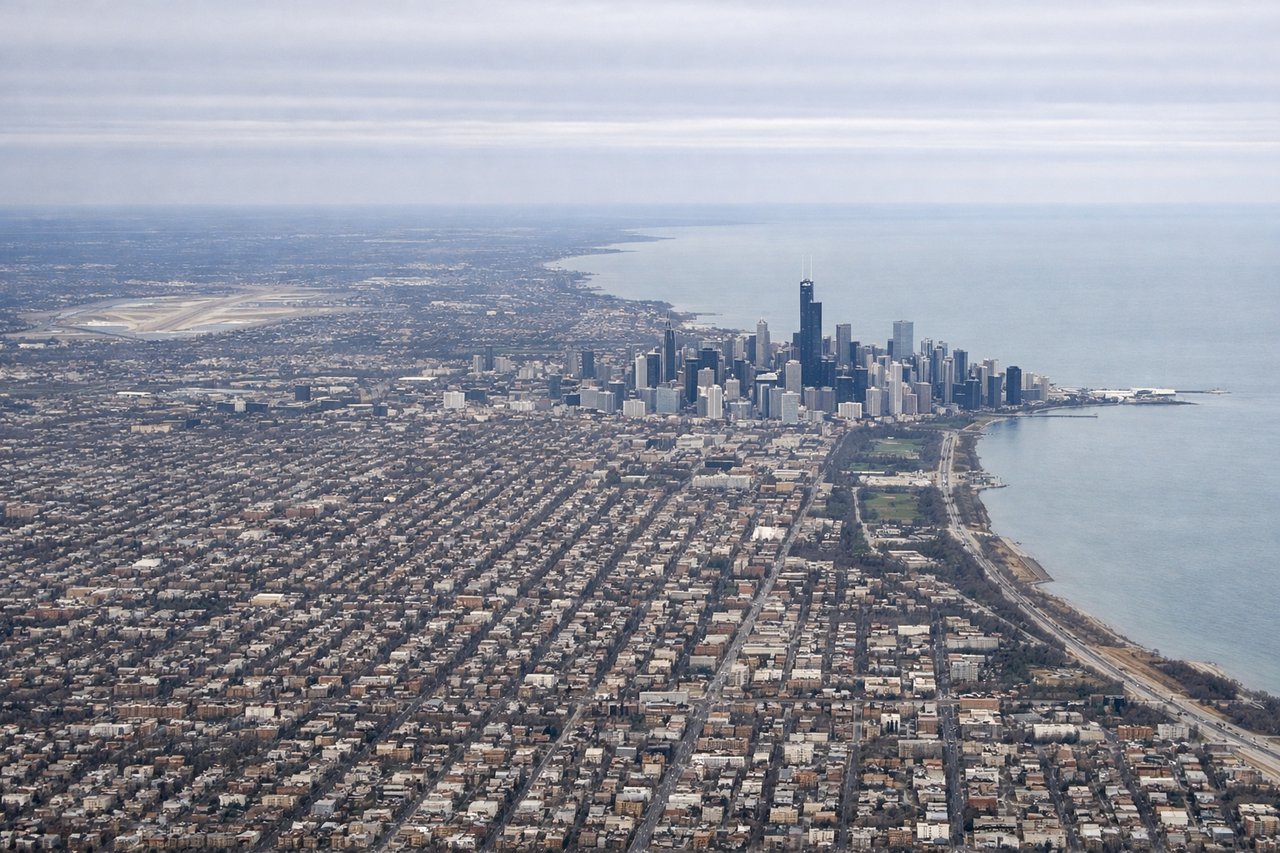
Takeoff from ORD
RIGHTO'Hare's most common departures head southeast or east toward the lake. A right-side seat gives you the Chicago skyline and Lake Michigan shoreline as you climb out. The downtown Loop and lakefront are clearly visible before you turn south.
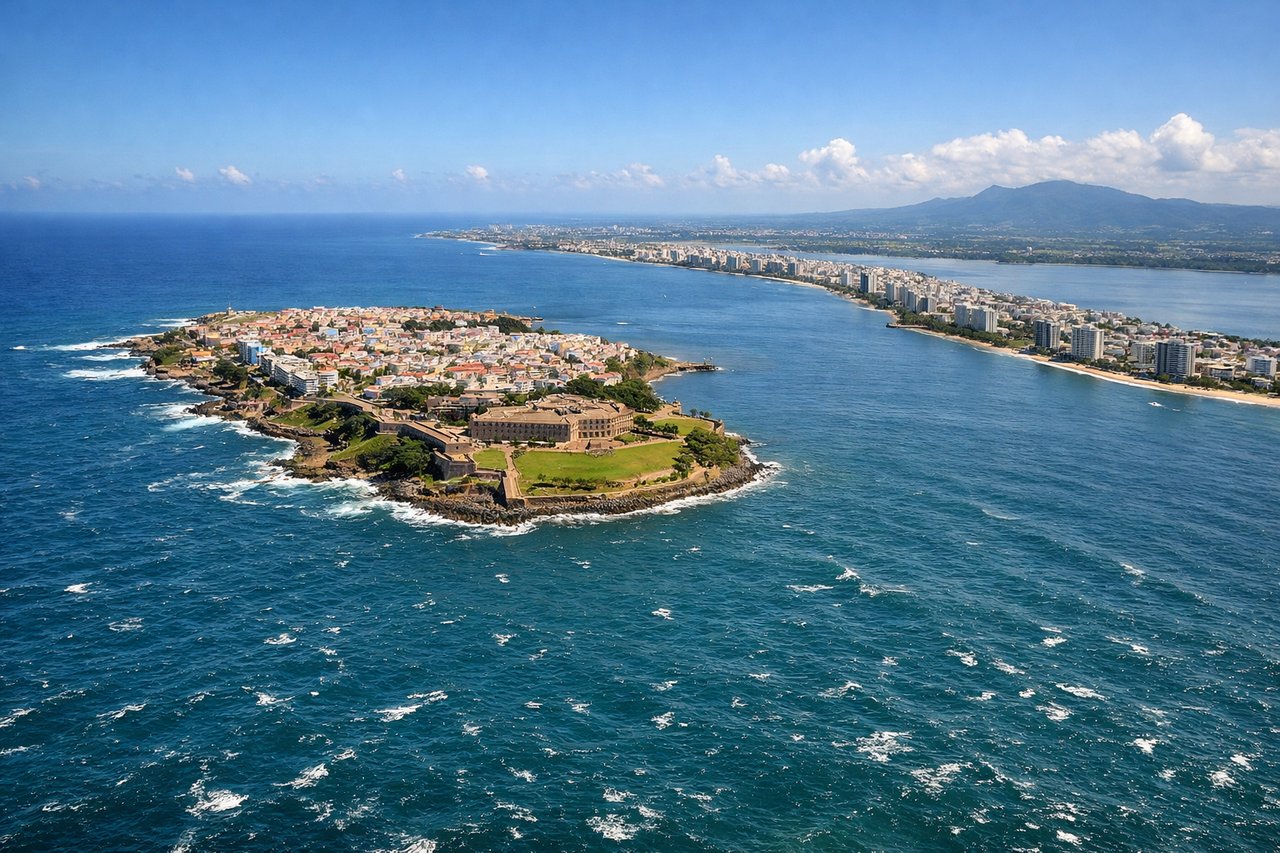
Landing at SJU
LEFTLuis Munoz Marin typically receives arrivals from the west or northwest, with aircraft approaching over the water and turning final over the bay. A left-side seat gives you Old San Juan, San Juan Bay, and El Morro fort on approach. The El Yunque rainforest hills are visible to the southeast on the left side during descent.
Landmarks on this routeAll landmarks →
Will your flight be in sunlight?
Pick a date and time in the Sun Map to watch the sun move across your whole flight.
About This Route
Which side of the plane should I sit on flying from Chicago Ohare International (ORD) to Luis Munoz Marin International (SJU)?
Sit on the Right side of the plane for the best views on flights from Chicago to San Juan. The right side delivers the dramatic Chicago skyline and Lake Michigan on departure, and over the flight you track southeast over the Atlantic where both sides are open ocean. The San Juan approach favors the left, but the Chicago departure view is the more iconic and visually rewarding moment of the flight, giving the right side the overall edge.
What can I see during takeoff from Chicago Ohare International in Chicago?
During takeoff from Chicago Ohare International (ORD), sit on the Right side for the best views. O'Hare's most common departures head southeast or east toward the lake. A right-side seat gives you the Chicago skyline and Lake Michigan shoreline as you climb out. The downtown Loop and lakefront are clearly visible before you turn south. Notable sights include: Chicago Loop skyline, Lake Michigan shoreline, Grant Park and Museum Campus, Indiana Dunes coastline.
What can I see when landing at Luis Munoz Marin International in San Juan?
When landing at Luis Munoz Marin International (SJU), sit on the Left side for the best views. Luis Munoz Marin typically receives arrivals from the west or northwest, with aircraft approaching over the water and turning final over the bay. A left-side seat gives you Old San Juan, San Juan Bay, and El Morro fort on approach. The El Yunque rainforest hills are visible to the southeast on the left side during descent. Notable sights include: Old San Juan peninsula and El Morro fort, San Juan Bay, Condado lagoon and beach strip, El Yunque rainforest hills.
How long is the flight from Chicago to San Juan?
The flight from Chicago Ohare International (ORD) to Luis Munoz Marin International (SJU) takes about 4 hours. The shortest flight path between them is 2,074 miles (3,338 km); winds and air traffic control usually add a few percent.
What does the Chicago to San Juan flight path pass over?
After departing Chicago the route tracks southeast over Indiana and Ohio, then over the Appalachians in Virginia and the Carolinas — visible as a wrinkled ridge system from altitude. The flight then crosses over the Atlantic off the Carolinas coast and continues southeast over open ocean. The Bahamas archipelago — shallow turquoise banks and scattered cays — is visible below roughly 90 minutes before landing. Hispaniola's mountainous interior, including the Cordillera Central, appears on the horizon to the south before Puerto Rico comes into view.