While takeoff offers coastal views, the landing approach into Seattle provides the most dramatic and visually distinctive scenery: Mount Rainier and the Cascade Range are iconic, snow-capped volcanic peaks visible from significant distance during descent. This outweighs the Norfolk harbor views.
Flown ORF to BFI? Did we get it right?
Flight Path
Norfolk to Seattle is 2,431 miles (3,913 km), a flight of about 5 hours 15 minutes.
The flight path crosses the Appalachian Mountains (visible during the first 2 hours westbound), the Ohio River valley, the Great Plains, and enters the Pacific Northwest with views of the Rocky Mountain foothills before descending into the Cascade Range. Notable geographic features include the ridge-and-valley topography of the Appalachians, the Mississippi River valley, the Great Plains extending across Kansas and Nebraska, and the high desert plateau of eastern Washington before the dramatic rise of the Cascades.
Great circle distance and headings ›


Phase by phase
Takeoff from ORF
RIGHTRight-side seats offer views of the Hampton Roads waterway system and the Atlantic coastline as the aircraft climbs out over southeastern Virginia. The James River estuary and Norfolk Harbor are prominent features during the initial climb.
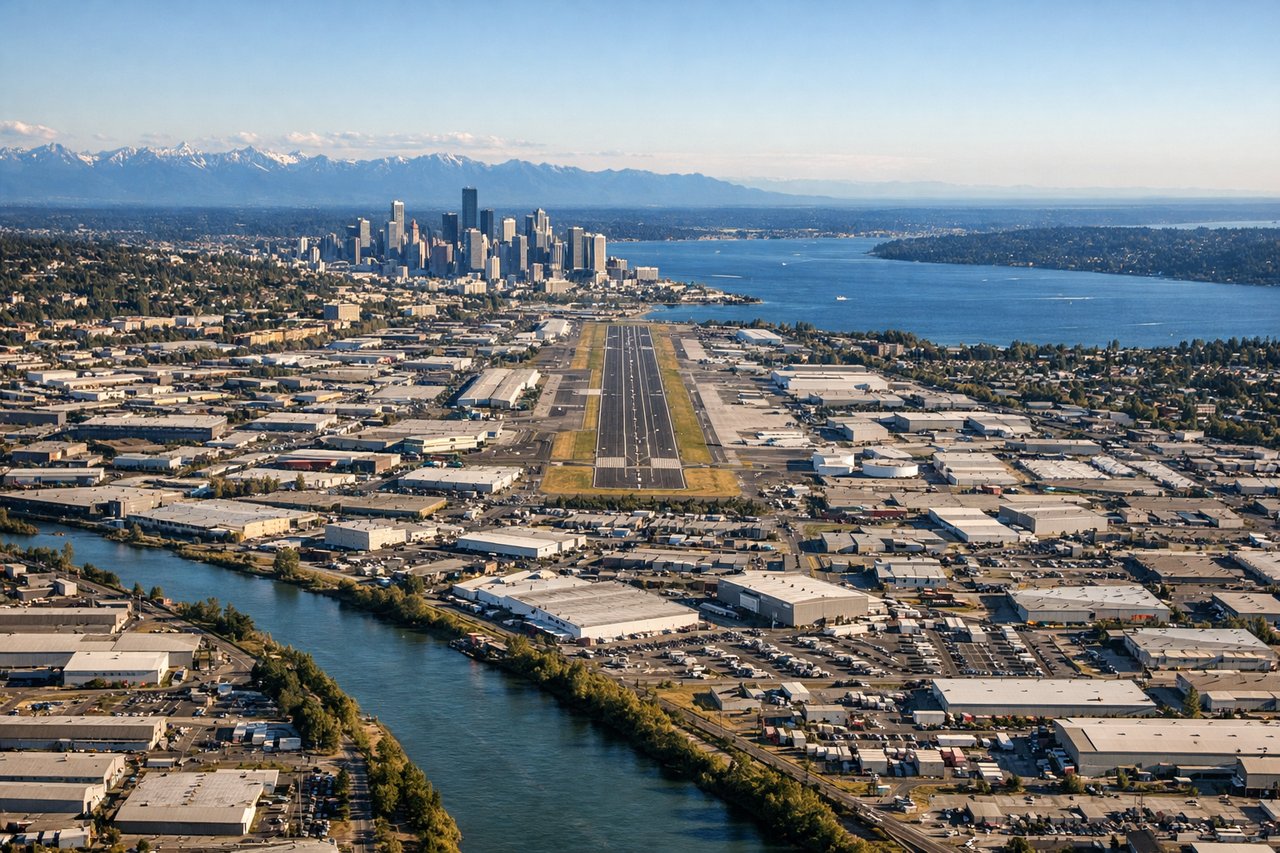
Landing at BFI
LEFTLeft-side seats provide excellent views of the Cascade Range and Mount Rainier during the descent into Seattle. As the aircraft approaches from the east, the dramatic volcanic peaks dominate the left side of the cabin, with the Puget Sound visible below.
Will your flight be in sunlight?
Pick a date and time in the Sun Map to watch the sun move across your whole flight.
About This Route
Which side of the plane should I sit on flying from Norfolk International (ORF) to Boeing Fld King Co International (BFI)?
Sit on the Left side of the plane for the best views on flights from Norfolk to Seattle. While takeoff offers coastal views, the landing approach into Seattle provides the most dramatic and visually distinctive scenery: Mount Rainier and the Cascade Range are iconic, snow-capped volcanic peaks visible from significant distance during descent. This outweighs the Norfolk harbor views.
What can I see during takeoff from Norfolk International in Norfolk?
During takeoff from Norfolk International (ORF), sit on the Right side for the best views. Right-side seats offer views of the Hampton Roads waterway system and the Atlantic coastline as the aircraft climbs out over southeastern Virginia. The James River estuary and Norfolk Harbor are prominent features during the initial climb. Notable sights include: Hampton Roads (major harbor complex), James River estuary, Atlantic Ocean coastline, Chesapeake Bay to the north.
What can I see when landing at Boeing Fld King Co International in Seattle?
When landing at Boeing Fld King Co International (BFI), sit on the Left side for the best views. Left-side seats provide excellent views of the Cascade Range and Mount Rainier during the descent into Seattle. As the aircraft approaches from the east, the dramatic volcanic peaks dominate the left side of the cabin, with the Puget Sound visible below. Notable sights include: Mount Rainier (14,410 ft, prominent volcanic cone), Cascade Range, Puget Sound, Lake Washington.
How long is the flight from Norfolk to Seattle?
The flight from Norfolk International (ORF) to Boeing Fld King Co International (BFI) takes about 5 hours 15 minutes. The shortest flight path between them is 2,431 miles (3,913 km); winds and air traffic control usually add a few percent.
What does the Norfolk to Seattle flight path pass over?
The flight path crosses the Appalachian Mountains (visible during the first 2 hours westbound), the Ohio River valley, the Great Plains, and enters the Pacific Northwest with views of the Rocky Mountain foothills before descending into the Cascade Range. Notable geographic features include the ridge-and-valley topography of the Appalachians, the Mississippi River valley, the Great Plains extending across Kansas and Nebraska, and the high desert plateau of eastern Washington before the dramatic rise of the Cascades.