Norfolk to Washington is 143 miles (230 km), a flight of about 1 hour 15 minutes.
While takeoff offers good water views on the right, the landing approach into DCA provides far more iconic and visually distinctive landmarks. The Potomac River and Washington monuments are unmissable on the left side, making it the stronger choice for the overall flight experience.
Flight Path
The flight path runs northwest from Norfolk across the Virginia Tidewater, passing east of Richmond. The James River and its major bends are visible from altitude during the cruise segment. As you approach the Washington area, the Rappahannock River and various tributary systems of the Potomac become visible. The terrain transitions from flat coastal plain to gently rolling Piedmont. No major mountain ranges are visible on this route—the Blue Ridge Mountains lie well to the west of the direct flight path.
Great circle distance and headings ›
.jpeg?width=600)
Phase by phase
Takeoff from ORF
RIGHTORF typically departs to the north on Runway 3 or northeast on Runway 5. Right-side seats capture the Elizabeth River and Hampton Roads waterway as you climb, with the naval shipyards and Naval Station Norfolk visible below. This is the most distinctive feature of the immediate departure corridor.
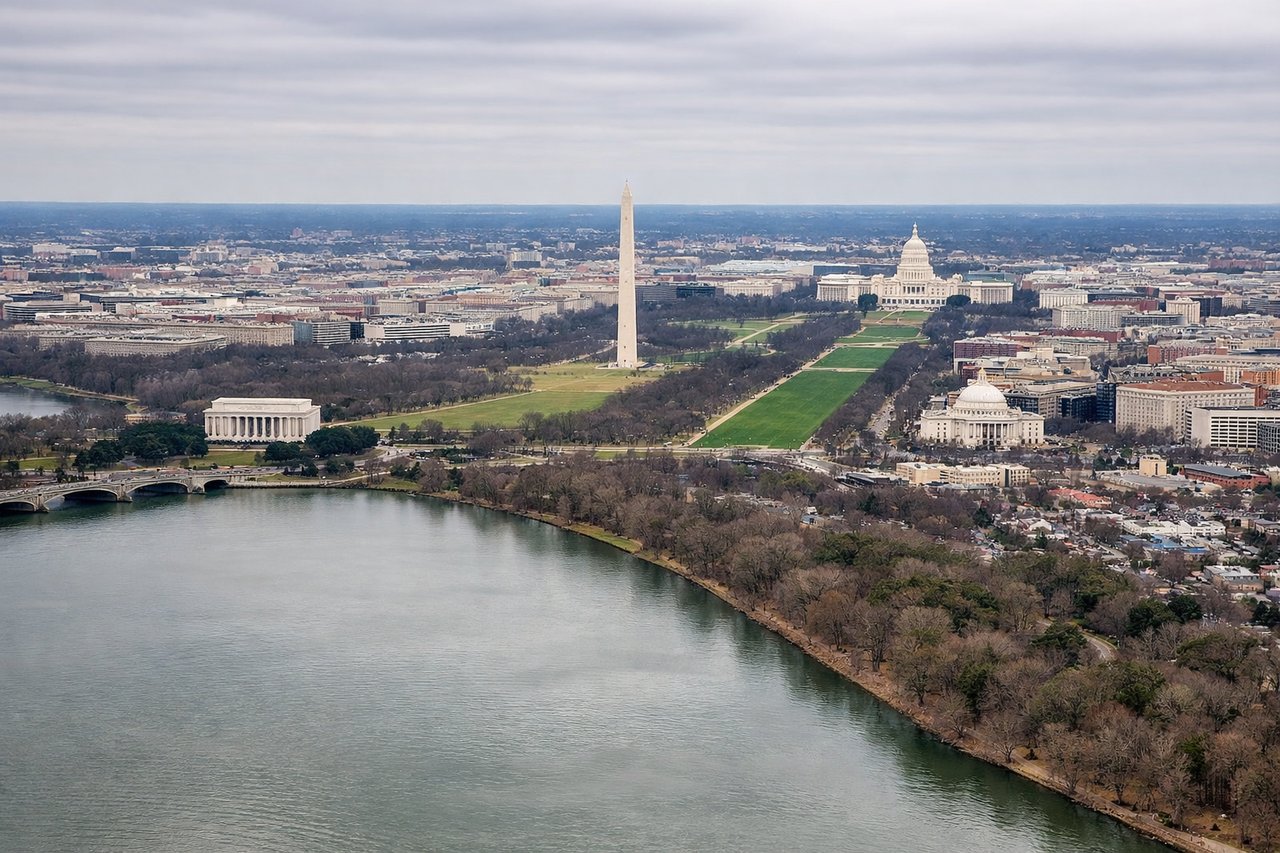
Landing at DCA
LEFTDCA uses Runways 1 or 19 depending on wind. On approach from the southeast, left-side seats offer views of the Potomac River, the National Mall with its monuments, and Arlington. The river curves dramatically as you descend toward the airport, and the iconic Washington landmarks are unmistakable on the left side of the approach corridor.
Landmarks on this routeAll landmarks →
Will your flight be in sunlight?
Pick a date and time in the Sun Map to watch the sun move across your whole flight.
About This Route
Which side of the plane should I sit on flying from Norfolk International (ORF) to Ronald Reagan Washington National (DCA)?
Sit on the Left side of the plane for the best views on flights from Norfolk to Washington. While takeoff offers good water views on the right, the landing approach into DCA provides far more iconic and visually distinctive landmarks. The Potomac River and Washington monuments are unmissable on the left side, making it the stronger choice for the overall flight experience.
What can I see during takeoff from Norfolk International in Norfolk?
During takeoff from Norfolk International (ORF), sit on the Right side for the best views. ORF typically departs to the north on Runway 3 or northeast on Runway 5. Right-side seats capture the Elizabeth River and Hampton Roads waterway as you climb, with the naval shipyards and Naval Station Norfolk visible below. This is the most distinctive feature of the immediate departure corridor. Notable sights include: Elizabeth River, Hampton Roads, Naval Station Norfolk, Willoughby Bay.
What can I see when landing at Ronald Reagan Washington National in Washington?
When landing at Ronald Reagan Washington National (DCA), sit on the Left side for the best views. DCA uses Runways 1 or 19 depending on wind. On approach from the southeast, left-side seats offer views of the Potomac River, the National Mall with its monuments, and Arlington. The river curves dramatically as you descend toward the airport, and the iconic Washington landmarks are unmistakable on the left side of the approach corridor. Notable sights include: Potomac River, National Mall monuments, Arlington National Cemetery, Theodore Roosevelt Island.
How long is the flight from Norfolk to Washington?
The flight from Norfolk International (ORF) to Ronald Reagan Washington National (DCA) takes about 1 hour 15 minutes. The shortest flight path between them is 143 miles (230 km); winds and air traffic control usually add a few percent.
What does the Norfolk to Washington flight path pass over?
The flight path runs northwest from Norfolk across the Virginia Tidewater, passing east of Richmond. The James River and its major bends are visible from altitude during the cruise segment. As you approach the Washington area, the Rappahannock River and various tributary systems of the Potomac become visible. The terrain transitions from flat coastal plain to gently rolling Piedmont. No major mountain ranges are visible on this route—the Blue Ridge Mountains lie well to the west of the direct flight path.