Norfolk to Edinburgh is 3,522 miles (5,668 km), a flight of about 7 hours 15 minutes.
While takeoff favors the right for coastal views, the landing experience on the left is significantly more rewarding—Edinburgh's dramatic volcanic geography and castle are iconic and unmissable. The left side captures the defining features of your destination.
Flight Path
The flight crosses the Atlantic at roughly 35,000 feet. Notable features along the route include: the Irish Sea (visible during the climb-out phase if departing northeast), the western coast of Ireland and the Atlantic approaches, the Hebrides and Scottish islands (visible during descent into Edinburgh), and the Scottish Lowlands. At cruise altitude, individual landmarks are difficult to discern, but the curvature of the Earth and the vast Atlantic expanse dominate the view. During descent into Scottish airspace, the Pentland Hills and Firth of Forth become increasingly visible.
Great circle distance and headings ›Phase by phase
Takeoff from ORF
RIGHTORF typically departs runway 3 (heading 030°) or runway 21 (heading 210°). Right-side seats offer views of the Hampton Roads waterway system and the Atlantic coastline as you climb out. The water features and coastal geography are more visually distinctive than the inland terrain to the left.
Landing at EDI
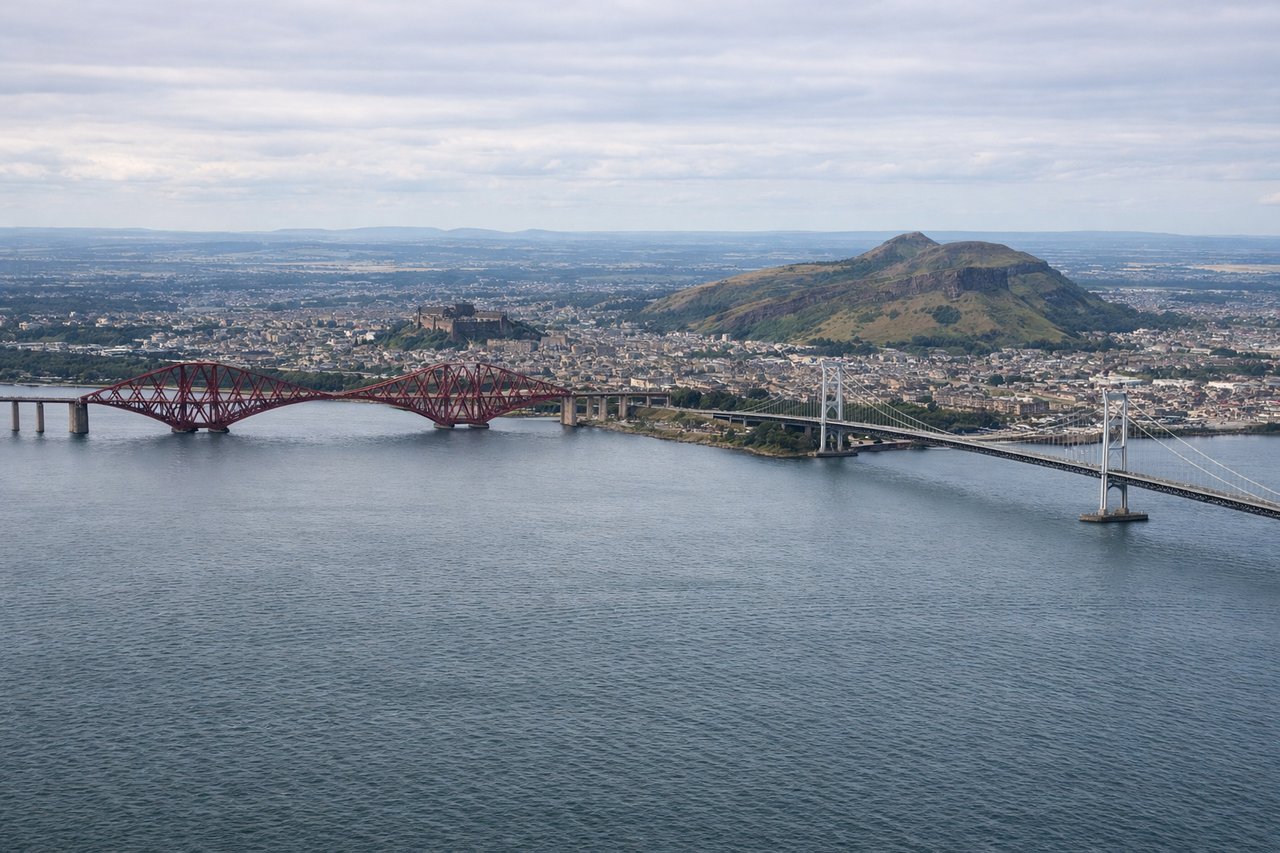
LEFTEdinburgh Airport (runway 24 or 06 depending on wind) sits west of the city. Left-side seats during approach offer direct views of Edinburgh's distinctive geography: the Pentland Hills to the south, the Firth of Forth to the north, and the city's castle and Old Town silhouette on the volcanic ridge. Right-side views show less distinctive terrain.
Landmarks on this routeAll landmarks →
Will your flight be in sunlight?
Pick a date and time in the Sun Map to watch the sun move across your whole flight.
About This Route
Which side of the plane should I sit on flying from Norfolk International (ORF) to Edinburgh (EDI)?
Sit on the Left side of the plane for the best views on flights from Norfolk to Edinburgh. While takeoff favors the right for coastal views, the landing experience on the left is significantly more rewarding—Edinburgh's dramatic volcanic geography and castle are iconic and unmissable. The left side captures the defining features of your destination.
What can I see during takeoff from Norfolk International in Norfolk?
During takeoff from Norfolk International (ORF), sit on the Right side for the best views. ORF typically departs runway 3 (heading 030°) or runway 21 (heading 210°). Right-side seats offer views of the Hampton Roads waterway system and the Atlantic coastline as you climb out. The water features and coastal geography are more visually distinctive than the inland terrain to the left. Notable sights include: Hampton Roads (the confluence of the James, Nansemond, and Elizabeth Rivers), Norfolk Naval Station, Chesapeake Bay opening to the Atlantic, Virginia Beach barrier islands.
What can I see when landing at Edinburgh in Edinburgh?
When landing at Edinburgh (EDI), sit on the Left side for the best views. Edinburgh Airport (runway 24 or 06 depending on wind) sits west of the city. Left-side seats during approach offer direct views of Edinburgh's distinctive geography: the Pentland Hills to the south, the Firth of Forth to the north, and the city's castle and Old Town silhouette on the volcanic ridge. Right-side views show less distinctive terrain. Notable sights include: Edinburgh Castle and Old Town (on volcanic ridge), Pentland Hills (south), Firth of Forth (north), Arthur's Seat.
How long is the flight from Norfolk to Edinburgh?
The flight from Norfolk International (ORF) to Edinburgh (EDI) takes about 7 hours 15 minutes. The shortest flight path between them is 3,522 miles (5,668 km); winds and air traffic control usually add a few percent.
What does the Norfolk to Edinburgh flight path pass over?
The flight crosses the Atlantic at roughly 35,000 feet. Notable features along the route include: the Irish Sea (visible during the climb-out phase if departing northeast), the western coast of Ireland and the Atlantic approaches, the Hebrides and Scottish islands (visible during descent into Edinburgh), and the Scottish Lowlands. At cruise altitude, individual landmarks are difficult to discern, but the curvature of the Earth and the vast Atlantic expanse dominate the view. During descent into Scottish airspace, the Pentland Hills and Firth of Forth become increasingly visible.