Cork to London is 345 miles (555 km), a flight of about 1 hour 15 minutes.
While takeoff from Cork favors the right side, the landing approach into Heathrow from the left offers more dramatic and recognizable scenery—the Thames estuary and London's urban landscape are more visually distinctive than the departure views. Left-side seats capture the most memorable portion of this route.
Flight Path
The flight crosses the Celtic Sea and Bristol Channel, passing over the Welsh coast (Pembrokeshire and Glamorgan coastlines visible), then crosses into England over the Severn Estuary. The Cotswolds and Thames Valley appear in the final approach phase. Clear-weather flights may show the Brecon Beacons in Wales during the midpoint of the journey.
Great circle distance and headings ›Phase by phase
Takeoff from ORK
RIGHTRight-side seats offer views of Cork Harbour and the surrounding coastline as the aircraft climbs eastward. You'll see the natural harbor geography and the city sprawl below before heading out over the Celtic Sea.
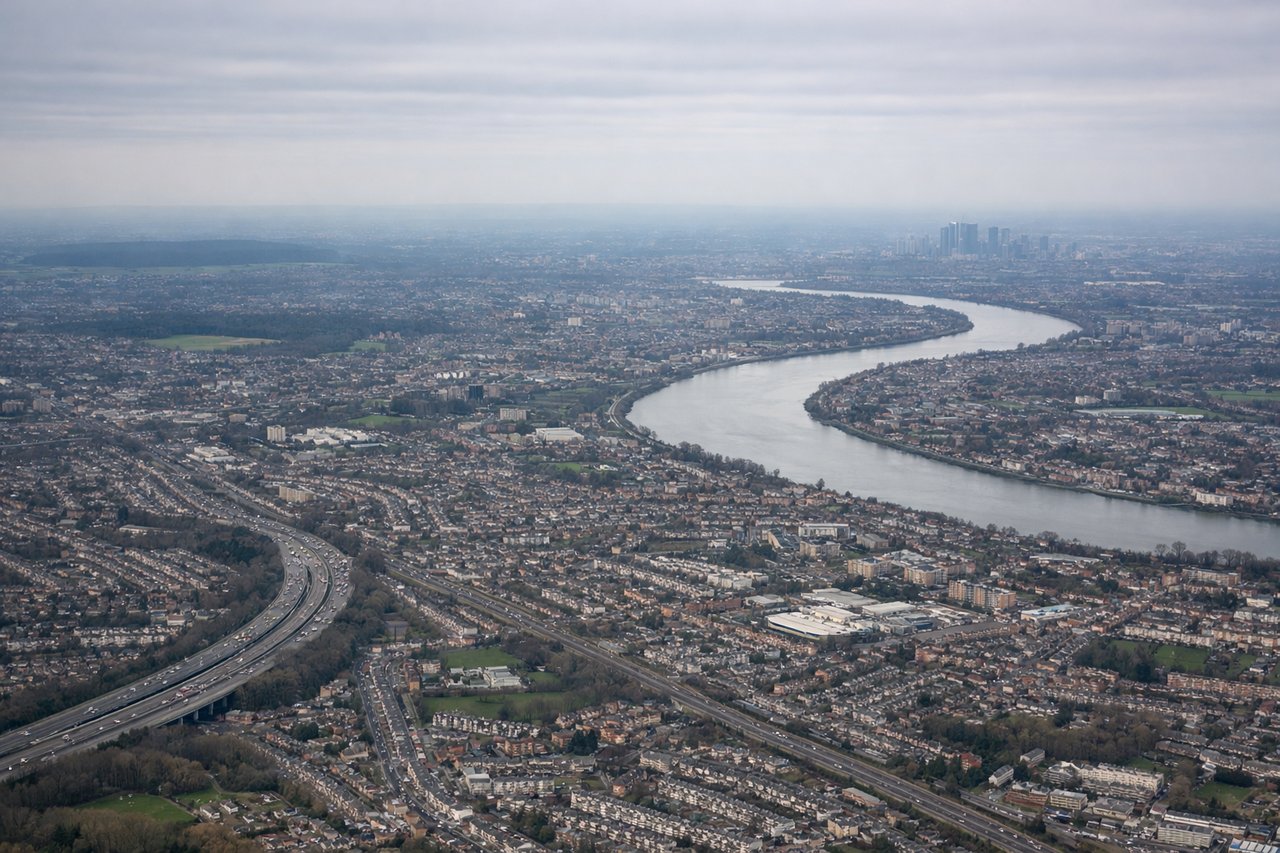
Landing at LHR
LEFTLeft-side seats provide excellent views during the descent into Heathrow, particularly of the Thames estuary, London's urban sprawl, and the approach path over west London. You'll see the river's distinctive meanders and the city's grid pattern expanding below.
Landmarks on this routeAll landmarks →
Will your flight be in sunlight?
Pick a date and time in the Sun Map to watch the sun move across your whole flight.
About This Route
Which side of the plane should I sit on flying from Cork (ORK) to Heathrow (LHR)?
Sit on the Left side of the plane for the best views on flights from Cork to London. While takeoff from Cork favors the right side, the landing approach into Heathrow from the left offers more dramatic and recognizable scenery—the Thames estuary and London's urban landscape are more visually distinctive than the departure views. Left-side seats capture the most memorable portion of this route.
What can I see during takeoff from Cork in Cork?
During takeoff from Cork (ORK), sit on the Right side for the best views. Right-side seats offer views of Cork Harbour and the surrounding coastline as the aircraft climbs eastward. You'll see the natural harbor geography and the city sprawl below before heading out over the Celtic Sea. Notable sights include: Cork Harbour, Cork city center, Fota Island, Inchydoney Beach.
What can I see when landing at Heathrow in London?
When landing at Heathrow (LHR), sit on the Left side for the best views. Left-side seats provide excellent views during the descent into Heathrow, particularly of the Thames estuary, London's urban sprawl, and the approach path over west London. You'll see the river's distinctive meanders and the city's grid pattern expanding below. Notable sights include: River Thames and its meanders, London urban area, Windsor and surrounding Thames Valley, Heathrow's position west of central London.
How long is the flight from Cork to London?
The flight from Cork (ORK) to Heathrow (LHR) takes about 1 hour 15 minutes. The shortest flight path between them is 345 miles (555 km); winds and air traffic control usually add a few percent.
What does the Cork to London flight path pass over?
The flight crosses the Celtic Sea and Bristol Channel, passing over the Welsh coast (Pembrokeshire and Glamorgan coastlines visible), then crosses into England over the Severn Estuary. The Cotswolds and Thames Valley appear in the final approach phase. Clear-weather flights may show the Brecon Beacons in Wales during the midpoint of the journey.