While takeoff offers central Florida's lake geography, the landing approach into Newark provides more visually distinctive and geographically significant features—the Hudson River, Manhattan skyline, and the Northeast Corridor's urban density make the left side the stronger choice for the overall flight.
Flown ORL to EWR? Did we get it right?
Flight Path
Orlando to Newark is 932 miles (1,500 km), a flight of about 2 hours 30 minutes.
The flight path crosses the Appalachian foothills (visible around Virginia/West Virginia border as subtle elevation changes and ridge patterns), the Chesapeake Bay (large water body visible during cruise if flying the typical northeast corridor), and the Delaware River valley before final approach into Newark. At cruise altitude (around 30,000 feet), the curvature of the Atlantic seaboard becomes apparent, with the coastline visible as a thin line separating land and ocean.
Great circle distance and headings ›


Phase by phase
Takeoff from ORL
RIGHTRight-side seats capture the sprawl of greater Orlando and the chain of lakes that define central Florida's geography. Depending on runway assignment (typically 01L/01R or 07L/07R), a right-bank turn northeastward shows the distinctive lake pattern and urban grid expanding below.
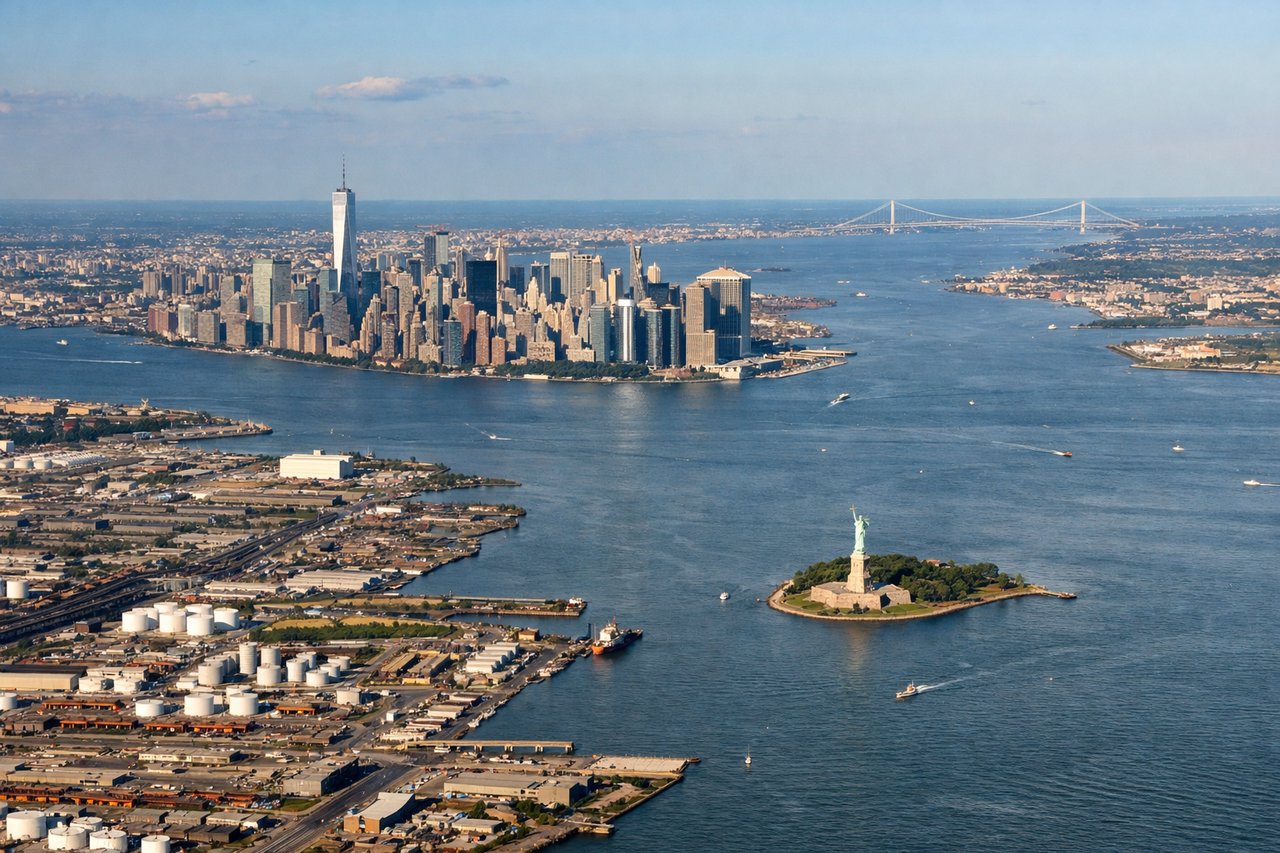
Landing at EWR
LEFTLeft-side seats on approach to Newark (typically runways 04L/04R or 22L/22R) offer views of the Hudson River, Manhattan skyline, and the New Jersey industrial corridor. A left-bank descent into Newark provides the most dramatic urban geography and the distinctive water features that define the approach corridor.
Will your flight be in sunlight?
Pick a date and time in the Sun Map to watch the sun move across your whole flight.
About This Route
Which side of the plane should I sit on flying from Executive (ORL) to Newark Liberty International (EWR)?
Sit on the Left side of the plane for the best views on flights from Orlando to Newark. While takeoff offers central Florida's lake geography, the landing approach into Newark provides more visually distinctive and geographically significant features—the Hudson River, Manhattan skyline, and the Northeast Corridor's urban density make the left side the stronger choice for the overall flight.
What can I see during takeoff from Executive in Orlando?
During takeoff from Executive (ORL), sit on the Right side for the best views. Right-side seats capture the sprawl of greater Orlando and the chain of lakes that define central Florida's geography. Depending on runway assignment (typically 01L/01R or 07L/07R), a right-bank turn northeastward shows the distinctive lake pattern and urban grid expanding below. Notable sights include: Lake Apopka (large, irregular shape northwest of airport), Orlando downtown skyline (small cluster near horizon), Shingle Creek (narrow waterway threading through wetlands), chain of smaller lakes dotting the landscape.
What can I see when landing at Newark Liberty International in Newark?
When landing at Newark Liberty International (EWR), sit on the Left side for the best views. Left-side seats on approach to Newark (typically runways 04L/04R or 22L/22R) offer views of the Hudson River, Manhattan skyline, and the New Jersey industrial corridor. A left-bank descent into Newark provides the most dramatic urban geography and the distinctive water features that define the approach corridor. Notable sights include: Hudson River (wide, dark waterway with visible shipping traffic), Manhattan skyline (dense high-rise cluster), Newark Bay (broader water body to the south), New Jersey Turnpike corridor (linear infrastructure visible below).
How long is the flight from Orlando to Newark?
The flight from Executive (ORL) to Newark Liberty International (EWR) takes about 2 hours 30 minutes. The shortest flight path between them is 932 miles (1,500 km); winds and air traffic control usually add a few percent.
What does the Orlando to Newark flight path pass over?
The flight path crosses the Appalachian foothills (visible around Virginia/West Virginia border as subtle elevation changes and ridge patterns), the Chesapeake Bay (large water body visible during cruise if flying the typical northeast corridor), and the Delaware River valley before final approach into Newark. At cruise altitude (around 30,000 feet), the curvature of the Atlantic seaboard becomes apparent, with the coastline visible as a thin line separating land and ocean.