While takeoff favors the right for Orlando views, the landing approach to San Juan is significantly more visually rewarding on the left, offering ocean, coastline, and mountain views. The left side captures the most distinctive geography of the destination.
Flown ORL to SJU? Did we get it right?
Flight Path
Orlando to San Juan is 1,194 miles (1,922 km), a flight of about 3 hours.
The flight path crosses the Bahamas and the Turks and Caicos Islands. Midway through the journey, passengers may see the shallow turquoise waters and island chains of the Bahamas (Great Bahama Bank, Exuma Cays) if flying at lower cruise altitudes or during clear conditions. The transition from the shallow Caribbean banks to deeper Atlantic blue water marks the approach to Puerto Rico. No major mountain ranges or significant terrain features are visible at cruise altitude until approaching Puerto Rico's interior mountains.
Great circle distance and headings ›Phase by phase
Takeoff from ORL
RIGHTOrlando Executive typically departs runway 18 (south) or 36 (north). Right-side seats offer views of the greater Orlando metropolitan area, including downtown Orlando's skyline and the chain of lakes that define central Florida's geography. Left side shows less distinctive terrain.
Landing at SJU
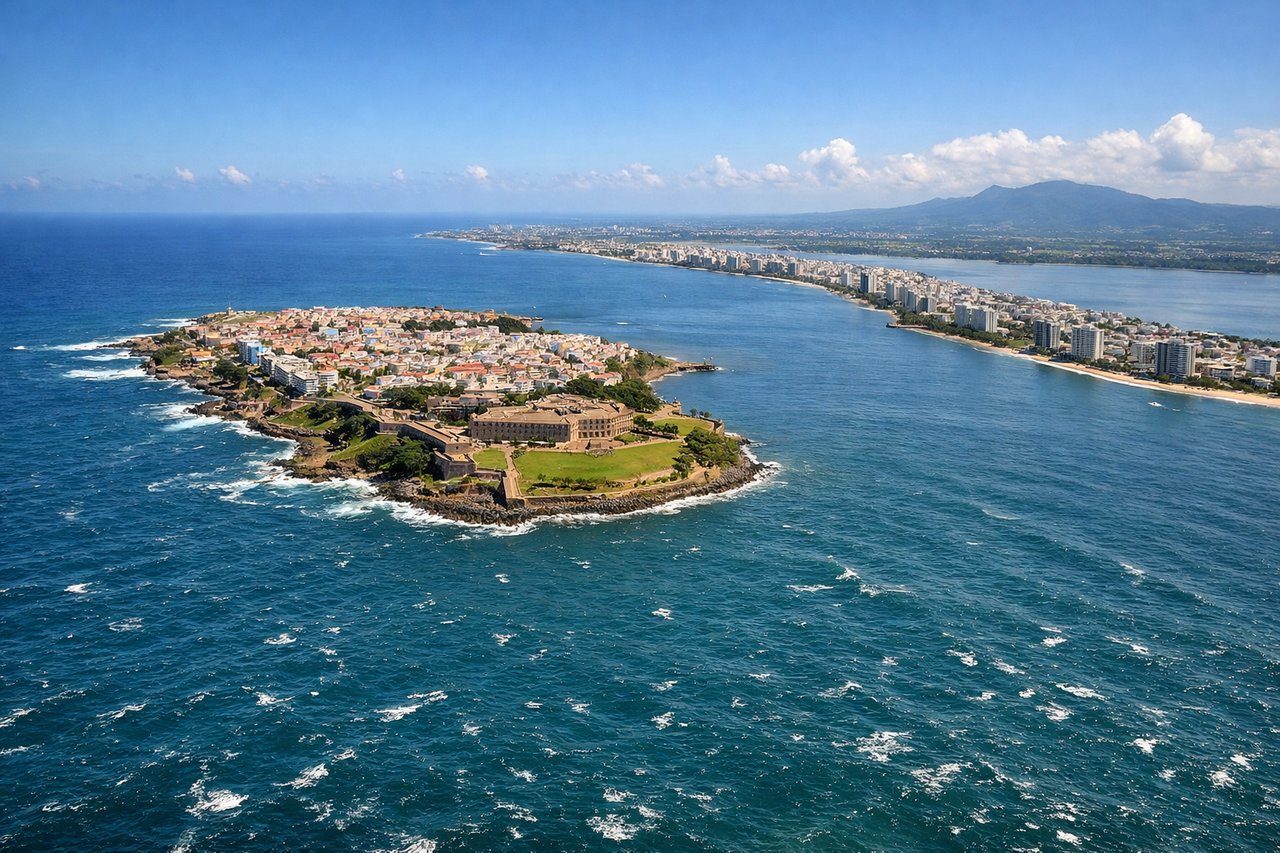
LEFTApproaching San Juan on runway 10 (northeast) or 28 (southwest), left-side seats provide superior views of the Atlantic approach, the northeastern coast of Puerto Rico, and the distinctive geography of the San Juan metropolitan area. Right side faces inland terrain with less visual interest.
Will your flight be in sunlight?
Pick a date and time in the Sun Map to watch the sun move across your whole flight.
About This Route
Which side of the plane should I sit on flying from Executive (ORL) to Luis Munoz Marin International (SJU)?
Sit on the Left side of the plane for the best views on flights from Orlando to San Juan. While takeoff favors the right for Orlando views, the landing approach to San Juan is significantly more visually rewarding on the left, offering ocean, coastline, and mountain views. The left side captures the most distinctive geography of the destination.
What can I see during takeoff from Executive in Orlando?
During takeoff from Executive (ORL), sit on the Right side for the best views. Orlando Executive typically departs runway 18 (south) or 36 (north). Right-side seats offer views of the greater Orlando metropolitan area, including downtown Orlando's skyline and the chain of lakes that define central Florida's geography. Left side shows less distinctive terrain. Notable sights include: Downtown Orlando skyline, Lake Eustis to the northwest, Chain of Lakes (Apopka, Dora, Beauclair) stretching north-south through the region, Florida's flat pine and palmetto scrubland extending to the horizon.
What can I see when landing at Luis Munoz Marin International in San Juan?
When landing at Luis Munoz Marin International (SJU), sit on the Left side for the best views. Approaching San Juan on runway 10 (northeast) or 28 (southwest), left-side seats provide superior views of the Atlantic approach, the northeastern coast of Puerto Rico, and the distinctive geography of the San Juan metropolitan area. Right side faces inland terrain with less visual interest. Notable sights include: Atlantic Ocean with deep blue water, Puerto Rico's northern coastline with development patterns, San Juan Bay and harbor infrastructure, El Yunque National Forest visible as green mountainous terrain to the southeast.
How long is the flight from Orlando to San Juan?
The flight from Executive (ORL) to Luis Munoz Marin International (SJU) takes about 3 hours. The shortest flight path between them is 1,194 miles (1,922 km); winds and air traffic control usually add a few percent.
What does the Orlando to San Juan flight path pass over?
The flight path crosses the Bahamas and the Turks and Caicos Islands. Midway through the journey, passengers may see the shallow turquoise waters and island chains of the Bahamas (Great Bahama Bank, Exuma Cays) if flying at lower cruise altitudes or during clear conditions. The transition from the shallow Caribbean banks to deeper Atlantic blue water marks the approach to Puerto Rico. No major mountain ranges or significant terrain features are visible at cruise altitude until approaching Puerto Rico's interior mountains.