Paris to San Francisco is 5,578 miles (8,977 km), a flight of about 10 hours 45 minutes.
While takeoff offers interesting Paris views from the right, the landing approach into SFO from the left provides more dramatic and distinctive scenery: the San Francisco Bay, Golden Gate Strait, and Marin Headlands are visually striking and geographically iconic. The left side during descent offers superior views of the approach corridor.
Flight Path
The flight path crosses the Atlantic Ocean (no significant landmarks for 4-5 hours after departure), then passes over Newfoundland and the Canadian Maritime provinces. The Great Lakes region may be visible on the northern approach to North America. The Rocky Mountains (particularly visible ranges in Montana and Idaho) appear as the aircraft crosses the continental interior. The Sierra Nevada range becomes visible during the final descent approach to California.
Great circle distance and headings ›.jpg?width=600)
.jpg?width=600)

Phase by phase
Takeoff from ORY
RIGHTRight side captures the Seine River winding through Paris and the city's urban sprawl expanding southwestward. You'll see the distinctive geometry of central Paris districts and suburban development receding toward the horizon as the aircraft climbs.
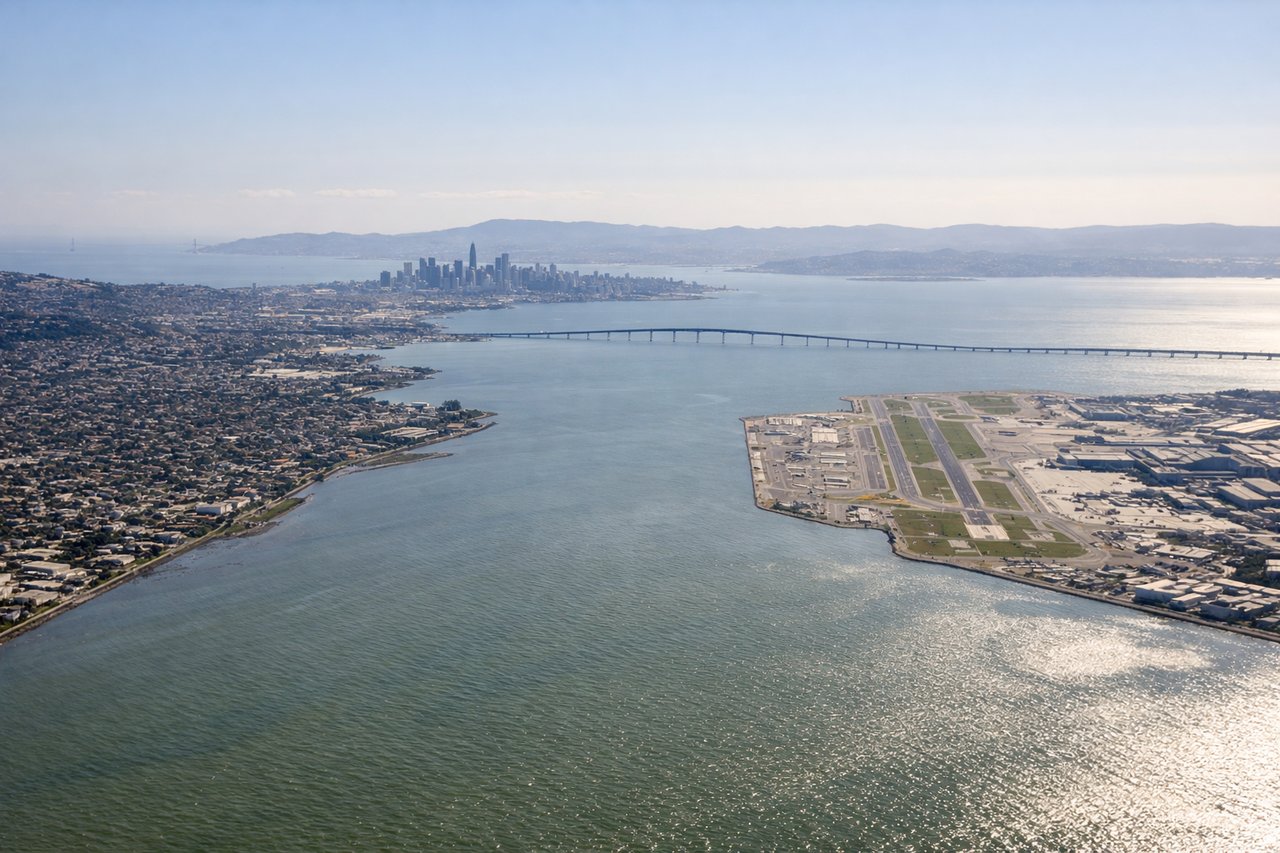
Landing at SFO
LEFTLeft side provides the best views during descent into SFO. You'll see the San Francisco Bay, the Golden Gate Strait, and the Marin Headlands as the aircraft approaches from the north. The bay's distinctive shape and surrounding topography are striking at lower altitudes.
Landmarks on this routeAll landmarks →
Will your flight be in sunlight?
Pick a date and time in the Sun Map to watch the sun move across your whole flight.
About This Route
Which side of the plane should I sit on flying from Orly (ORY) to San Francisco International (SFO)?
Sit on the Left side of the plane for the best views on flights from Paris to San Francisco. While takeoff offers interesting Paris views from the right, the landing approach into SFO from the left provides more dramatic and distinctive scenery: the San Francisco Bay, Golden Gate Strait, and Marin Headlands are visually striking and geographically iconic. The left side during descent offers superior views of the approach corridor.
What can I see during takeoff from Orly in Paris?
During takeoff from Orly (ORY), sit on the Right side for the best views. Right side captures the Seine River winding through Paris and the city's urban sprawl expanding southwestward. You'll see the distinctive geometry of central Paris districts and suburban development receding toward the horizon as the aircraft climbs. Notable sights include: Seine River, Paris city center (Île de la Cité visible as urban density), suburban Paris extending southwest, Fontainebleau Forest (distant, southeast).
What can I see when landing at San Francisco International in San Francisco?
When landing at San Francisco International (SFO), sit on the Left side for the best views. Left side provides the best views during descent into SFO. You'll see the San Francisco Bay, the Golden Gate Strait, and the Marin Headlands as the aircraft approaches from the north. The bay's distinctive shape and surrounding topography are striking at lower altitudes. Notable sights include: San Francisco Bay, Golden Gate Strait, Marin Headlands, San Francisco Peninsula.
How long is the flight from Paris to San Francisco?
The flight from Orly (ORY) to San Francisco International (SFO) takes about 10 hours 45 minutes. The shortest flight path between them is 5,578 miles (8,977 km); winds and air traffic control usually add a few percent.
What does the Paris to San Francisco flight path pass over?
The flight path crosses the Atlantic Ocean (no significant landmarks for 4-5 hours after departure), then passes over Newfoundland and the Canadian Maritime provinces. The Great Lakes region may be visible on the northern approach to North America. The Rocky Mountains (particularly visible ranges in Montana and Idaho) appear as the aircraft crosses the continental interior. The Sierra Nevada range becomes visible during the final descent approach to California.