Right side scores higher (3.5 vs 2.5) due to superior urban and water scenery on both takeoff and landing. Departure from PAC offers Panama City's waterfront and canal views; arrival into JFK provides Manhattan's skyline, East River, and Long Island Sound—two of North America's most recognizable urban and geographic features. Left side is dominated by jungle, inland terrain, and suburban sprawl with minimal dramatic landmarks.
Flown PAC to JFK? Did we get it right?
Flight Path
Panama City to New York is 2,216 miles (3,567 km), a flight of about 5 hours 15 minutes.
The flight path crosses the Caribbean Sea, the Bahamas (islands and shallow turquoise waters visible at altitude), and the Atlantic coast of Florida. Notable midpoint features include the Bahama Banks (shallow turquoise water visible from altitude), the Florida peninsula's eastern coastline, and the transition from tropical to temperate Atlantic waters. The route then crosses the southeastern United States, with the Appalachian foothills becoming visible in the final descent phase toward the Northeast Corridor.
Great circle distance and headings ›Phase by phase
Takeoff from PAC
RIGHTRight side captures Panama City's urban waterfront and the Panama Canal approach during northbound departure. The city skyline, Casco Viejo district, and the beginning of the Caribbean coastline are visible during climb-out from runway 01 (northbound). Left side shows inland jungle and terrain with minimal urban features.
Landing at JFK
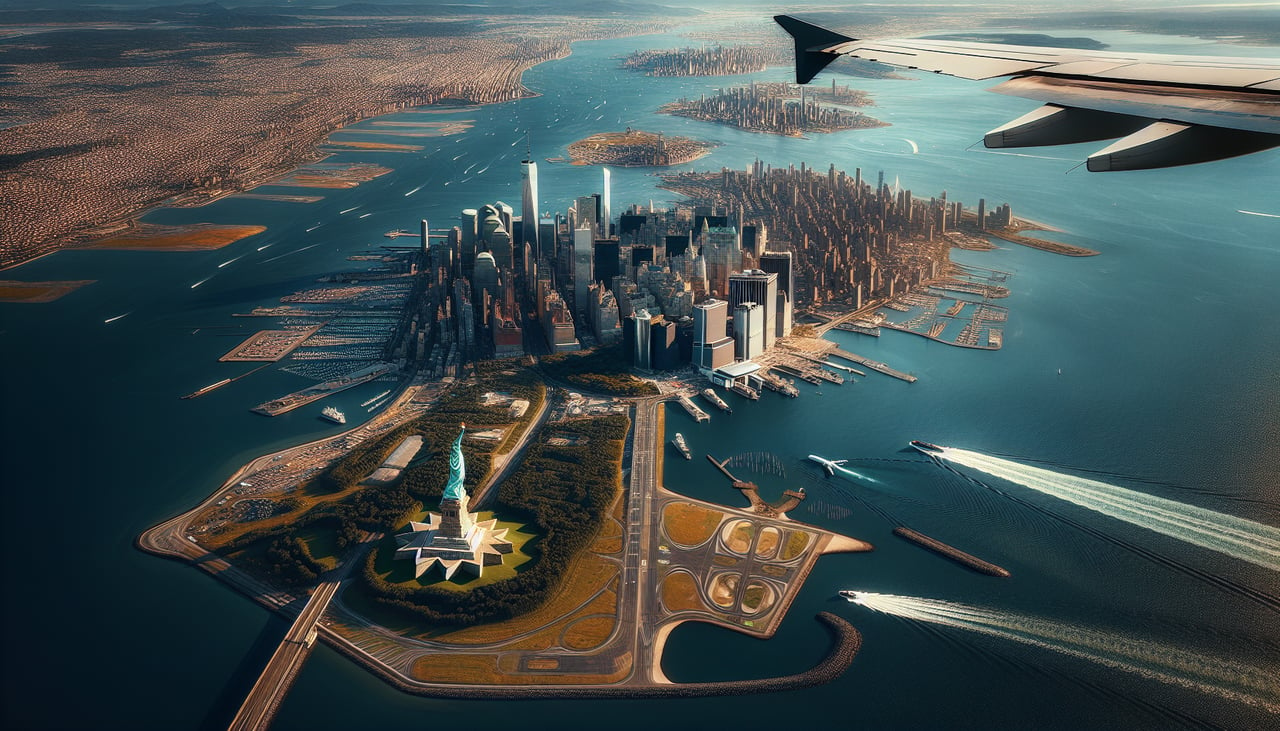
RIGHTRight side offers superior approach scenery into JFK. Depending on wind and runway assignment, northeastbound approaches typically provide views of Long Island Sound, the East River, Manhattan's skyline, and the Queens/Brooklyn waterfront during descent and final approach. Left side shows inland Long Island and New Jersey suburbs with less dramatic urban and water features.
Will your flight be in sunlight?
Pick a date and time in the Sun Map to watch the sun move across your whole flight.
About This Route
Which side of the plane should I sit on flying from Marcos A Gelabert International (PAC) to John F Kennedy International (JFK)?
Sit on the Right side of the plane for the best views on flights from Panama City to New York. Right side scores higher (3.5 vs 2.5) due to superior urban and water scenery on both takeoff and landing. Departure from PAC offers Panama City's waterfront and canal views; arrival into JFK provides Manhattan's skyline, East River, and Long Island Sound—two of North America's most recognizable urban and geographic features. Left side is dominated by jungle, inland terrain, and suburban sprawl with minimal dramatic landmarks.
What can I see during takeoff from Marcos A Gelabert International in Panama City?
During takeoff from Marcos A Gelabert International (PAC), sit on the Right side for the best views. Right side captures Panama City's urban waterfront and the Panama Canal approach during northbound departure. The city skyline, Casco Viejo district, and the beginning of the Caribbean coastline are visible during climb-out from runway 01 (northbound). Left side shows inland jungle and terrain with minimal urban features. Notable sights include: Panama City skyline and harbor, Casco Viejo historic district, Panama Canal entrance, Caribbean coastline.
What can I see when landing at John F Kennedy International in New York?
When landing at John F Kennedy International (JFK), sit on the Right side for the best views. Right side offers superior approach scenery into JFK. Depending on wind and runway assignment, northeastbound approaches typically provide views of Long Island Sound, the East River, Manhattan's skyline, and the Queens/Brooklyn waterfront during descent and final approach. Left side shows inland Long Island and New Jersey suburbs with less dramatic urban and water features. Notable sights include: Manhattan skyline, East River, Long Island Sound, Queens and Brooklyn waterfront.
How long is the flight from Panama City to New York?
The flight from Marcos A Gelabert International (PAC) to John F Kennedy International (JFK) takes about 5 hours 15 minutes. The shortest flight path between them is 2,216 miles (3,567 km); winds and air traffic control usually add a few percent.
What does the Panama City to New York flight path pass over?
The flight path crosses the Caribbean Sea, the Bahamas (islands and shallow turquoise waters visible at altitude), and the Atlantic coast of Florida. Notable midpoint features include the Bahama Banks (shallow turquoise water visible from altitude), the Florida peninsula's eastern coastline, and the transition from tropical to temperate Atlantic waters. The route then crosses the southeastern United States, with the Appalachian foothills becoming visible in the final descent phase toward the Northeast Corridor.