While takeoff favors the right for estuary views, the landing experience on the left—seeing central Buenos Aires' historic waterfront neighborhoods and the Río de la Plata approach—provides the more distinctive and memorable segment of this short flight.
Flight Path
The flight crosses the Río de la Plata estuary at roughly its widest point (approximately 35 nautical miles wide). At cruise altitude (around 15,000 feet), the estuary's muddy sediment plume is clearly visible as a brown discoloration. The flight path generally follows a west-northwest heading, with the Buenos Aires coastline becoming visible approximately 20 minutes before landing. No significant mountain ranges or dramatic terrain features—the entire route crosses flat, low-lying coastal plains and estuary waters.
Great circle distance and headings ›Phase by phase
Takeoff from PDP
RIGHTPDP typically departs runway 13/31 depending on wind. Right-side seats offer views of the Río de la Plata estuary immediately after climb-out, with the Atlantic coastline of Punta del Este visible to the east. Left seats face inland toward relatively featureless terrain.
Landing at AEP
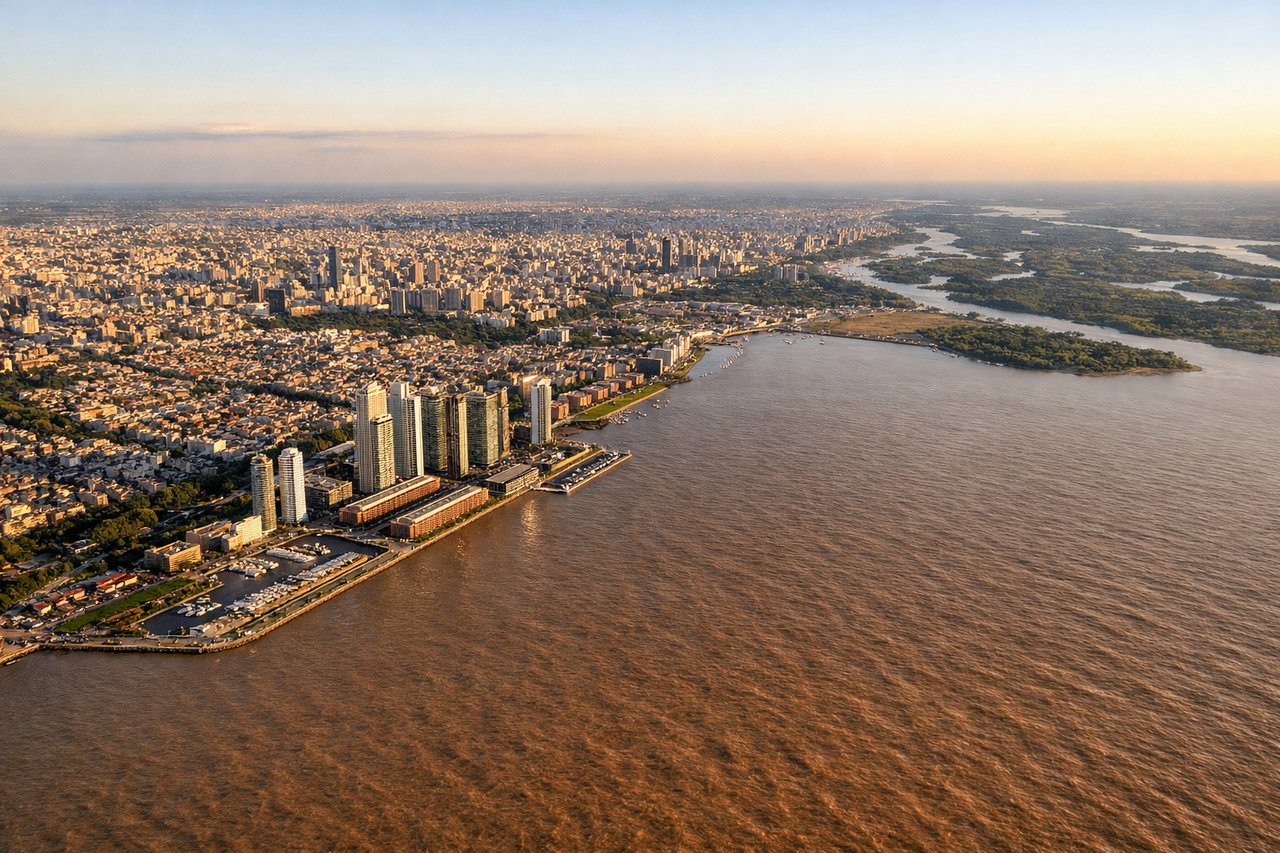
LEFTAEP uses runways 09/27 or 13/31 depending on wind. Left-side seats during approach offer views of central Buenos Aires neighborhoods (San Telmo, La Boca, Recoleta) and the Río de la Plata waterfront. Right seats see the western suburbs and less distinctive terrain.
Landmarks on this routeAll landmarks →
Will your flight be in sunlight?
See exactly which side of the plane gets sun and shade at your departure time.
About This Route
Which side of the plane should I sit on flying from Capitan Corbeta CA Curbelo International Airport (PDP) to Aeroparque Jorge Newbery (AEP)?
Sit on the Left side of the plane for the best views on flights from Punta Del Este to Buenos Aires. While takeoff favors the right for estuary views, the landing experience on the left—seeing central Buenos Aires' historic waterfront neighborhoods and the Río de la Plata approach—provides the more distinctive and memorable segment of this short flight.
What can I see during takeoff from Capitan Corbeta CA Curbelo International Airport in Punta Del Este?
During takeoff from Capitan Corbeta CA Curbelo International Airport (PDP), sit on the Right side for the best views. PDP typically departs runway 13/31 depending on wind. Right-side seats offer views of the Río de la Plata estuary immediately after climb-out, with the Atlantic coastline of Punta del Este visible to the east. Left seats face inland toward relatively featureless terrain. Notable sights include: Río de la Plata estuary (muddy brown water contrasting with Atlantic), Punta del Este peninsula and its beaches, Atlantic coastline extending northeast, Maldonado department coastal settlements.
What can I see when landing at Aeroparque Jorge Newbery in Buenos Aires?
When landing at Aeroparque Jorge Newbery (AEP), sit on the Left side for the best views. AEP uses runways 09/27 or 13/31 depending on wind. Left-side seats during approach offer views of central Buenos Aires neighborhoods (San Telmo, La Boca, Recoleta) and the Río de la Plata waterfront. Right seats see the western suburbs and less distinctive terrain. Notable sights include: Río de la Plata waterfront and docks, La Boca neighborhood with its characteristic low-rise buildings, Recoleta district, central Buenos Aires grid pattern.
How long is the flight from Punta Del Este to Buenos Aires?
The flight from Capitan Corbeta CA Curbelo International Airport (PDP) to Aeroparque Jorge Newbery (AEP) takes Approximately 1 hour 15 minutes.
What does the Punta Del Este to Buenos Aires flight path pass over?
The flight crosses the Río de la Plata estuary at roughly its widest point (approximately 35 nautical miles wide). At cruise altitude (around 15,000 feet), the estuary's muddy sediment plume is clearly visible as a brown discoloration. The flight path generally follows a west-northwest heading, with the Buenos Aires coastline becoming visible approximately 20 minutes before landing. No significant mountain ranges or dramatic terrain features—the entire route crosses flat, low-lying coastal plains and estuary waters.