Left wins at both ends: the Troodos Mountains and Akamas Peninsula on departure, and the London skyline with the Thames on approach. The right side offers open sea on takeoff and Surrey farmland on landing — both significantly less interesting.
Flight Path
The route tracks northwest from Cyprus across the eastern Mediterranean, passing over or near the southern coast of Turkey (Taurus Mountains visible to the right), then across the Aegean Sea, over mainland Greece and the Greek islands, across the Adriatic Sea, over northern Italy and the Alps (visible as a broad white mountain arc), then across France, the English Channel, and into southern England. The Alps crossing is the most dramatic midpoint feature, typically visible from both sides around the 2.5-hour mark.
Great circle distance and headings ›


.jpeg?width=600)
Phase by phase
Takeoff from PFO
LEFTPFO's runway 29 departure heads northwest over the sea, and the left side looks back southeast over Paphos town, the Akamas Peninsula, and the Troodos Mountains inland. The right side gets open Mediterranean with little of interest.
Landing at LGW
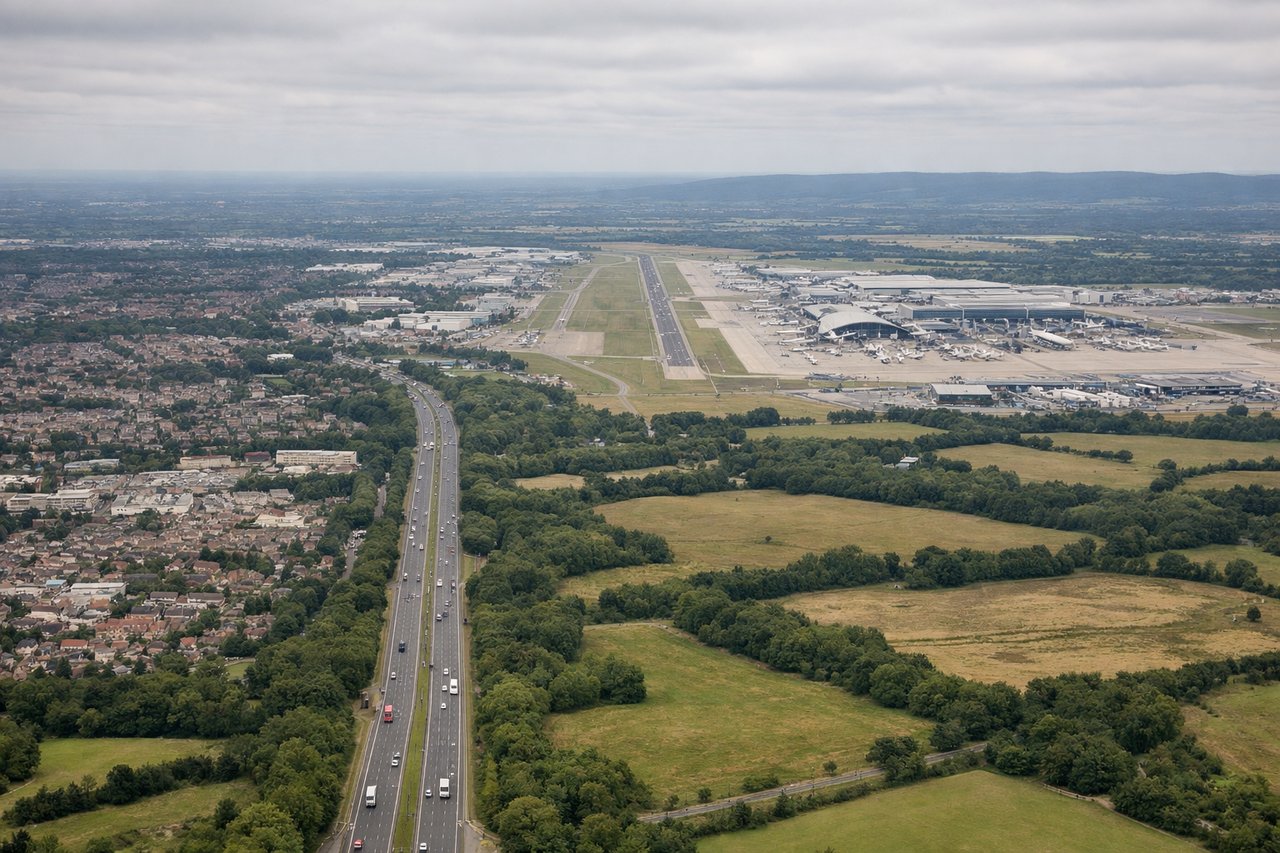
LEFTGatwick typically lands on runway 26L/26R approaching from the east, meaning the aircraft tracks westward. The left side gives views over central London — the Thames, the City, and South London suburbs — while the right side looks south over the Surrey countryside with less to see.
Landmarks on this routeAll landmarks →
Will your flight be in sunlight?
See exactly which side of the plane gets sun and shade at your departure time.
About This Route
Which side of the plane should I sit on flying from Paphos International (PFO) to Gatwick (LGW)?
Sit on the Left side of the plane for the best views on flights from Paphos to London. Left wins at both ends: the Troodos Mountains and Akamas Peninsula on departure, and the London skyline with the Thames on approach. The right side offers open sea on takeoff and Surrey farmland on landing — both significantly less interesting.
What can I see during takeoff from Paphos International in Paphos?
During takeoff from Paphos International (PFO), sit on the Left side for the best views. PFO's runway 29 departure heads northwest over the sea, and the left side looks back southeast over Paphos town, the Akamas Peninsula, and the Troodos Mountains inland. The right side gets open Mediterranean with little of interest. Notable sights include: Akamas Peninsula coastline, Troodos Mountains (Mount Olympos at 1,952m), Paphos harbour and old town, Cape Drepanum headland.
What can I see when landing at Gatwick in London?
When landing at Gatwick (LGW), sit on the Left side for the best views. Gatwick typically lands on runway 26L/26R approaching from the east, meaning the aircraft tracks westward. The left side gives views over central London — the Thames, the City, and South London suburbs — while the right side looks south over the Surrey countryside with less to see. Notable sights include: River Thames and its distinctive meanders through London, The Shard and City of London skyline, Canary Wharf tower cluster, M25 motorway arc through Surrey.
How long is the flight from Paphos to London?
The flight from Paphos International (PFO) to Gatwick (LGW) takes Approximately 4 hours 30 minutes.
What does the Paphos to London flight path pass over?
The route tracks northwest from Cyprus across the eastern Mediterranean, passing over or near the southern coast of Turkey (Taurus Mountains visible to the right), then across the Aegean Sea, over mainland Greece and the Greek islands, across the Adriatic Sea, over northern Italy and the Alps (visible as a broad white mountain arc), then across France, the English Channel, and into southern England. The Alps crossing is the most dramatic midpoint feature, typically visible from both sides around the 2.5-hour mark.