The right side captures the dramatic Himalayan scenery during takeoff—the Annapurna massif and Machhapuchhare are the flight's most visually striking features. While landing views are pleasant, the mountain panorama during climb-out from Pokhara is the superior scenic experience for this short regional flight.
Flown PHH to KTM? Did we get it right?
Flight Path
Pokhara to Kathmandu is 89 miles (143 km), a flight of about 25 minutes.
The flight path crosses the Kathmandu-Pokhara corridor through the central Nepal hills. En route, passengers may glimpse the Trisuli River valley and the forested ridges of the Mahabharat Range that separate the two cities. The terrain transitions from the Pokhara Valley's lower elevation through progressively higher foothills before descending into the Kathmandu Valley basin.
Great circle distance and headings ›
Phase by phase
Takeoff from PHH
RIGHTRight-side seats offer immediate views of the Annapurna massif and Machhapuchhare as the aircraft climbs eastward from Pokhara. The mountains rise dramatically to the north and northeast of the airport, creating a striking backdrop during the initial climb phase.
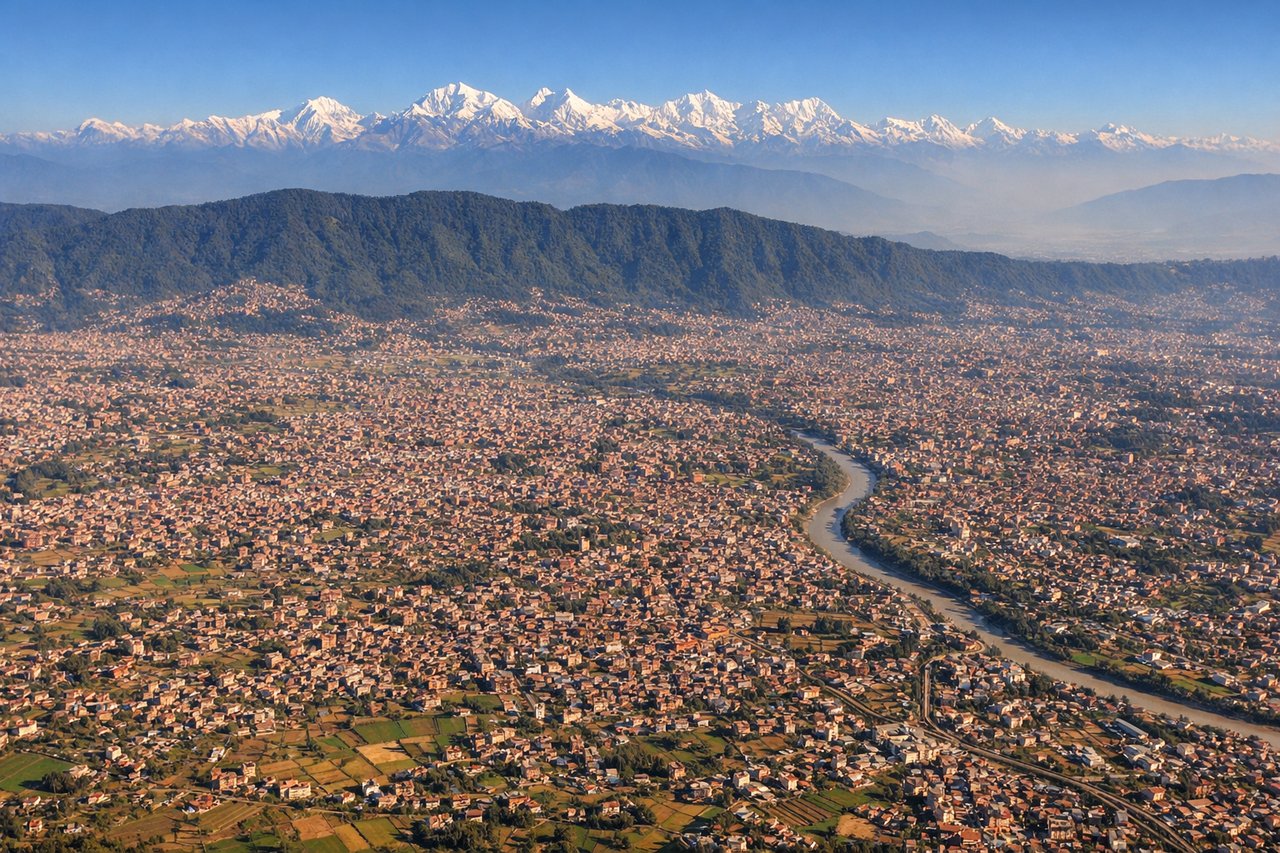
Landing at KTM
LEFTLeft-side seats provide excellent views during the descent approach into Kathmandu. The aircraft descends from the south and southwest, and left-side passengers see the Kathmandu Valley rim, the city sprawl, and the Bagmati River valley as the aircraft lines up for landing on the northbound runway.
Will your flight be in sunlight?
Pick a date and time in the Sun Map to watch the sun move across your whole flight.
About This Route
Which side of the plane should I sit on flying from Pokhara International Airport (PHH) to Tribhuvan International (KTM)?
Sit on the Right side of the plane for the best views on flights from Pokhara to Kathmandu. The right side captures the dramatic Himalayan scenery during takeoff—the Annapurna massif and Machhapuchhare are the flight's most visually striking features. While landing views are pleasant, the mountain panorama during climb-out from Pokhara is the superior scenic experience for this short regional flight.
What can I see during takeoff from Pokhara International Airport in Pokhara?
During takeoff from Pokhara International Airport (PHH), sit on the Right side for the best views. Right-side seats offer immediate views of the Annapurna massif and Machhapuchhare as the aircraft climbs eastward from Pokhara. The mountains rise dramatically to the north and northeast of the airport, creating a striking backdrop during the initial climb phase. Notable sights include: Annapurna Range (north), Machhapuchhare/Fishtail Mountain (northeast), Phewa Lake (directly below during initial climb), Pokhara Valley floor.
What can I see when landing at Tribhuvan International in Kathmandu?
When landing at Tribhuvan International (KTM), sit on the Left side for the best views. Left-side seats provide excellent views during the descent approach into Kathmandu. The aircraft descends from the south and southwest, and left-side passengers see the Kathmandu Valley rim, the city sprawl, and the Bagmati River valley as the aircraft lines up for landing on the northbound runway. Notable sights include: Kathmandu Valley (entire basin visible), Bagmati River (winding through the valley), Shivapuri Range (northern rim of valley), Kathmandu city grid and urban sprawl.
How long is the flight from Pokhara to Kathmandu?
The flight from Pokhara International Airport (PHH) to Tribhuvan International (KTM) takes about 25 minutes. The shortest flight path between them is 89 miles (143 km); winds and air traffic control usually add a few percent.
What does the Pokhara to Kathmandu flight path pass over?
The flight path crosses the Kathmandu-Pokhara corridor through the central Nepal hills. En route, passengers may glimpse the Trisuli River valley and the forested ridges of the Mahabharat Range that separate the two cities. The terrain transitions from the Pokhara Valley's lower elevation through progressively higher foothills before descending into the Kathmandu Valley basin.