While right seats dominate the departure, left seats win overall because the landing approach over Spain's interior plateau and mountain scenery is more visually distinctive and geographically significant than the departure over the mid-Atlantic coastal plain.
Flown PHL to MAD? Did we get it right?
Flight Path
Philadelphia to Madrid is 3,672 miles (5,909 km), a flight of about 7 hours 15 minutes.
The transatlantic crossing passes over the Atlantic Ocean with no significant landmarks for roughly 5 hours. The flight path crosses the Mid-Atlantic Ridge area (not visible at altitude), then approaches European airspace over the Bay of Biscay and the Iberian Peninsula. As you approach Spain, the Pyrenees Mountains appear on the northern horizon (visible from cruising altitude on clear days), and the Portuguese and Spanish coastlines become visible before turning inland toward Madrid.
Great circle distance and headings ›Phase by phase
Takeoff from PHL
RIGHTPHL typically departs eastbound (Runways 27L/R or 09L/R depending on wind). Right-side seats offer views of the Delaware River estuary, the New Jersey Pine Barrens, and the Atlantic coastline as you climb out over southeastern Pennsylvania and New Jersey.
Landing at MAD
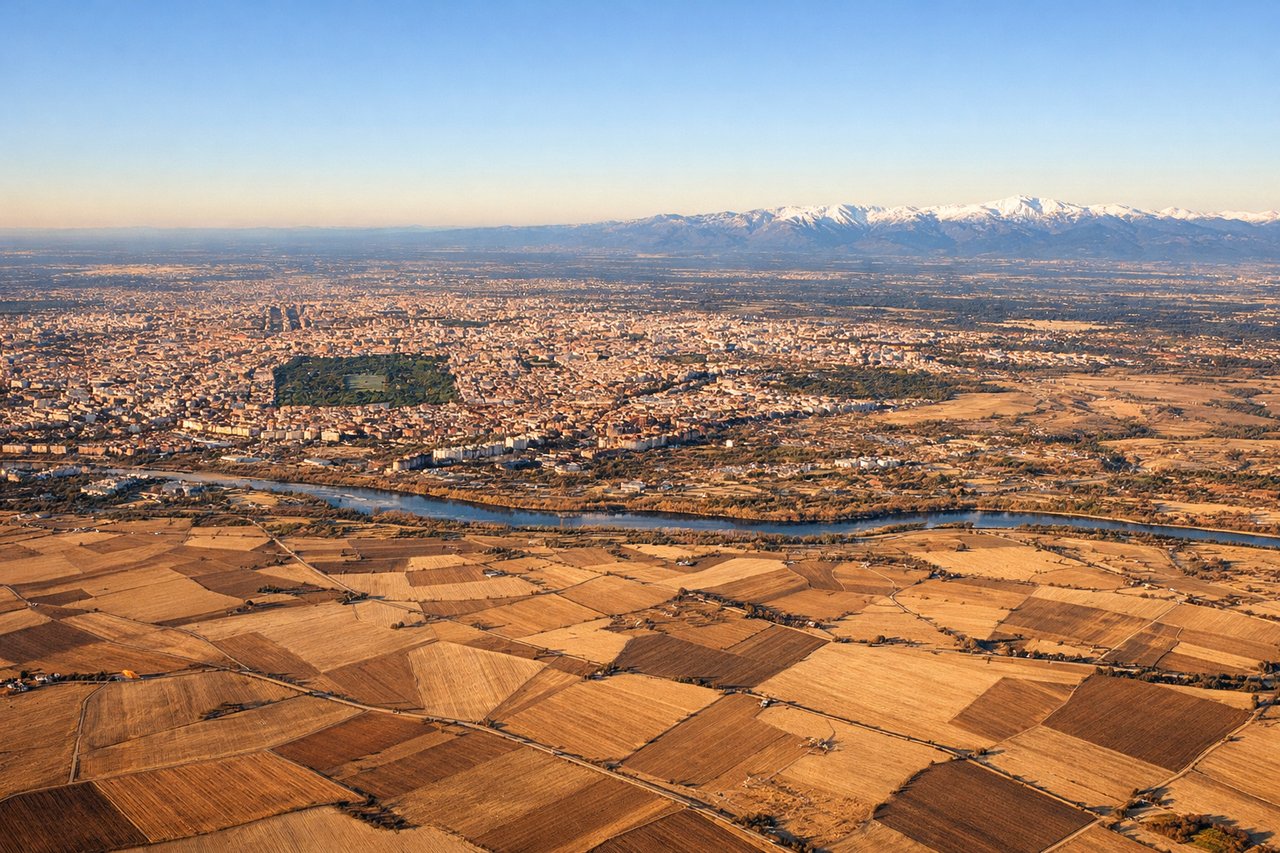
LEFTMadrid typically lands on Runways 32L/R (northwesterly approach). Left-side seats provide excellent views of the Spanish Meseta plateau, the Sierra de Guadarrama mountains to the northwest, and the approach over central Spain's distinctive tan and ochre agricultural landscape.
Will your flight be in sunlight?
Pick a date and time in the Sun Map to watch the sun move across your whole flight.
About This Route
Which side of the plane should I sit on flying from Philadelphia International (PHL) to Barajas (MAD)?
Sit on the Left side of the plane for the best views on flights from Philadelphia to Madrid. While right seats dominate the departure, left seats win overall because the landing approach over Spain's interior plateau and mountain scenery is more visually distinctive and geographically significant than the departure over the mid-Atlantic coastal plain.
What can I see during takeoff from Philadelphia International in Philadelphia?
During takeoff from Philadelphia International (PHL), sit on the Right side for the best views. PHL typically departs eastbound (Runways 27L/R or 09L/R depending on wind). Right-side seats offer views of the Delaware River estuary, the New Jersey Pine Barrens, and the Atlantic coastline as you climb out over southeastern Pennsylvania and New Jersey. Notable sights include: Delaware River (immediate left bank), Atlantic City area (distant southeast), New Jersey Pine Barrens (south-southeast), Cape May Peninsula (far right on horizon).
What can I see when landing at Barajas in Madrid?
When landing at Barajas (MAD), sit on the Left side for the best views. Madrid typically lands on Runways 32L/R (northwesterly approach). Left-side seats provide excellent views of the Spanish Meseta plateau, the Sierra de Guadarrama mountains to the northwest, and the approach over central Spain's distinctive tan and ochre agricultural landscape. Notable sights include: Sierra de Guadarrama (northwest, snow-capped peaks visible in winter), Spanish Meseta plateau (golden-brown agricultural fields), Tagus River valley (thin green line), Madrid urban sprawl (gray-brown cluster on horizon).
How long is the flight from Philadelphia to Madrid?
The flight from Philadelphia International (PHL) to Barajas (MAD) takes about 7 hours 15 minutes. The shortest flight path between them is 3,672 miles (5,909 km); winds and air traffic control usually add a few percent.
What does the Philadelphia to Madrid flight path pass over?
The transatlantic crossing passes over the Atlantic Ocean with no significant landmarks for roughly 5 hours. The flight path crosses the Mid-Atlantic Ridge area (not visible at altitude), then approaches European airspace over the Bay of Biscay and the Iberian Peninsula. As you approach Spain, the Pyrenees Mountains appear on the northern horizon (visible from cruising altitude on clear days), and the Portuguese and Spanish coastlines become visible before turning inland toward Madrid.