Beijing to Amsterdam is 4,890 miles (7,870 km), a flight of about 9 hours 15 minutes.
While the takeoff offers mountain views, the landing provides more sustained and visually distinctive scenery: the Ijsselmeer, Rhine delta, and polder landscape are iconic and remain visible for a longer period during descent.
Flight Path
The flight path crosses the Ural Mountains (around 3.5 hours from Beijing), the Caspian Sea (visible to the south around 5.5 hours), and the Caucasus Mountains. Over Eastern Europe, the Dnieper River and the vast Eastern European Plain dominate. The Carpathian Mountains appear as the aircraft approaches Central Europe, followed by the Vistula River valley in Poland and the North European Plain.
Great circle distance and headings ›

Phase by phase
Takeoff from PKX
LEFTLeft-side seats offer views of the Yanshan Mountains as the aircraft climbs northwest from Daxing. The range forms a dramatic backdrop north of Beijing and remains visible for 15–20 minutes after departure.
Landing at AMS
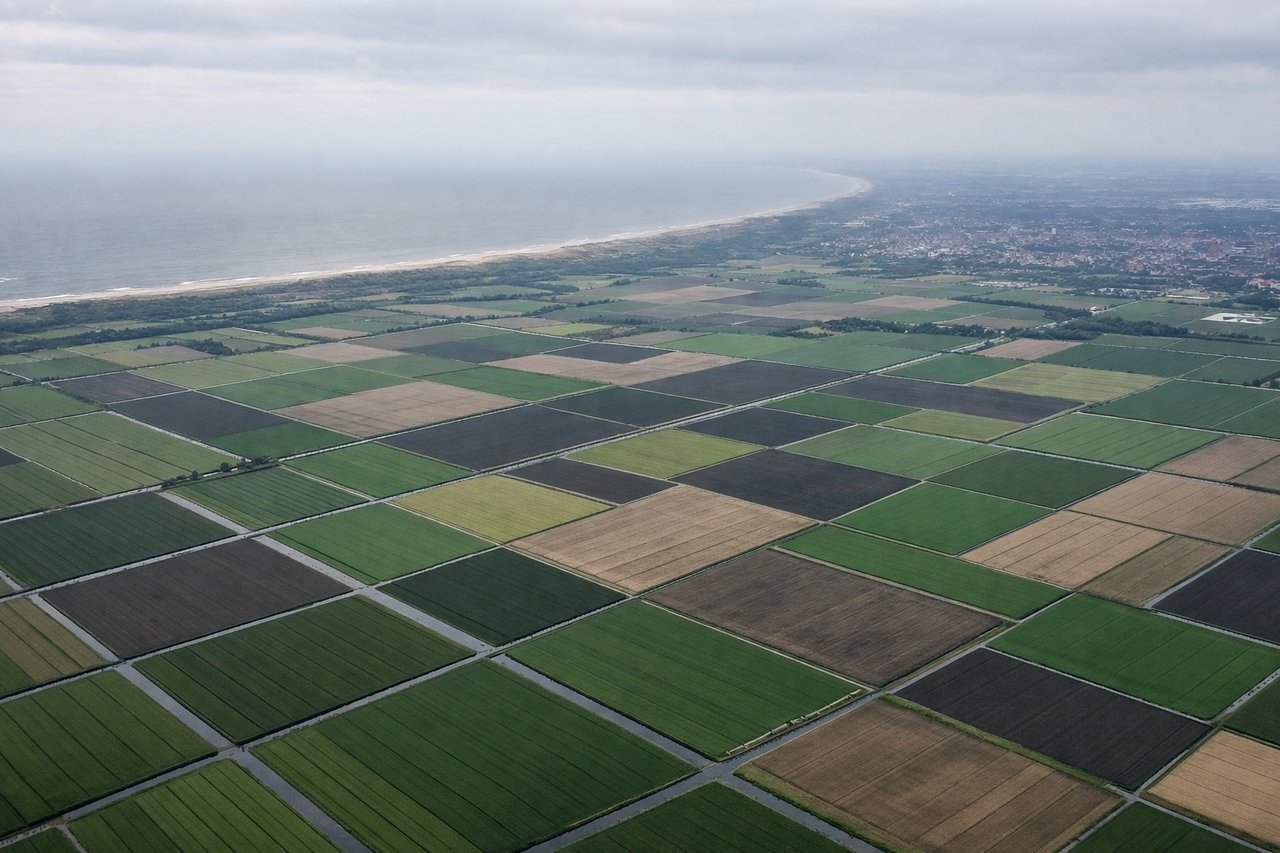
RIGHTRight-side seats provide views of the Rhine River delta and the Dutch coastline during descent into Amsterdam. The Ijsselmeer (a large inland lake) and the polder landscape with its distinctive linear waterways and field patterns are striking from altitude.
Landmarks on this routeAll landmarks →
Will your flight be in sunlight?
Pick a date and time in the Sun Map to watch the sun move across your whole flight.
About This Route
Which side of the plane should I sit on flying from Beijing Daxing International Airport (PKX) to Schiphol (AMS)?
Sit on the Right side of the plane for the best views on flights from Beijing to Amsterdam. While the takeoff offers mountain views, the landing provides more sustained and visually distinctive scenery: the Ijsselmeer, Rhine delta, and polder landscape are iconic and remain visible for a longer period during descent.
What can I see during takeoff from Beijing Daxing International Airport in Beijing?
During takeoff from Beijing Daxing International Airport (PKX), sit on the Left side for the best views. Left-side seats offer views of the Yanshan Mountains as the aircraft climbs northwest from Daxing. The range forms a dramatic backdrop north of Beijing and remains visible for 15–20 minutes after departure. Notable sights include: Yanshan Mountains (north), Beijing urban sprawl (south and southeast), Guanting Reservoir (northwest), North China Plain (extending east).
What can I see when landing at Schiphol in Amsterdam?
When landing at Schiphol (AMS), sit on the Right side for the best views. Right-side seats provide views of the Rhine River delta and the Dutch coastline during descent into Amsterdam. The Ijsselmeer (a large inland lake) and the polder landscape with its distinctive linear waterways and field patterns are striking from altitude. Notable sights include: Rhine River delta (center-right), Ijsselmeer (north), North Sea coastline (northwest), Dutch polder fields with canals (foreground and left).
How long is the flight from Beijing to Amsterdam?
The flight from Beijing Daxing International Airport (PKX) to Schiphol (AMS) takes about 9 hours 15 minutes. The shortest flight path between them is 4,890 miles (7,870 km); winds and air traffic control usually add a few percent.
What does the Beijing to Amsterdam flight path pass over?
The flight path crosses the Ural Mountains (around 3.5 hours from Beijing), the Caspian Sea (visible to the south around 5.5 hours), and the Caucasus Mountains. Over Eastern Europe, the Dnieper River and the vast Eastern European Plain dominate. The Carpathian Mountains appear as the aircraft approaches Central Europe, followed by the Vistula River valley in Poland and the North European Plain.