Porto Alegre to Frankfurt is 6,625 miles (10,662 km), a flight of about 11 hours 15 minutes.
While takeoff favors the right for Porto Alegre's water features, the landing approach into Frankfurt strongly favors the left for views of the Rhine, Main, and Taunus hills—more visually distinctive landmarks. Left seats capture the more dramatic scenery during the final descent.
Flight Path
The flight path crosses the Atlantic Ocean for approximately 6 hours with no notable landmarks visible. Over the Iberian Peninsula (Spain/Portugal), the Sierra de Gredos and Pyrenees may be visible depending on exact routing. Crossing France, the Alps appear on the southern horizon if the aircraft passes south of Paris. The Loire Valley and Seine River valley are visible during the approach to European airspace. The flight typically follows a great-circle route over the Atlantic, making the midpoint roughly over the mid-Atlantic with no land features.
Great circle distance and headings ›


Phase by phase
Takeoff from POA
RIGHTRight-side seats capture the Guaíba River estuary and Lagoa dos Patos as the aircraft climbs southeastward from Salgado Filho. These water features dominate the immediate landscape around Porto Alegre during initial climb.
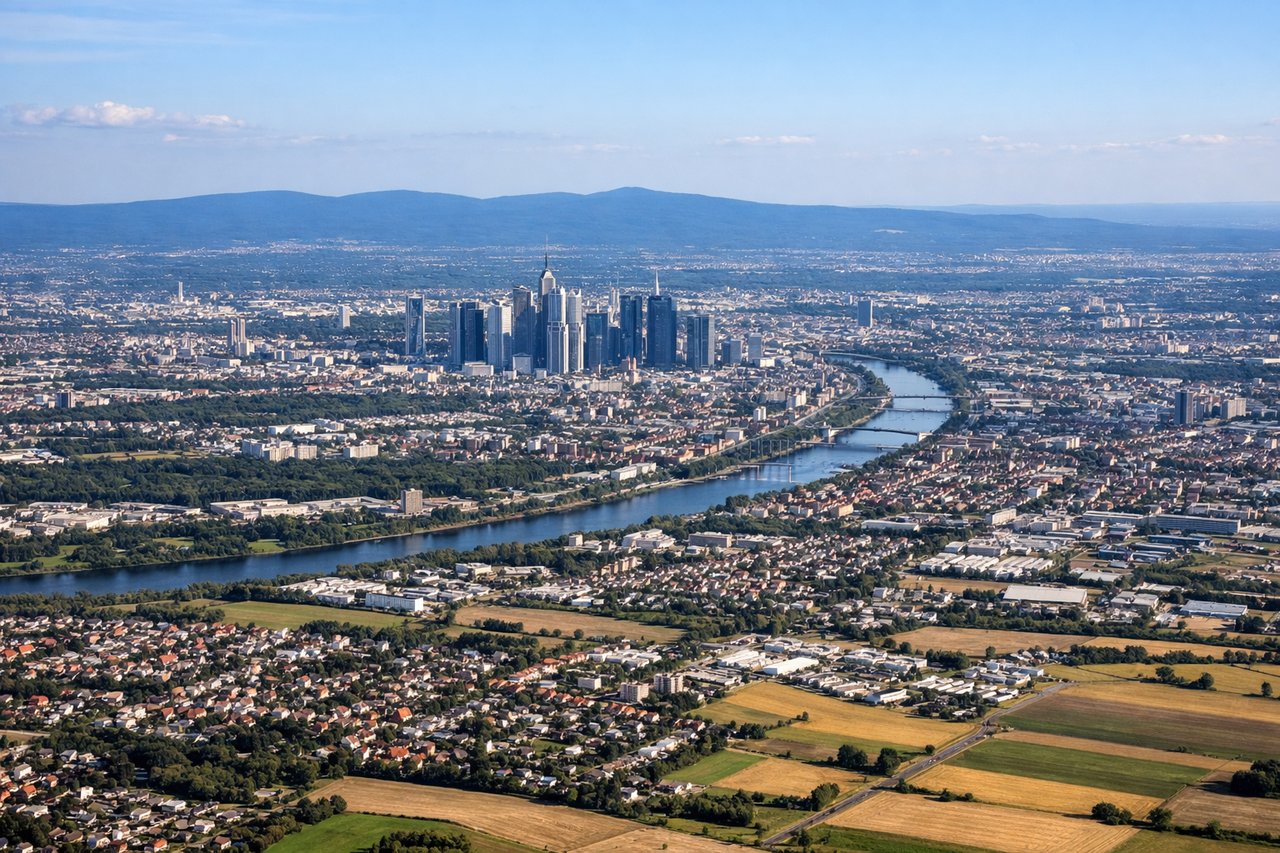
Landing at FRA
LEFTLeft-side seats offer views of the Rhine River valley and the Main River as the aircraft descends toward Frankfurt. These major waterways are prominent landmarks during the final approach from the northeast.
Landmarks on this routeAll landmarks →
Will your flight be in sunlight?
Pick a date and time in the Sun Map to watch the sun move across your whole flight.
About This Route
Which side of the plane should I sit on flying from Salgado Filho (POA) to Frankfurt Main (FRA)?
Sit on the Left side of the plane for the best views on flights from Porto Alegre to Frankfurt. While takeoff favors the right for Porto Alegre's water features, the landing approach into Frankfurt strongly favors the left for views of the Rhine, Main, and Taunus hills—more visually distinctive landmarks. Left seats capture the more dramatic scenery during the final descent.
What can I see during takeoff from Salgado Filho in Porto Alegre?
During takeoff from Salgado Filho (POA), sit on the Right side for the best views. Right-side seats capture the Guaíba River estuary and Lagoa dos Patos as the aircraft climbs southeastward from Salgado Filho. These water features dominate the immediate landscape around Porto Alegre during initial climb. Notable sights include: Guaíba River estuary, Lagoa dos Patos (large coastal lagoon), Porto Alegre urban sprawl, Atlantic coastal plains.
What can I see when landing at Frankfurt Main in Frankfurt?
When landing at Frankfurt Main (FRA), sit on the Left side for the best views. Left-side seats offer views of the Rhine River valley and the Main River as the aircraft descends toward Frankfurt. These major waterways are prominent landmarks during the final approach from the northeast. Notable sights include: Rhine River, Main River confluence, Frankfurt city center, Taunus hills (northern bank of Main).
How long is the flight from Porto Alegre to Frankfurt?
The flight from Salgado Filho (POA) to Frankfurt Main (FRA) takes about 11 hours 15 minutes. The shortest flight path between them is 6,625 miles (10,662 km); winds and air traffic control usually add a few percent.
What does the Porto Alegre to Frankfurt flight path pass over?
The flight path crosses the Atlantic Ocean for approximately 6 hours with no notable landmarks visible. Over the Iberian Peninsula (Spain/Portugal), the Sierra de Gredos and Pyrenees may be visible depending on exact routing. Crossing France, the Alps appear on the southern horizon if the aircraft passes south of Paris. The Loire Valley and Seine River valley are visible during the approach to European airspace. The flight typically follows a great-circle route over the Atlantic, making the midpoint roughly over the mid-Atlantic with no land features.