Pointe-à-Pitre to New York is 1,837 miles (2,956 km), a flight of about 4 hours 30 minutes.
The right side wins overall because the Guadeloupe departure is genuinely spectacular — the butterfly island shape, La Soufrière, and the lagoon system are rare and visually dramatic. The Manhattan approach on the left at landing is good but familiar to many travelers, whereas the Caribbean island geography on takeoff is unique to this route.
Flight Path
The flight tracks northwest over the northeastern Caribbean, passing near Puerto Rico and Hispaniola (visible as large mountainous islands in the early portion of the flight), then over the Turks and Caicos and the Bahamas chain. The Atlantic Ocean dominates the middle portion of the flight. The US East Coast appears as a low landmass roughly an hour before landing, with the Outer Banks of North Carolina sometimes visible before the aircraft tracks up toward New York.
Great circle distance and headings ›Phase by phase
Takeoff from PTP
RIGHTLe Raizet typically departs on runway 11/29. A northbound departure climbing out over the northeast will put the right side facing south and east over the main island of Grande-Terre and the lagoon-fringed coastline. You get a clear view of the butterfly shape of Guadeloupe as the aircraft banks north, with the volcanic peak of La Soufrière on Basse-Terre visible to the southwest.
Landing at JFK
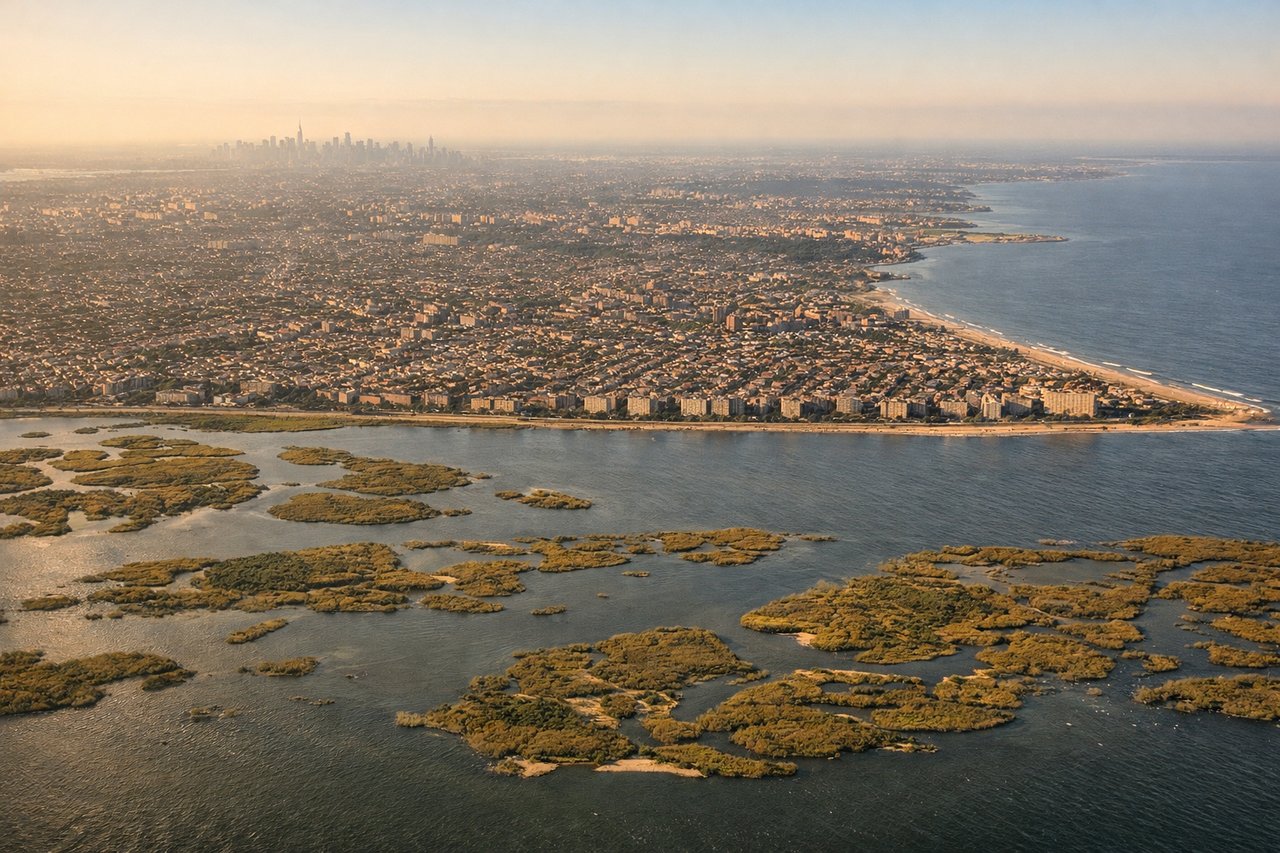
LEFTJFK arrivals typically come in from the northeast or east on runway 31L/31R or 22L/22R, with the final approach over Jamaica Bay and Long Island. The left side faces south and west, giving you the Manhattan skyline in the distance, the Verrazano-Narrows Bridge, and the full sweep of Jamaica Bay beneath you on final approach.
Landmarks on this routeAll landmarks →
Will your flight be in sunlight?
Pick a date and time in the Sun Map to watch the sun move across your whole flight.
About This Route
Which side of the plane should I sit on flying from Le Raizet (PTP) to John F Kennedy International (JFK)?
Sit on the Right side of the plane for the best views on flights from Pointe-à-Pitre to New York. The right side wins overall because the Guadeloupe departure is genuinely spectacular — the butterfly island shape, La Soufrière, and the lagoon system are rare and visually dramatic. The Manhattan approach on the left at landing is good but familiar to many travelers, whereas the Caribbean island geography on takeoff is unique to this route.
What can I see during takeoff from Le Raizet in Pointe-à-Pitre?
During takeoff from Le Raizet (PTP), sit on the Right side for the best views. Le Raizet typically departs on runway 11/29. A northbound departure climbing out over the northeast will put the right side facing south and east over the main island of Grande-Terre and the lagoon-fringed coastline. You get a clear view of the butterfly shape of Guadeloupe as the aircraft banks north, with the volcanic peak of La Soufrière on Basse-Terre visible to the southwest. Notable sights include: La Soufrière volcano (Basse-Terre), the Grand Cul-de-Sac Marin lagoon, the isthmus connecting Grande-Terre and Basse-Terre, the turquoise reef shelf along the southern coast.
What can I see when landing at John F Kennedy International in New York?
When landing at John F Kennedy International (JFK), sit on the Left side for the best views. JFK arrivals typically come in from the northeast or east on runway 31L/31R or 22L/22R, with the final approach over Jamaica Bay and Long Island. The left side faces south and west, giving you the Manhattan skyline in the distance, the Verrazano-Narrows Bridge, and the full sweep of Jamaica Bay beneath you on final approach. Notable sights include: Manhattan skyline (distant, to the northwest), Jamaica Bay and its wildlife refuge islands, the Verrazano-Narrows Bridge, the Rockaway Peninsula barrier beach.
How long is the flight from Pointe-à-Pitre to New York?
The flight from Le Raizet (PTP) to John F Kennedy International (JFK) takes about 4 hours 30 minutes. The shortest flight path between them is 1,837 miles (2,956 km); winds and air traffic control usually add a few percent.
What does the Pointe-à-Pitre to New York flight path pass over?
The flight tracks northwest over the northeastern Caribbean, passing near Puerto Rico and Hispaniola (visible as large mountainous islands in the early portion of the flight), then over the Turks and Caicos and the Bahamas chain. The Atlantic Ocean dominates the middle portion of the flight. The US East Coast appears as a low landmass roughly an hour before landing, with the Outer Banks of North Carolina sometimes visible before the aircraft tracks up toward New York.