The left side wins overall because the London approach views are exceptional and sustained — you track the Thames and the full London skyline for several minutes on descent. The Pula takeoff right-side views are good but brief. Mid-flight over the Alps, left side also gets slightly better angles on the main Alpine chain as the route crosses over Austria and Switzerland.
Flown PUY to LHR? Did we get it right?
Flight Path
Pula to London is 801 miles (1,289 km), a flight of about 2 hours 40 minutes.
The route crosses the northern Adriatic, then the Julian Alps and Austrian Alps (Dolomites visible to the west), the broad Po Valley of northern Italy, then the Swiss Plateau and Jura mountains, crossing into France over Burgundy, then the English Channel near Calais or Boulogne before descending over southeast England toward London.
Great circle distance and headings ›


Phase by phase
Takeoff from PUY
RIGHTPula Airport's primary departure runway 09/27 means westbound departures head out over the Istrian peninsula. A right-side seat gives you views back over the Pula amphitheatre area and the southern Istrian coastline as the aircraft turns northwest. The Brijuni Islands archipelago sits clearly visible off the western Istrian coast from this side.
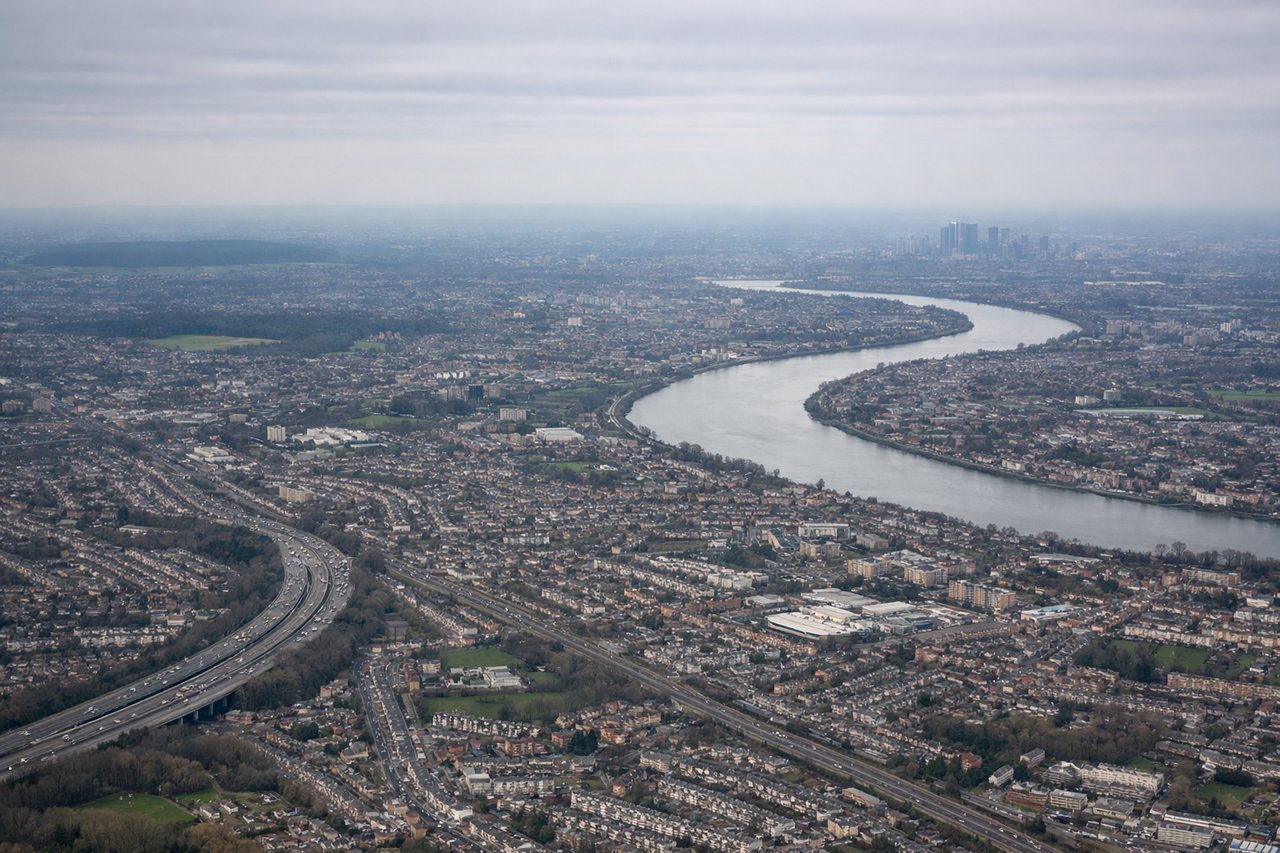
Landing at LHR
LEFTHeathrow's primary westerly arrivals on runways 27L/27R bring aircraft in from the east over central London. A left-side seat on final approach gives a clear view of the Thames river bends, the City of London skyline, and Canary Wharf as the aircraft descends over east and central London. Right side faces mostly suburban west London.
Will your flight be in sunlight?
Pick a date and time in the Sun Map to watch the sun move across your whole flight.
About This Route
Which side of the plane should I sit on flying from Pula (PUY) to Heathrow (LHR)?
Sit on the Left side of the plane for the best views on flights from Pula to London. The left side wins overall because the London approach views are exceptional and sustained — you track the Thames and the full London skyline for several minutes on descent. The Pula takeoff right-side views are good but brief. Mid-flight over the Alps, left side also gets slightly better angles on the main Alpine chain as the route crosses over Austria and Switzerland.
What can I see during takeoff from Pula in Pula?
During takeoff from Pula (PUY), sit on the Right side for the best views. Pula Airport's primary departure runway 09/27 means westbound departures head out over the Istrian peninsula. A right-side seat gives you views back over the Pula amphitheatre area and the southern Istrian coastline as the aircraft turns northwest. The Brijuni Islands archipelago sits clearly visible off the western Istrian coast from this side. Notable sights include: Pula Roman Amphitheatre (visible as oval structure near waterfront), Brijuni Islands archipelago, southern Istrian peninsula coastline, Pula harbour.
What can I see when landing at Heathrow in London?
When landing at Heathrow (LHR), sit on the Left side for the best views. Heathrow's primary westerly arrivals on runways 27L/27R bring aircraft in from the east over central London. A left-side seat on final approach gives a clear view of the Thames river bends, the City of London skyline, and Canary Wharf as the aircraft descends over east and central London. Right side faces mostly suburban west London. Notable sights include: Thames river bends through central London, Canary Wharf tower cluster, City of London skyline, Windsor Castle and Thames Valley on earlier descent.
How long is the flight from Pula to London?
The flight from Pula (PUY) to Heathrow (LHR) takes about 2 hours 40 minutes. The shortest flight path between them is 801 miles (1,289 km); winds and air traffic control usually add a few percent.
What does the Pula to London flight path pass over?
The route crosses the northern Adriatic, then the Julian Alps and Austrian Alps (Dolomites visible to the west), the broad Po Valley of northern Italy, then the Swiss Plateau and Jura mountains, crossing into France over Burgundy, then the English Channel near Calais or Boulogne before descending over southeast England toward London.