Portland to Newark is 284 miles (457 km), a flight of about 1 hour 10 minutes.
The left side tracks the Atlantic coastline for nearly the whole flight, offering Maine's rocky shore at takeoff, glimpses of Boston and Cape Cod at cruise, and a dramatic Manhattan skyline view on final approach into EWR — far more visually varied than the inland forests and suburbs visible from the right.
Flight Path
New Hampshire seacoast, Boston's South Shore and harbor islands, Cape Cod Bay, Long Island Sound
Great circle distance and headings ›.jpeg?width=600)
.jpg?width=600)
Phase by phase
Takeoff from PWM
LEFTDeparting PWM to the south, the left side offers views of Casco Bay, Portland's working harbor, and the rocky Maine coastline as the plane climbs out over the water before turning toward New York.
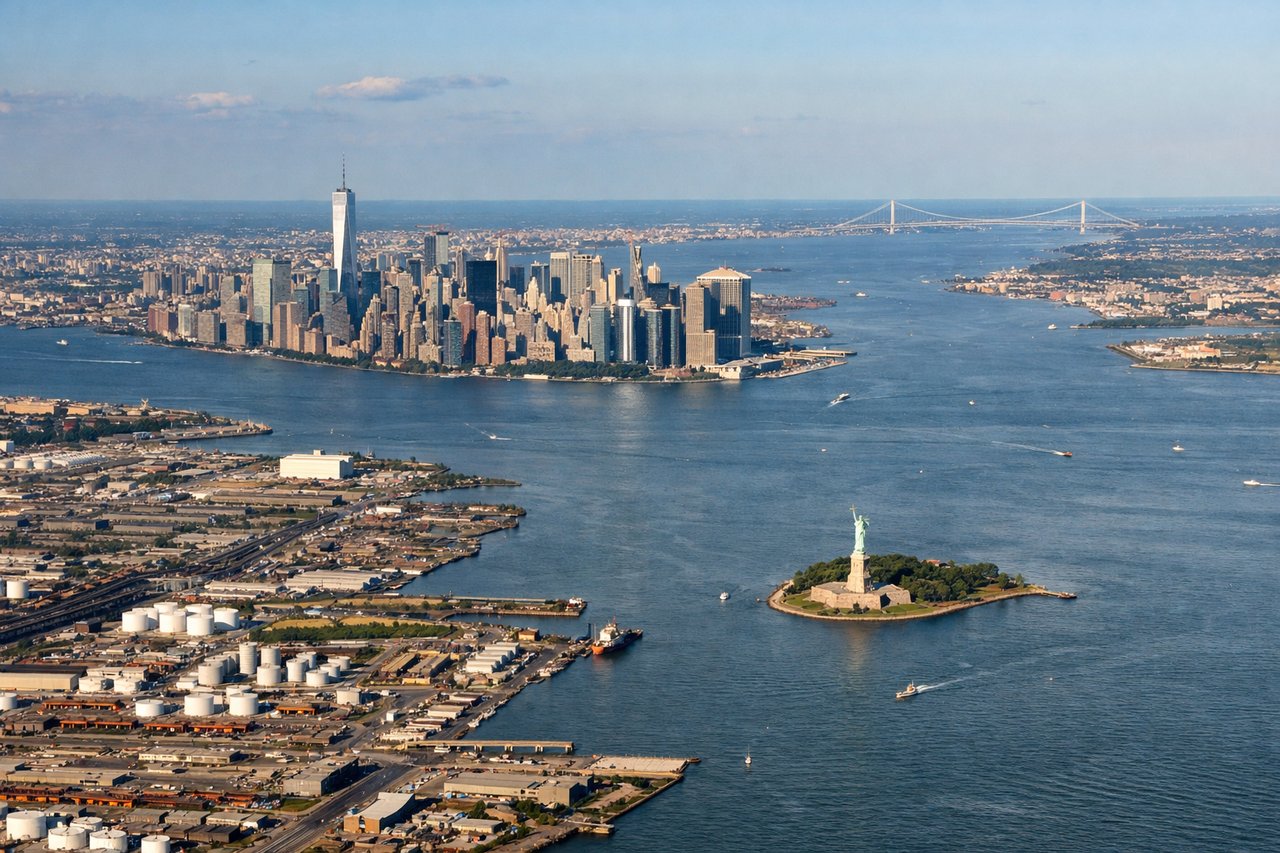
Landing at EWR
LEFTOn approach into EWR from the north, the left side gives passengers a clear view of the Manhattan skyline and Hudson River before the final turn onto the runway, a dramatic contrast to the flat New Jersey meadowlands on the other side.
Landmarks on this routeAll landmarks →
Will your flight be in sunlight?
Pick a date and time in the Sun Map to watch the sun move across your whole flight.
About This Route
Which side of the plane should I sit on flying from Portland International Jetport (PWM) to Newark Liberty International (EWR)?
Sit on the Left side of the plane for the best views on flights from Portland to Newark. The left side tracks the Atlantic coastline for nearly the whole flight, offering Maine's rocky shore at takeoff, glimpses of Boston and Cape Cod at cruise, and a dramatic Manhattan skyline view on final approach into EWR — far more visually varied than the inland forests and suburbs visible from the right.
What can I see during takeoff from Portland International Jetport in Portland?
During takeoff from Portland International Jetport (PWM), sit on the Left side for the best views. Departing PWM to the south, the left side offers views of Casco Bay, Portland's working harbor, and the rocky Maine coastline as the plane climbs out over the water before turning toward New York. Notable sights include: Casco Bay, Portland Harbor, Maine coastline islands.
What can I see when landing at Newark Liberty International in Newark?
When landing at Newark Liberty International (EWR), sit on the Left side for the best views. On approach into EWR from the north, the left side gives passengers a clear view of the Manhattan skyline and Hudson River before the final turn onto the runway, a dramatic contrast to the flat New Jersey meadowlands on the other side. Notable sights include: Manhattan skyline, Hudson River, Statue of Liberty area, Newark Bay.
How long is the flight from Portland to Newark?
The flight from Portland International Jetport (PWM) to Newark Liberty International (EWR) takes about 1 hour 10 minutes. The shortest flight path between them is 284 miles (457 km); winds and air traffic control usually add a few percent.
What does the Portland to Newark flight path pass over?
New Hampshire seacoast, Boston's South Shore and harbor islands, Cape Cod Bay, Long Island Sound